
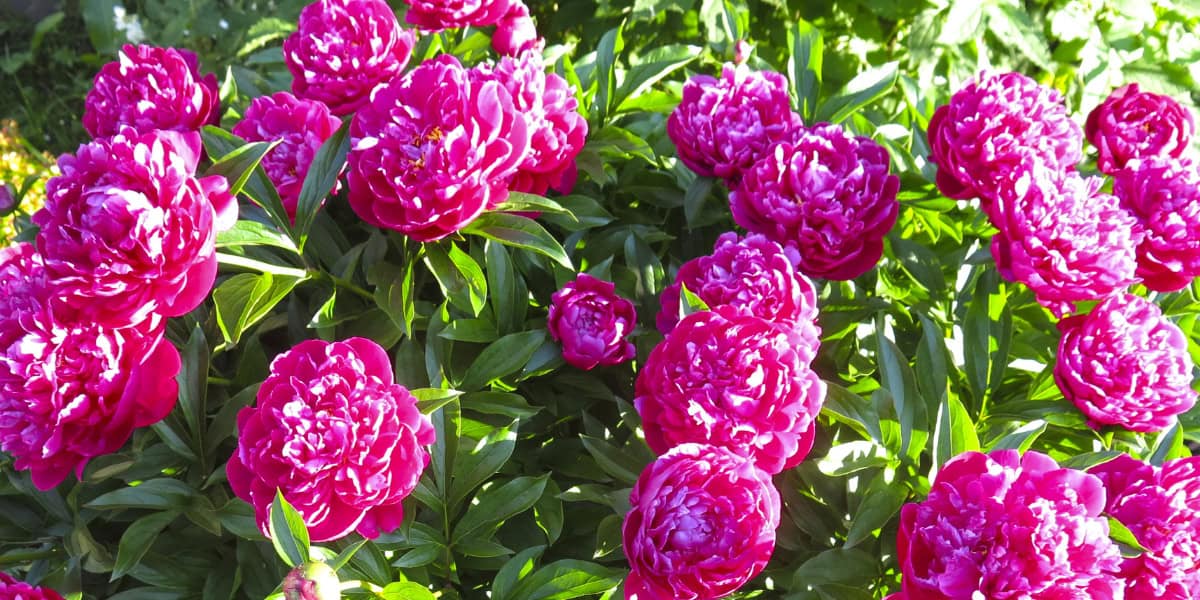
Few flowers stop people in their tracks quite like peonies. Whether you’re dreaming of a lush peonies garden overflowing with blooms, hoping to try growing peonies for the first time, or finally ready to learn how to care for peonies the right way, you’ve come to the right place. Peonies are reliable bloomers in my USDA Plant Hardiness Zone 8 garden, and I’ve grown them for nearly 30 years. From choosing the perfect spot to understanding the peonies season and knowing exactly when to expect those glorious blooms, this guide covers everything. We’ll talk about the best peonies garden flower beds, walk through what to plant with peonies for a stunning display, and even explore peonies in pots for those with smaller spaces. Whether you’re drawn to soft coral peonies, romantic blush peonies, or classic pink peonies, there’s a variety with your name on it. Get ready to fall even more in love with one of the most beloved perennials you’ll ever grow in your garden.
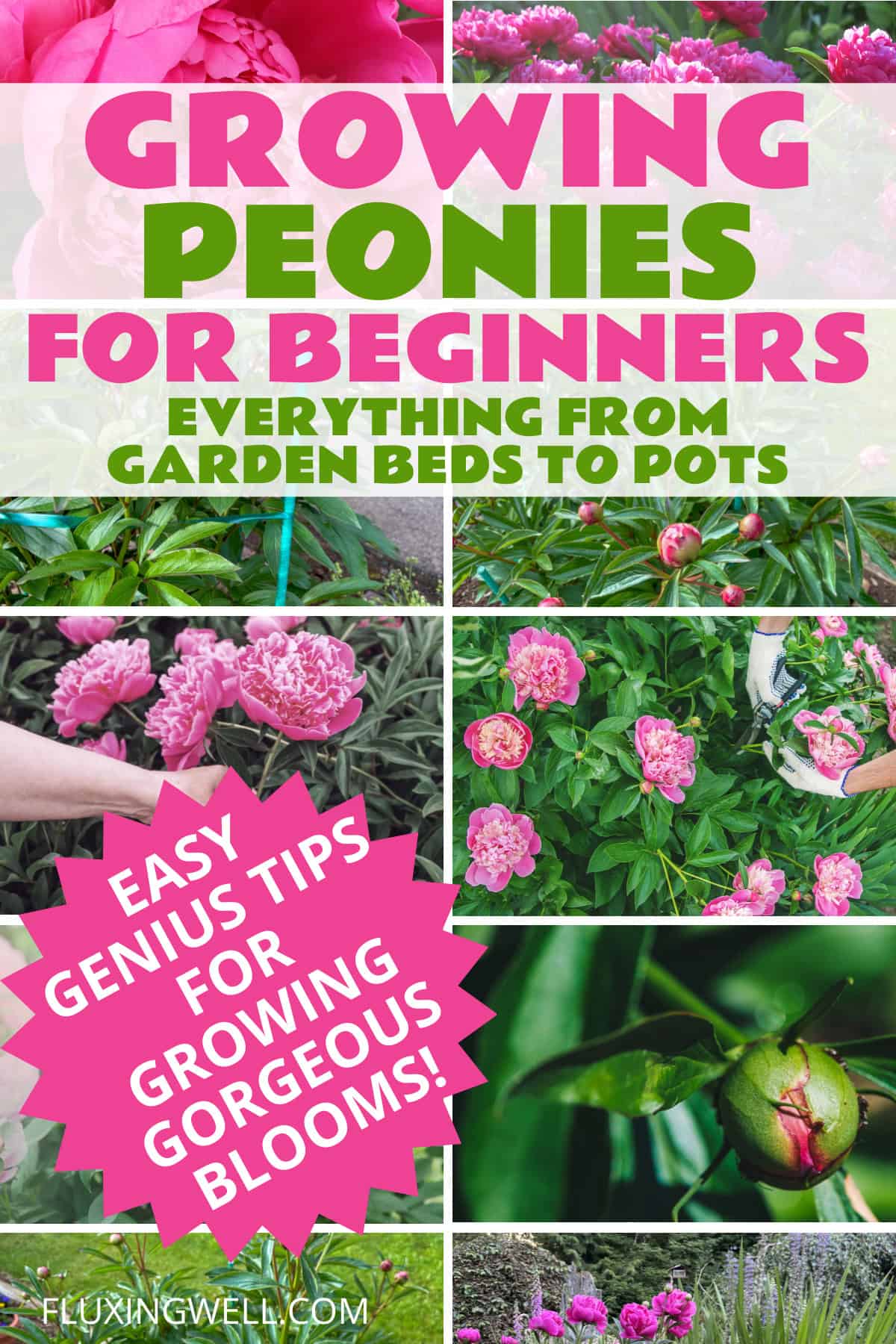
Why I Love to Grow Peonies in My Garden
We received our peonies from my dear late mother-in-law, an avid gardener. She loved the color pink, and she loved flowers. When our peonies grow and bloom each year, I’m reminded of her. We have peonies growing in our perennial garden as well as in our front and back yards as part of our landscape.
What Makes Peonies So Special
Peonies are long-lived, low-maintenance perennials that reward patient gardeners with enormous, fragrant blooms year after year. Once established, a healthy peony plant can live for decades with very little fuss, making them one of the best investments you can make in your garden.
Peonies Season: When Do Peonies Bloom
Most peonies bloom in late spring to early summer, typically between May and June depending on your climate and variety. The blooming window for each plant is short, usually one to two weeks, but the show is absolutely worth it.
Are Peonies Hard to Grow
Not at all! Peonies have a reputation for being finicky, but they are actually quite forgiving once you understand their basic needs. The most important factors are proper planting depth, good drainage, and plenty of sunlight.
Types of Peonies to Know Before You Plant
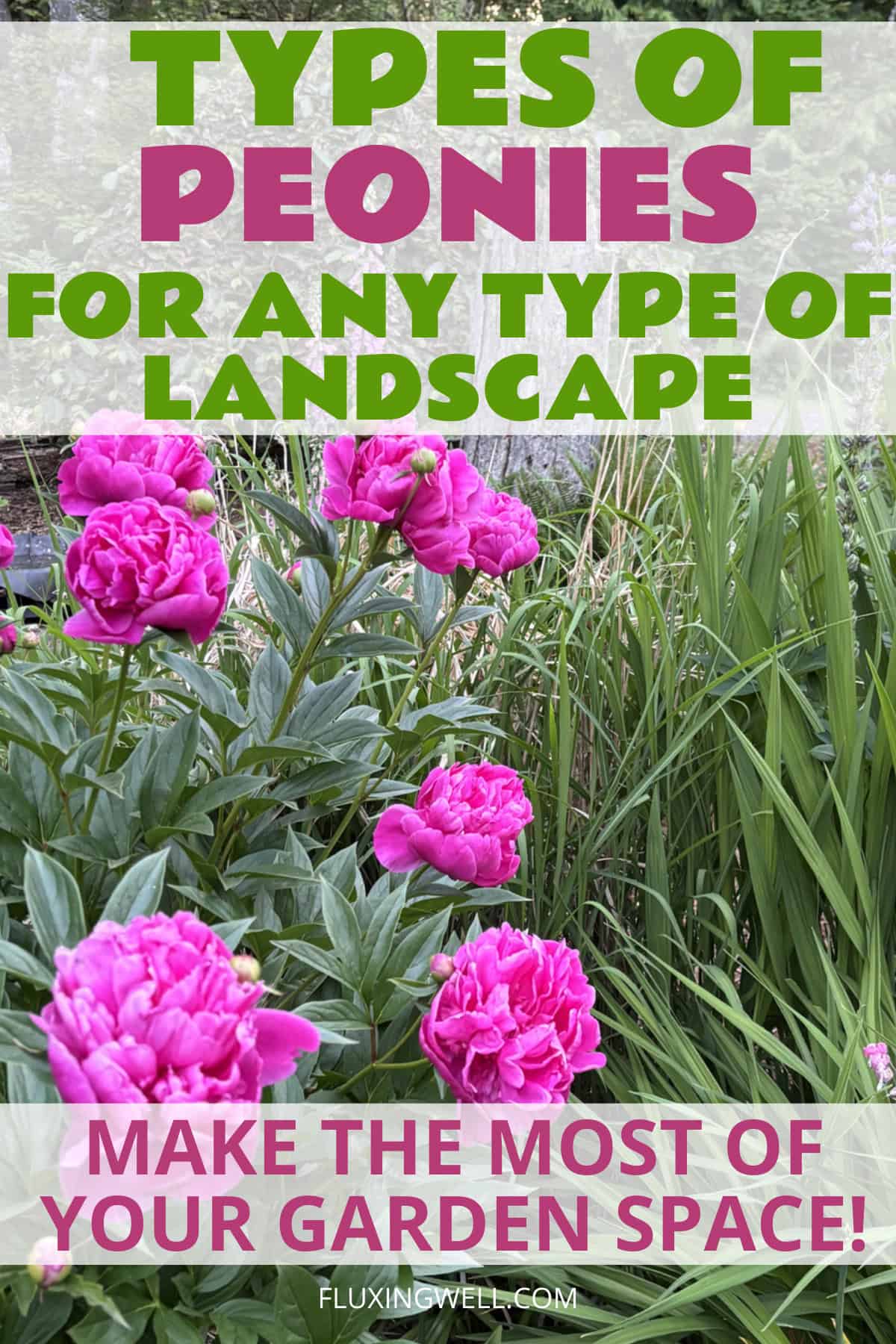
Herbaceous Peonies
These are the classic garden peonies most people picture. They die back to the ground each winter and return reliably every spring. They are the easiest type to grow and come in a wide range of colors and forms. These are the kind of peonies we grow in our yard.
Tree Peonies
Tree peonies develop woody stems that remain above ground year-round. They bloom earlier than herbaceous types and produce dramatic, dinner-plate-sized flowers. They require a bit more patience but are stunning focal points in the landscape.
Itoh Peonies: The Best of Both Worlds
Itoh peonies, also called intersectional peonies, are a cross between herbaceous and tree peonies. They offer the large blooms and extended flowering period of tree peonies with the easy care of herbaceous types. They are increasingly popular and well worth seeking out.
Peonies by Color: Choosing the Right Variety
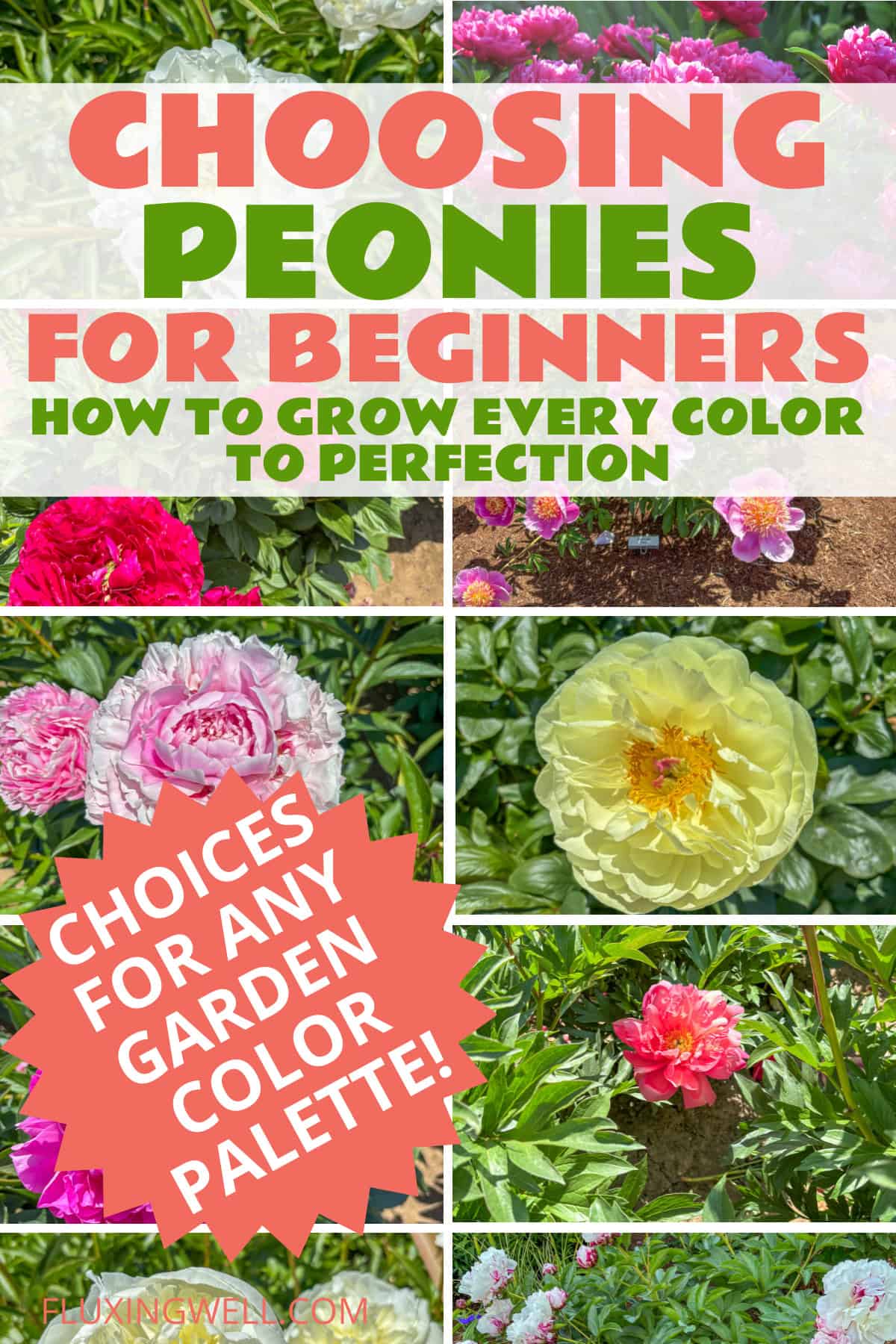
Peonies come in an incredible range of colors. Pink peonies and white peonies are classic choices, while coral peonies and peach peonies offer a warmer, softer look. For drama, consider deep burgundy peonies or rich red peonies. Blush peonies and yellow peonies round out the palette beautifully. An excellent source of information about different varieties is the Adelman Peony Gardens. You can visit their farm, located near Salem, Oregon, around Memorial Day each year for inspiration or browse their digital catalog.
How to Plant Peonies for Success
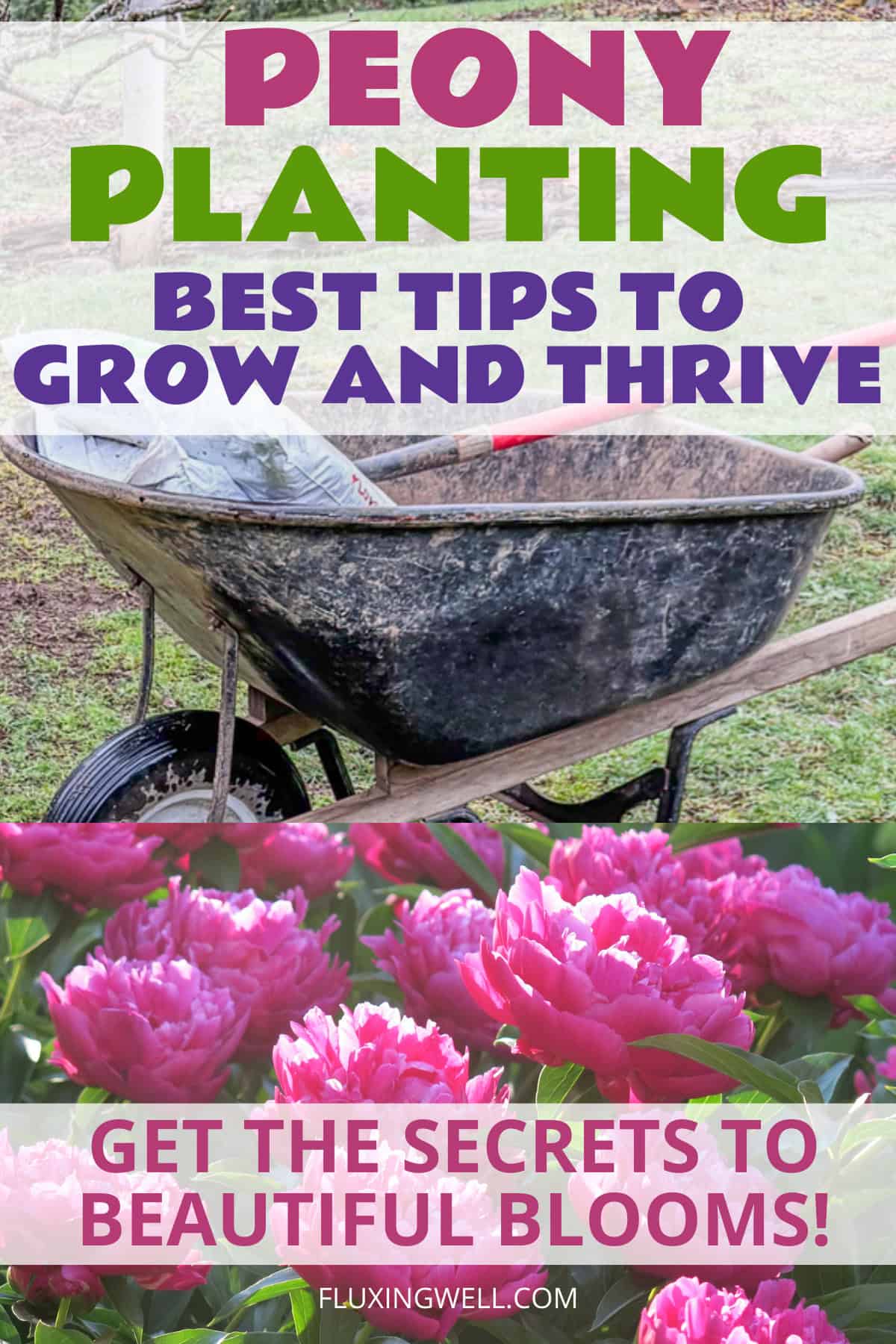
Choosing the Best Location for Peonies in the Garden
Peonies thrive in full sun, needing at least six hours of direct sunlight daily. Choose a spot with good air circulation to help prevent disease, and avoid planting too close to trees or shrubs that will compete for nutrients and water.
Peonies Garden Flower Beds: Soil Preparation and Spacing
Peonies prefer well-draining, fertile soil with a slightly neutral pH. Amend heavy clay soil with compost before planting. Space plants about three feet apart to allow for good airflow and mature growth.
When and How Deep to Plant Peonies
Plant peonies in fall for the best results. The most critical rule: plant the eyes — the red or pink buds on the root — no more than one to two inches below the soil surface. Planting too deep is the number one reason peonies fail to bloom.
Peonies in Front Yard Beds: Placement Tips
Peonies make spectacular front yard plants. Use them as a low flowering hedge along a walkway, as anchors in a mixed border, or as a standalone focal point. Their lush foliage remains attractive even after blooming season ends.
Growing Peonies in Pots and Containers
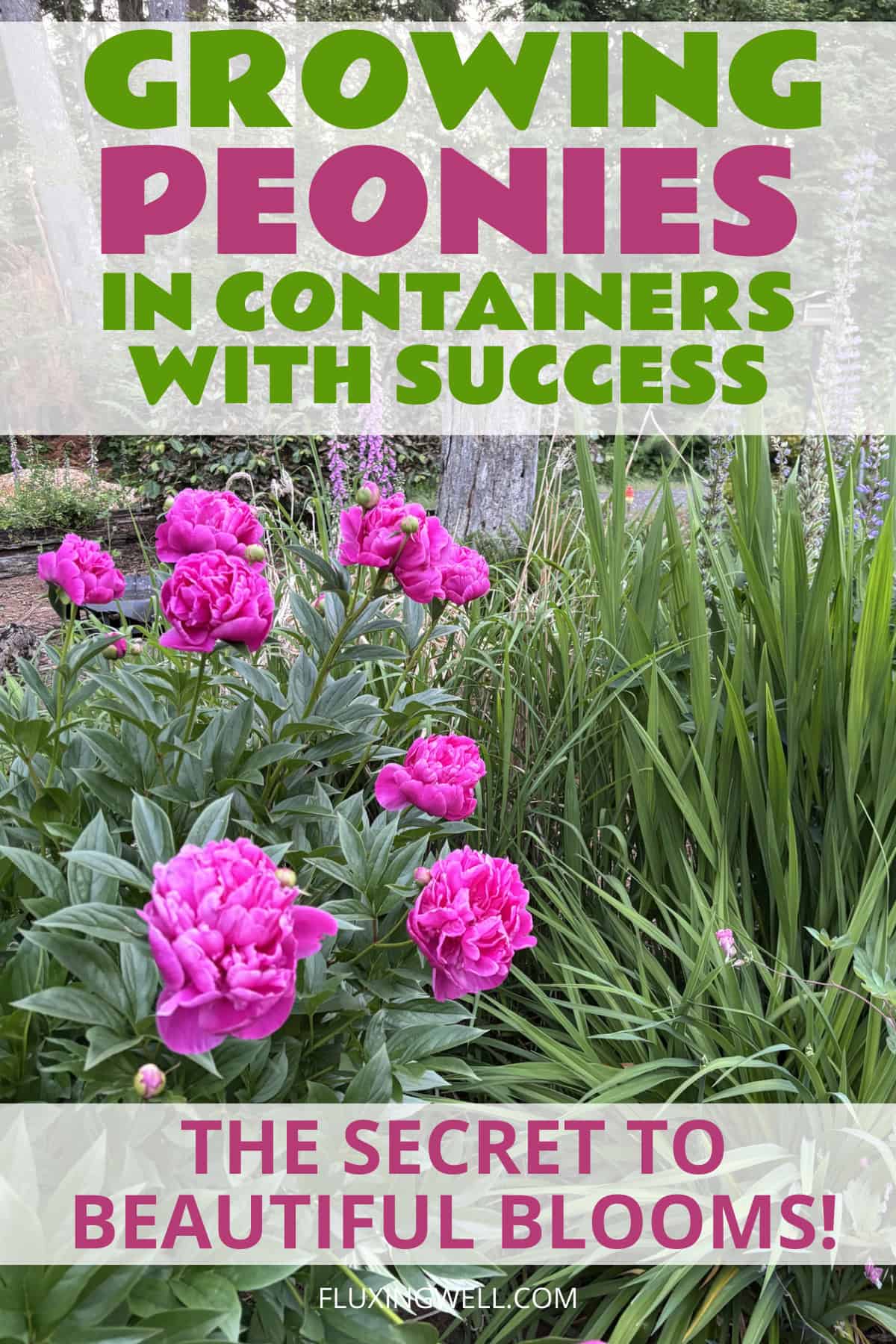
Best Pots and Containers for Potted Peonies
Choose a large container at least 18 to 24 inches wide and deep with excellent drainage holes. Potted peonies need room for their root system to develop, so bigger is always better here.

Soil and Fertilizer for Peonies in Pots
Use a high-quality potting mix blended with compost for container peonies. Feed with a low-nitrogen, high-phosphorus fertilizer in early spring to encourage blooming rather than excessive leafy growth.
Watering and Drainage Tips for Container Peonies
Container peonies dry out faster than those in the ground, so check soil moisture regularly. Water deeply when the top inch of soil feels dry, but never let the roots sit in standing water, as this leads to rot.
Best Peony Varieties for Pots and Small Spaces
Compact herbaceous varieties and itoh peonies tend to do best in containers. Look for varieties labeled as dwarf or compact at your local nursery for the most success in smaller spaces.
How to Care for Peonies Throughout the Year
Spring Care: What to Do When Peonies Emerge
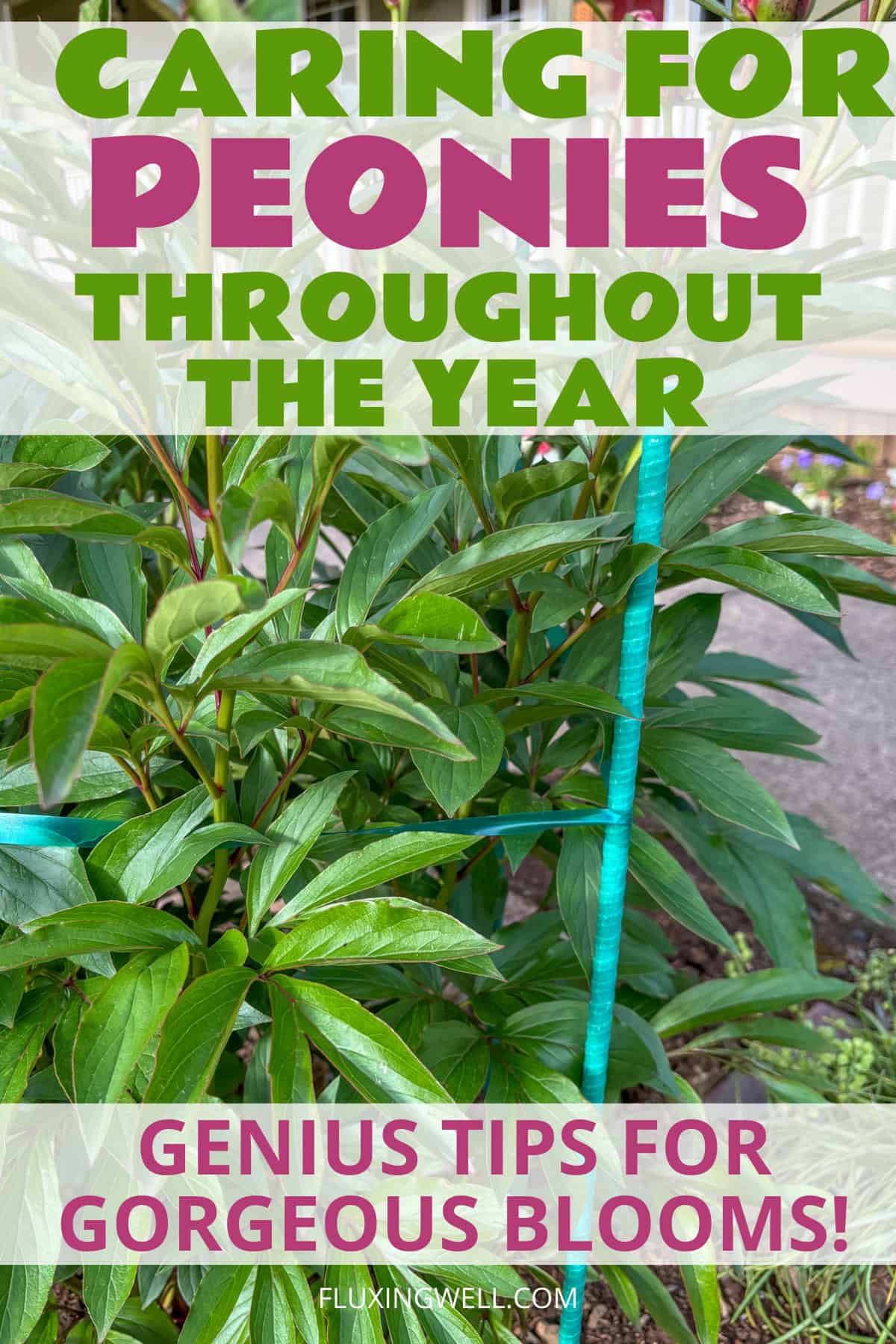
As soon as shoots appear, remove any winter mulch and apply a balanced fertilizer around the base of the plant. This is also a good time to set up support cages or stakes before the plants get too tall. Some people use peony cages, but most of our plants are too large for that.

For our peonies, we use stakes and garden tape for supports. We got tired of our flimsy wooden stakes breaking, so this year, we are trying sturdy fiberglass rebar. Cut the pieces to about four feet in length, and you also want to make sure you wear gloves when inserting the stakes into the ground to avoid tiny fiberglass slivers.


Summer Care: Watering, Feeding, and Supporting Blooms
Water peonies deeply once a week during dry spells. Deadhead spent blooms to keep the plant looking tidy, and allow the foliage to remain until fall so the plant can store energy for next year’s blooms.
How to Prune Peonies After They Bloom
Herbaceous peonies should be cut back to the ground in fall after the foliage has died back naturally. Tree peonies only need light pruning to remove dead or crossing branches. Never cut them back hard.
Fall Care: Cutting Back and Preparing for Winter
Cut herbaceous peonies down to about an inch above the ground after the first hard frost. Remove and dispose of all foliage rather than composting it, as this helps prevent disease from overwintering in the garden.
Winter Peonies: How to Protect Them in Cold Climates
In colder climates, apply a light layer of mulch over the crown after the ground freezes to protect against extreme temperature swings. Remove the mulch in early spring as soon as new growth begins to emerge.
Peonies Landscaping Ideas for Every Yard

Peonies in Front Yard Landscaping
A row of peonies along a fence or front walkway creates a classic, cottage-style look that never goes out of style. Pair them with ornamental grasses or low-growing perennials to extend the season of interest. We have one peony in our front yard that is surrounded by low-growing, brilliant blue lithodora.
Peonies in Garden Beds and Borders
In mixed borders, peonies pair beautifully with late spring bulbs and early summer perennials. Their bold blooms create a natural focal point, while their lush green foliage fills in the border all season long. We have peonies growing in our front yard in the border between our lawn and our driveway.
Using Peonies in Pots for Patios and Porches
A pair of large potted peonies flanking a front door or patio entrance makes an elegant and welcoming statement. Choose a single color variety for a clean, polished look or mix colors for a cottage garden feel.
What to Plant With Peonies
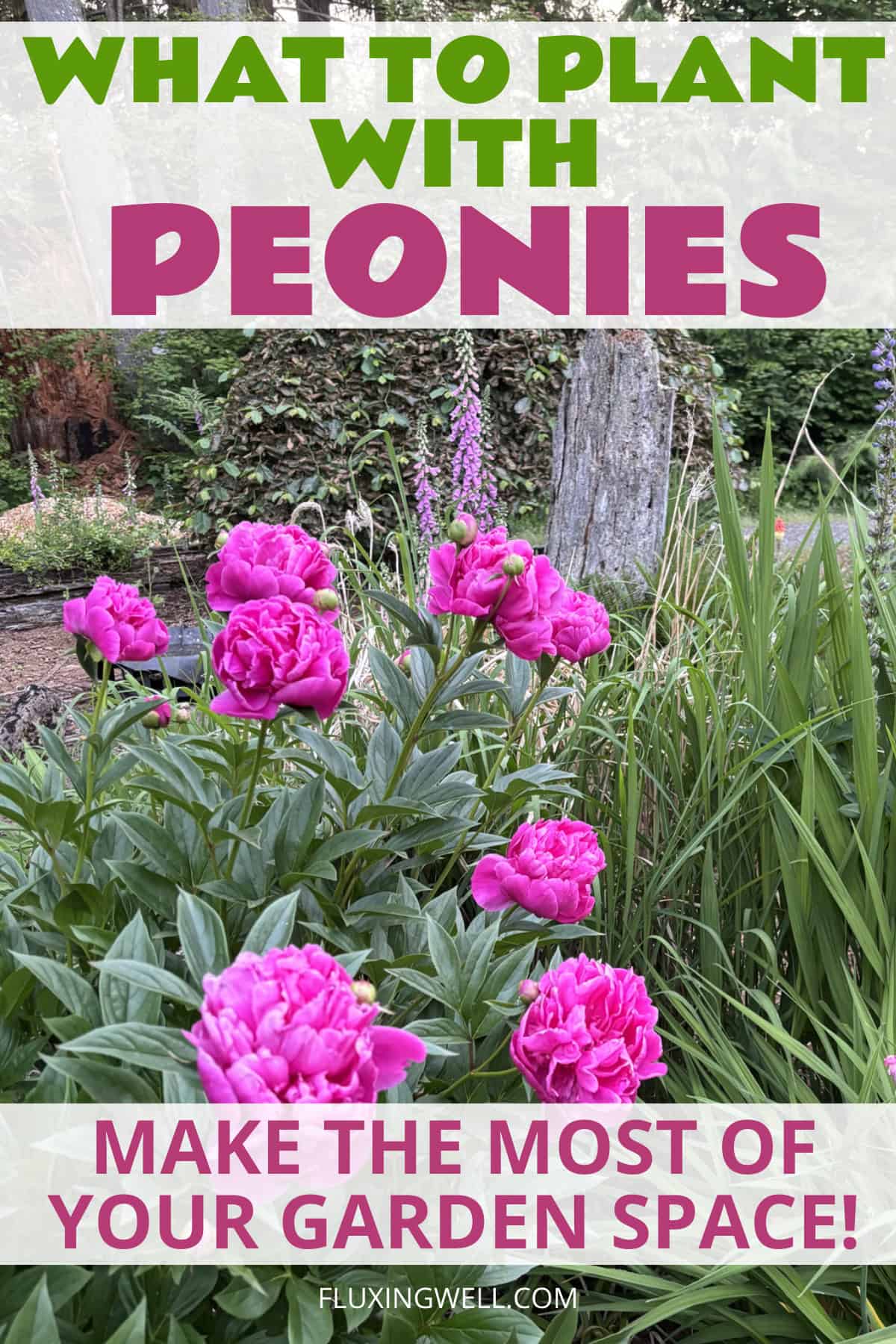
Many flowering plants make excellent companions for peonies. See my post about peony companion plants for an extensive list. Here are a few favorite combinations.
Peonies and Roses: A Classic Garden Pairing
Roses and peonies bloom at similar times and share similar growing needs, making them natural companions. The combination of rose and peony blooms in shades of pink, white, and blush creates a romantic, timeless garden display.
Peonies and Hydrangeas for a Lush Garden Look
Hydrangeas bloom after peonies fade, making them perfect partners for extending the flower season. Their large mophead blooms complement the lush, full form of peony plants beautifully.
Peonies and Lavender for a Cottage Garden Feel
The soft purple spikes of lavender provide a lovely color contrast to pink and blush peonies. Lavender also helps attract pollinators to the garden, which benefits all your surrounding plants.
Peonies and Tulips for a Spring Succession of Blooms
Plant tulips among your peonies for a seamless succession of spring color. Tulips will bloom just before peonies, and their dying foliage is easily hidden by the emerging peony growth.
How to Cut Peonies for a Vase

When to Cut Peonies for the Longest Vase Life
Cut peonies when the buds are still soft and closed, at what growers call the “marshmallow stage.” Buds at this stage will open beautifully indoors and last up to a week or more in a vase.
How to Cut Peonies for a Vase Step by Step
Use clean, sharp scissors or pruners and cut stems at an angle early in the morning. Remove any foliage that will fall below the waterline, place immediately in cool water, and change the water every two days. My favorite pruning shears are made by Felco.

Peonies Flower Arrangement Tips for Beginners
Peonies are stunning on their own in a simple vase, but they also pair beautifully with greenery, roses, and ranunculus for a lush, garden-style arrangement. Use a variety of bud stages for the most natural, layered look.
Troubleshooting Common Peony Problems
Why Are My Peonies Not Blooming
The most common culprits are planting too deep, too much shade, over-fertilizing with nitrogen, or plants that are simply too young. Most peonies need two to three years to establish before blooming reliably.
Peonies and Ants: Should You Be Worried
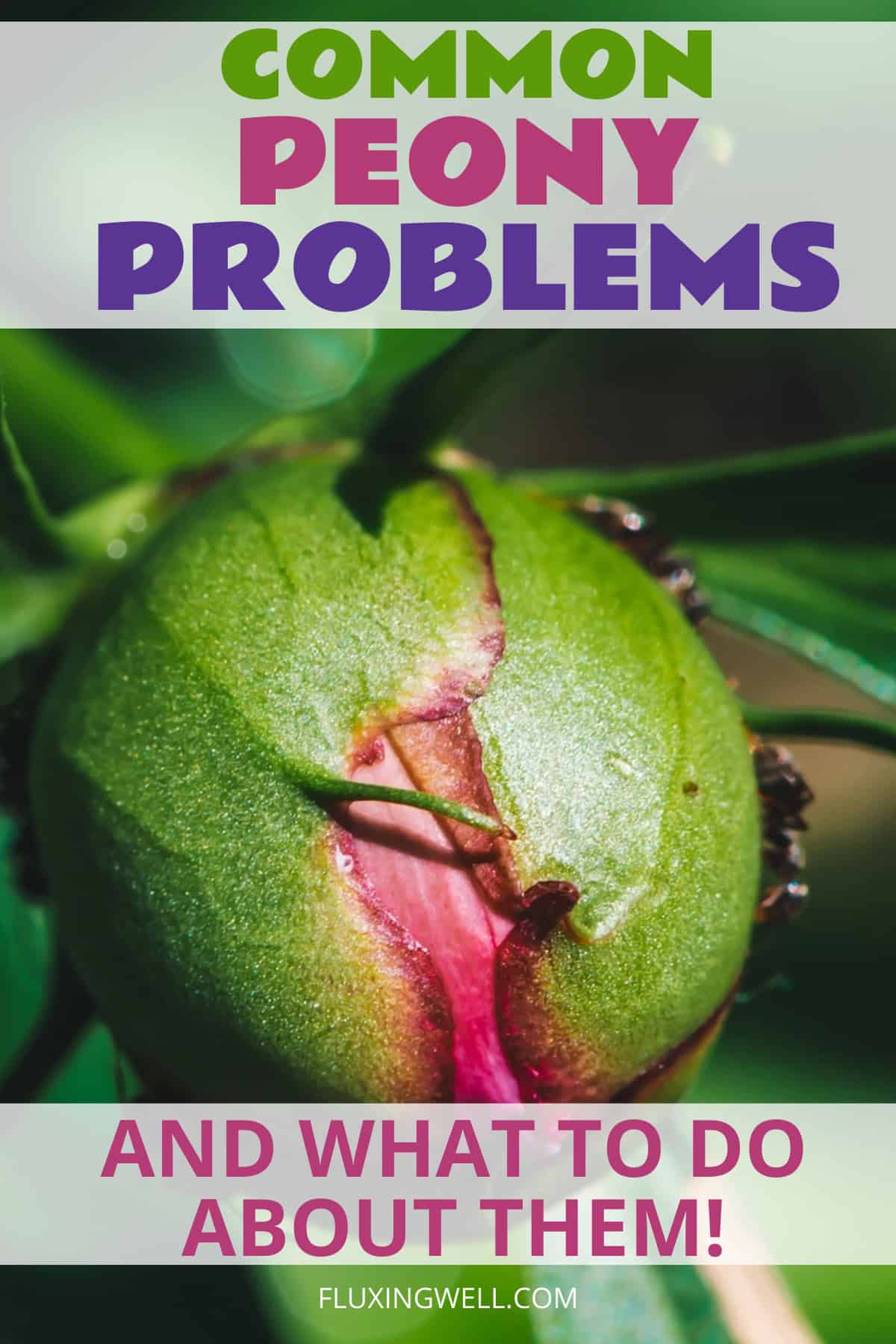
Ants on peony buds are completely normal and harmless. They are attracted to the sweet nectar the buds produce and actually help the buds open. No need to spray or remove them. This happens to our peony buds every year. Just make sure to examine blooms thoroughly for any remaining ants before adding to a cut flower arrangement.
Do Deer Eat Peonies
Good news for gardeners in deer country: peonies are generally considered deer-resistant. Their strong fragrance tends to deter deer, making them a smart choice for gardens in areas with heavy deer pressure.
Frequently Asked Questions About Growing Peonies
How Long Do Peonies Take to Bloom
Most peonies take two to three years after planting to produce their first full bloom. The wait is absolutely worth it, as established plants produce more and more flowers with each passing year.
Do Peonies Spread in the Garden
Peonies grow slowly and do not spread aggressively. They gradually expand in clump size over many years but will not take over your garden the way some perennials do.
How Long Do Peonies Live
With proper care, peonies can live for 50 to 100 years or more. There are documented cases of peony plants outliving the gardeners who planted them, which makes them one of the most enduring investments in any garden.
Can You Grow Peonies in Pots Long Term
Yes, with the right container, soil, and care routine, peonies can thrive in pots for several years. They will eventually need dividing or repotting, but container growing is absolutely a viable long-term option for smaller gardens and patios.
Are You Now Thinking of Growing Peonies?
Growing peonies is one of the most rewarding things you can do in the garden. With a little patience and the right care, these stunning flowers will reward you with decades of breathtaking blooms season after season.
Need More Planting Ideas?
Get a list of deer-resistant vegetables and herbs here. Check out the tips for the best companion plants for hydrangeas to learn what to grow with those beauties. If you like the idea of companion planting, you might be interested in reading about companion plants for irises, sunflowers, garlic, asparagus, rosemary, radishes, beetroot (beets), thyme, parsley, lupine, borage, stevia, kale, dahlias, or the best companion plants for lavender. Get tips for growing stunning dahlias or vintage roses. Are you a beginning gardener? Try planting some foolproof, easy-care perennials, or learning about the best companion plants for columbine. There are so many exciting plants to grow!
Keep Track of Your Garden with a Journal Logbook
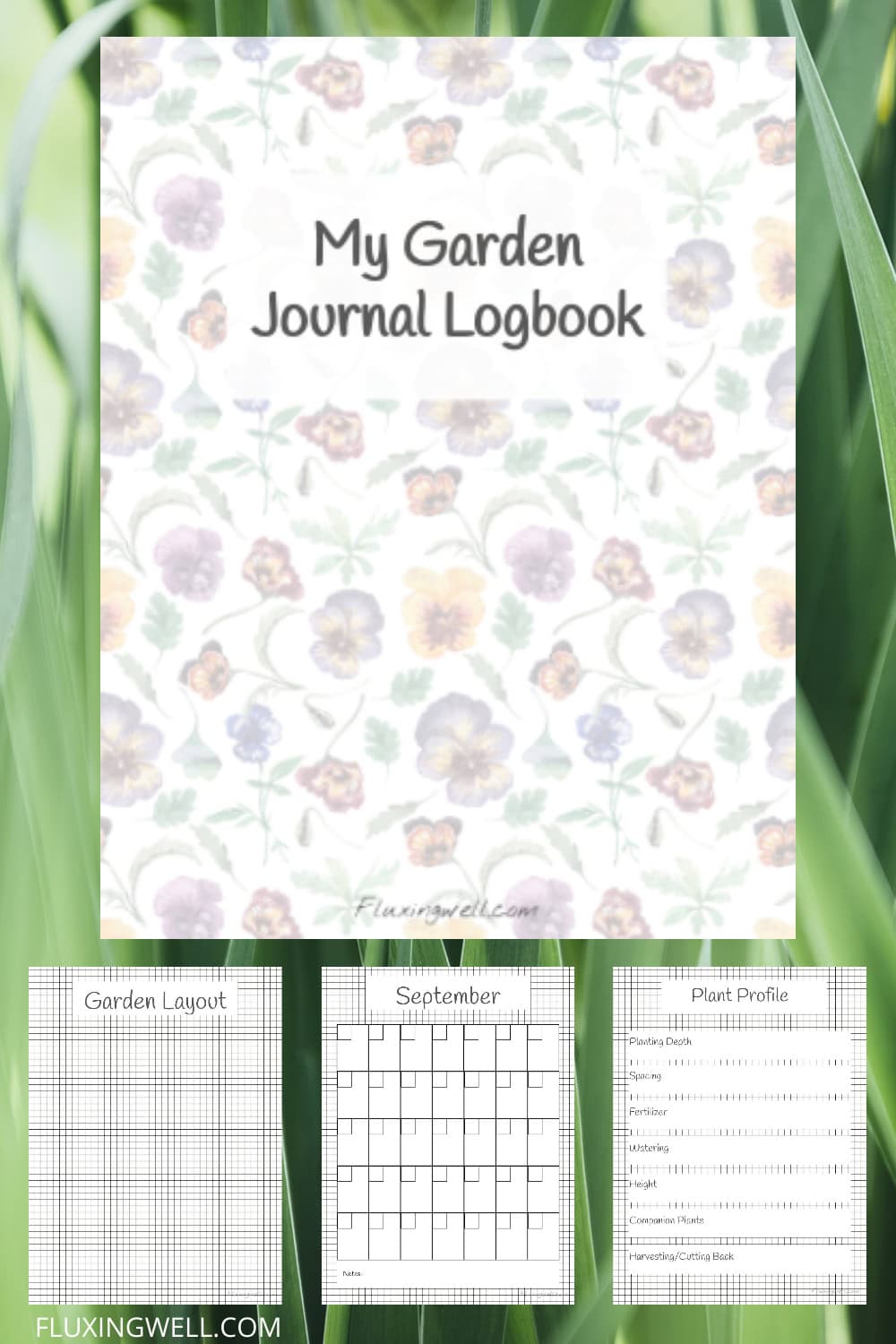
Now that you have learned about growing peonies, keep track of your planting ideas, goals, and plans with a printable, editable free garden journal logbook. Choose the pages you want to use and customize them as you wish to record monthly, weekly, and daily garden tasks, lists, weather, and planting arrangements. There are also grid pages for easily designing the layout of your vegetable garden, flower garden, or landscape. Print it out and put it into a notebook you can take with you to the garden (that’s what I do). It’s nice to have all of your garden information in one place.
Free Online Garden Planner Layout Template
Now that you know which are the best companion plants for arugula, you might need a way to plan your garden layout. Whether you are planting vegetables, flowers, or herbs near your lupine plants, this online garden planner can help you visualize your design and bring it to life. Arrange and rearrange the plants over and over, then print the layout when you are satisfied. With garden tasks that need your attention, this is one way to save time.

It’s fully customizable when you make your own copy and includes two editable chart pages for noting planting specifications.
Get my free online garden layout planner template!
Have a wonderful day, and may all of your peony-growing endeavors meet with great success!
Lisa Mitchell is a wife, mom, and school librarian who likes to grow fruit, herbs, vegetables, and flowers on her family’s small Pacific Northwest farm. To learn more about what this website has to offer gardeners, click on over to the Garden page.
Wow! Didn’t know there different types of peonies for landscaping. Options for doing different things. And there there were cages for peonies. You’re giving me ideas.
Great! I’m so glad you found the peony growing tips and ideas helpful.
Thank you for this helpful guide of the types of peonies for any type of landscape. They are gorgeous blooms and can really make the most of a garden! Bonus they are deer resistant for my deer-loving backyard garden, too!
Yes, the deer leave our peonies alone. This time of year, we have a lot to choose from, and I don’t want my yard to become a deer buffet!
Peonies are the state flower of Indiana where I live, so this peony planting guide is extra special to me. Thanks for sharing!
Hooray for peonies! I didn’t know they are Indiana’s state flower. Thank you for your kind words, and happy peony-growing!
Oh, this is wonderful! I love peonies, so I appreciate this guide about how to grow them. Very inspiring and informative!
I’m so glad you liked the information. Happy peony-growing!