
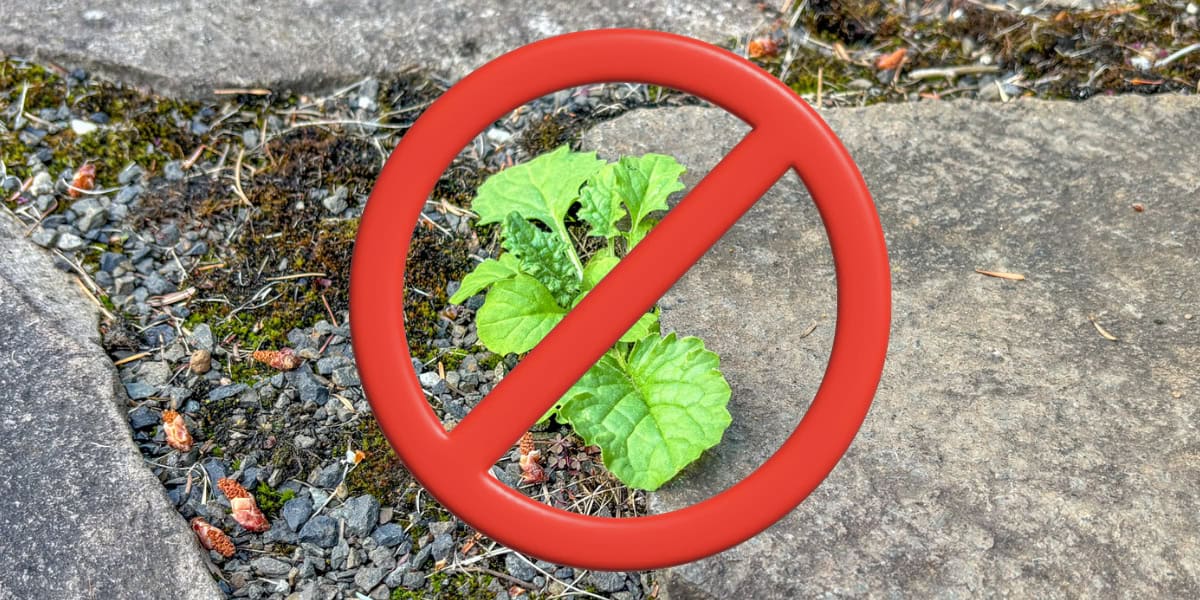
Nothing ruins the look of a beautiful garden path faster than stubborn weeds popping up where they don’t belong. Whether you’re trying to learn how to prevent weeds growing between pavers or find a ground cover that chokes out weeds naturally, there are plenty of effective solutions. Whether your pathway is made of homemade stepping stones or made of natural stone, these ideas should work for you. From simple sidewalk landscaping ideas to the best tool to remove weeds from pavers, these practical tips will help you spend less time pulling weeds and more time enjoying your outdoor space. In my USDA Plant Hardiness Zone 8b yard on our small farm in the Pacific Northwest, I’ve had over three decades of experience battling weeds. Although it’s an ongoing task, preventing weeds between pavers now takes up far less time than it used to. Read on for the simple solutions to make your pavers less likely to become weed havens.
My Garden Paver Backstory
Where we live, in the foothills of Mt. Hood in Oregon, rock gathering in the nearby Mt. Hood National Forest is allowed. You can read the guidelines here. Years ago, when we were landscaping our front yard, we gathered some slate to create a stone paver pathway around the west and south edges of our lawn. Here it is, below.
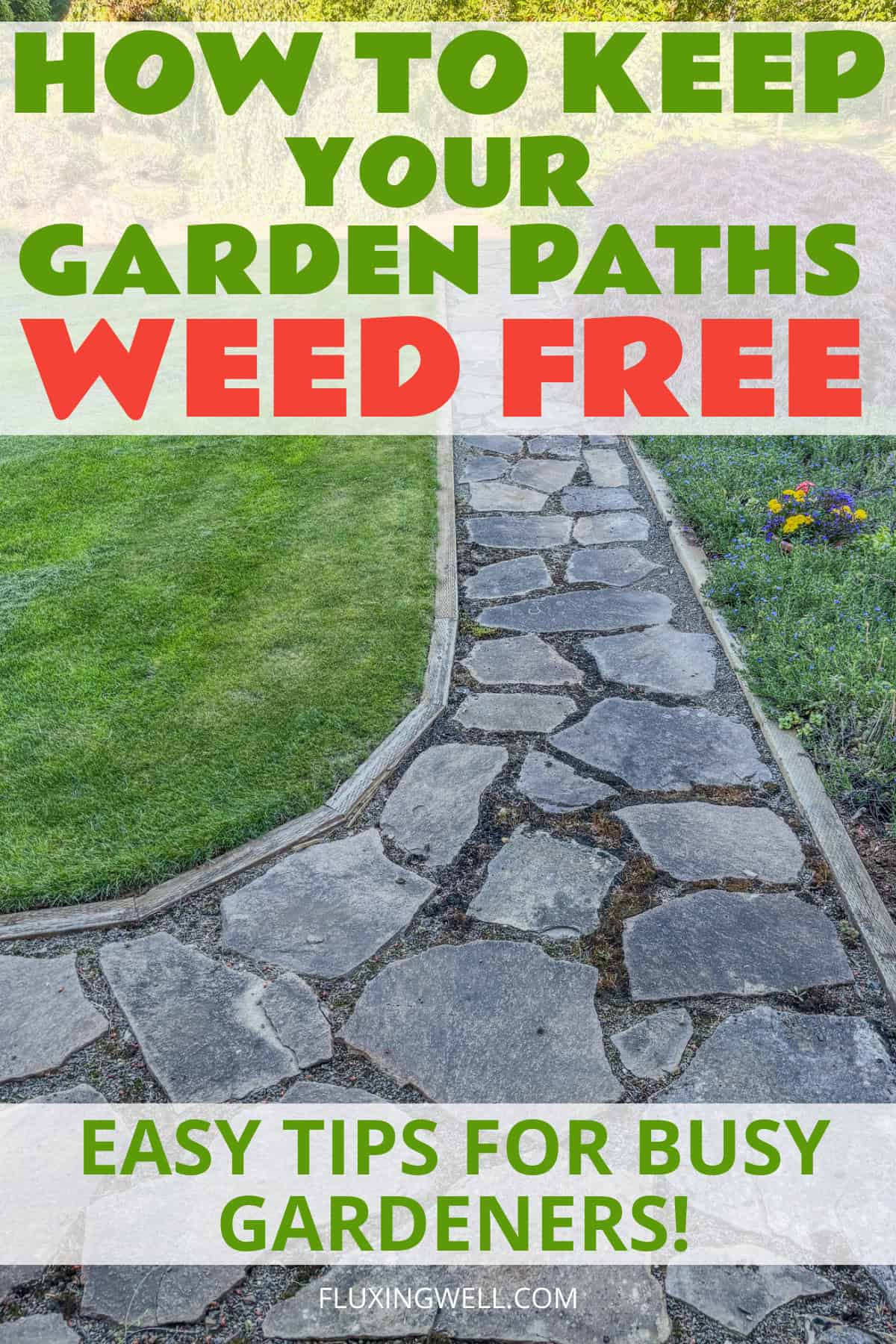
Over the years, we have worked to maintain a natural look while keeping the slate stones weed free, and have tried a number of techniques. Here are the ones that have been effective.
Polymeric Sand
Polymeric sand is one of the most effective ways to prevent weeds from growing between pavers. This special sand contains binding agents that harden when activated with water, creating a firm joint that makes it difficult for weed seeds to take root. Proper installation can significantly reduce weed growth while also helping to prevent erosion and insect activity.

Regularly Sweep Debris Away
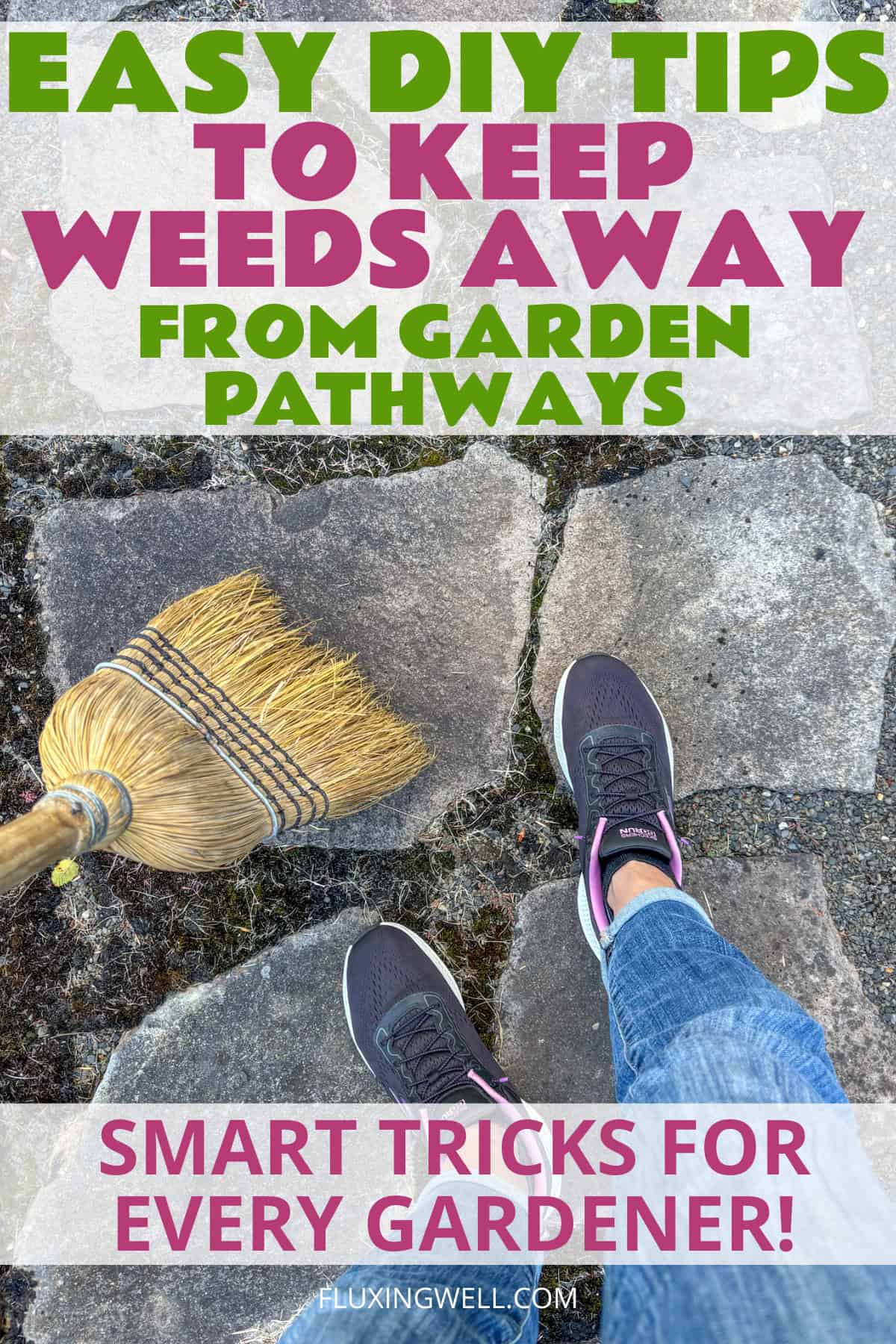
Weeds often sprout when dirt, leaves, and organic matter accumulate in paver joints. Regular sweeping removes the material that weed seeds need to germinate and grow. A quick weekly sweep can go a long way toward keeping paver surfaces clean and weed-free.
Apply a Pre-Emergent Herbicide
Pre-emergent herbicides prevent weed seeds from germinating before they have a chance to grow. Applying a product labeled for use around pavers in early spring can help stop many common weeds before they appear. Always follow the manufacturer’s directions for safe and effective use.

Use Vinegar for Spot Treatments
Household vinegar can be an effective option for killing young weeds growing between pavers. Spraying weeds on a sunny day can damage their foliage and slow growth. Since vinegar typically kills only the top growth, repeated applications may be necessary for persistent weeds.
Pull Weeds as Soon as They Appear
Removing weeds while they are small prevents them from developing deep roots and producing seeds. Regular inspection and prompt removal can keep minor weed problems from becoming major infestations. Moist soil after rain often makes weeds easier to pull completely.
Use a Weed Removal Tool
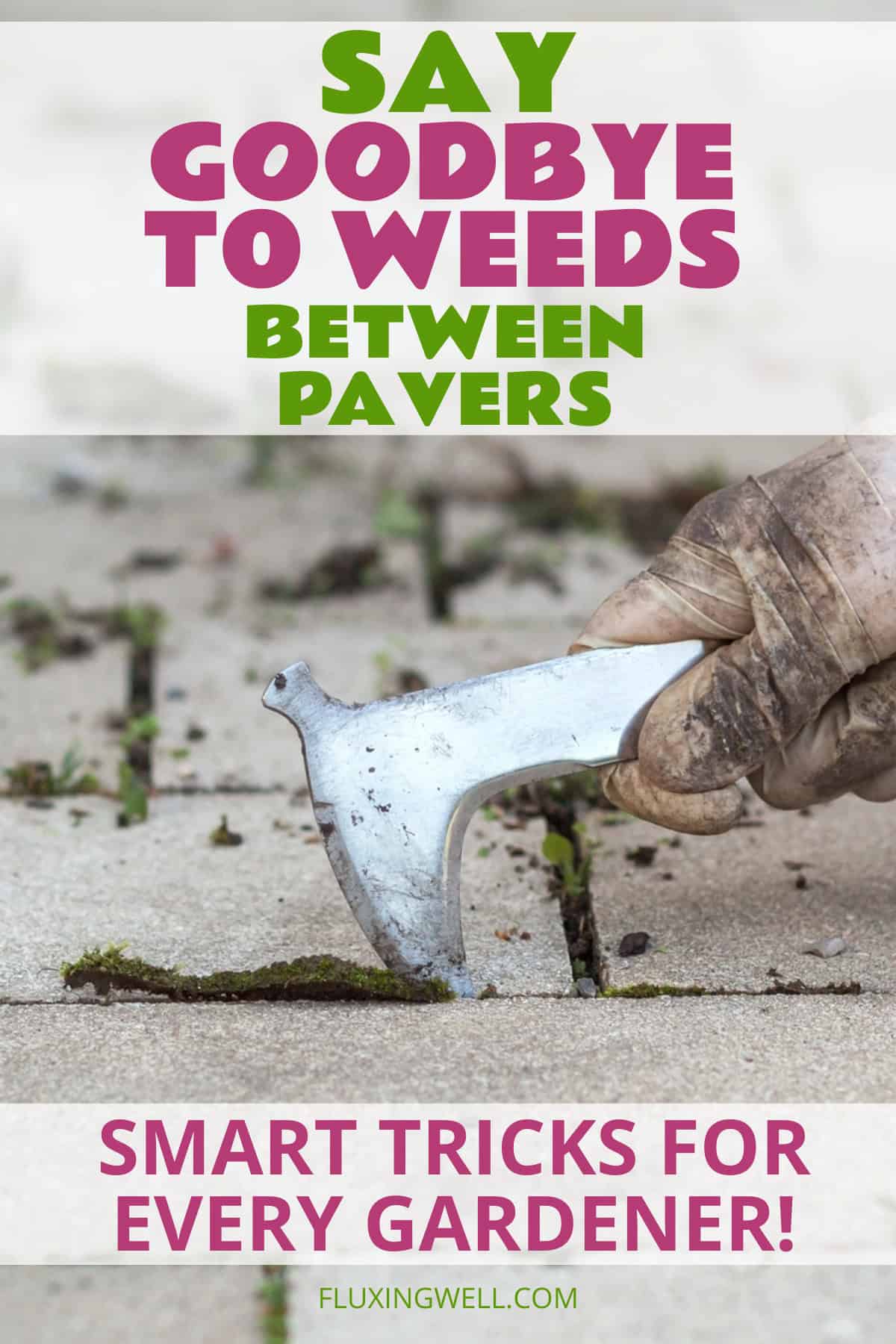
A specialized tool to remove weeds from pavers can make maintenance faster and easier. These tools are designed to scrape or hook weeds out of narrow joints while minimizing strain on your hands and back. Many gardeners find them especially useful for larger paved areas.

There are also smaller, hand-weeding tools designed for weeding between pavers as well. The one I use was a wedding gift years ago, and it has served me well.
Seal the Pavers
Applying a quality paver sealer can help reduce weed growth by limiting moisture and preventing soil from accumulating in the joints. Sealing also enhances the appearance of the pavers and can protect them from staining and weather damage.

Pour Boiling Water on Weeds
This is my go-to solution for weeds in the cracks of our paved driveway as well. Boiling water is a simple, chemical-free method for killing weeds between pavers. The heat destroys plant tissue and can be especially effective on newly emerged weeds. Care should be taken to avoid nearby ornamental plants, as the hot water can damage any vegetation it contacts.
Improve Drainage
Poor drainage creates damp conditions that encourage weed growth. Ensuring that pavers are properly graded and that water drains away efficiently can make the area less hospitable to weeds. Good drainage also helps maintain the stability and longevity of the paved surface.
Fill Gaps Promptly
Over time, paver joints can lose sand due to rain, foot traffic, and weathering. Refilling gaps before they become large prevents soil and debris from collecting in the spaces. Maintaining well-filled joints makes it much harder for weeds to gain a foothold. In addition to sand, we filled in the areas between the pavers with pea gravel.
Grow Hardy Ground Cover Plants in Between Pavers
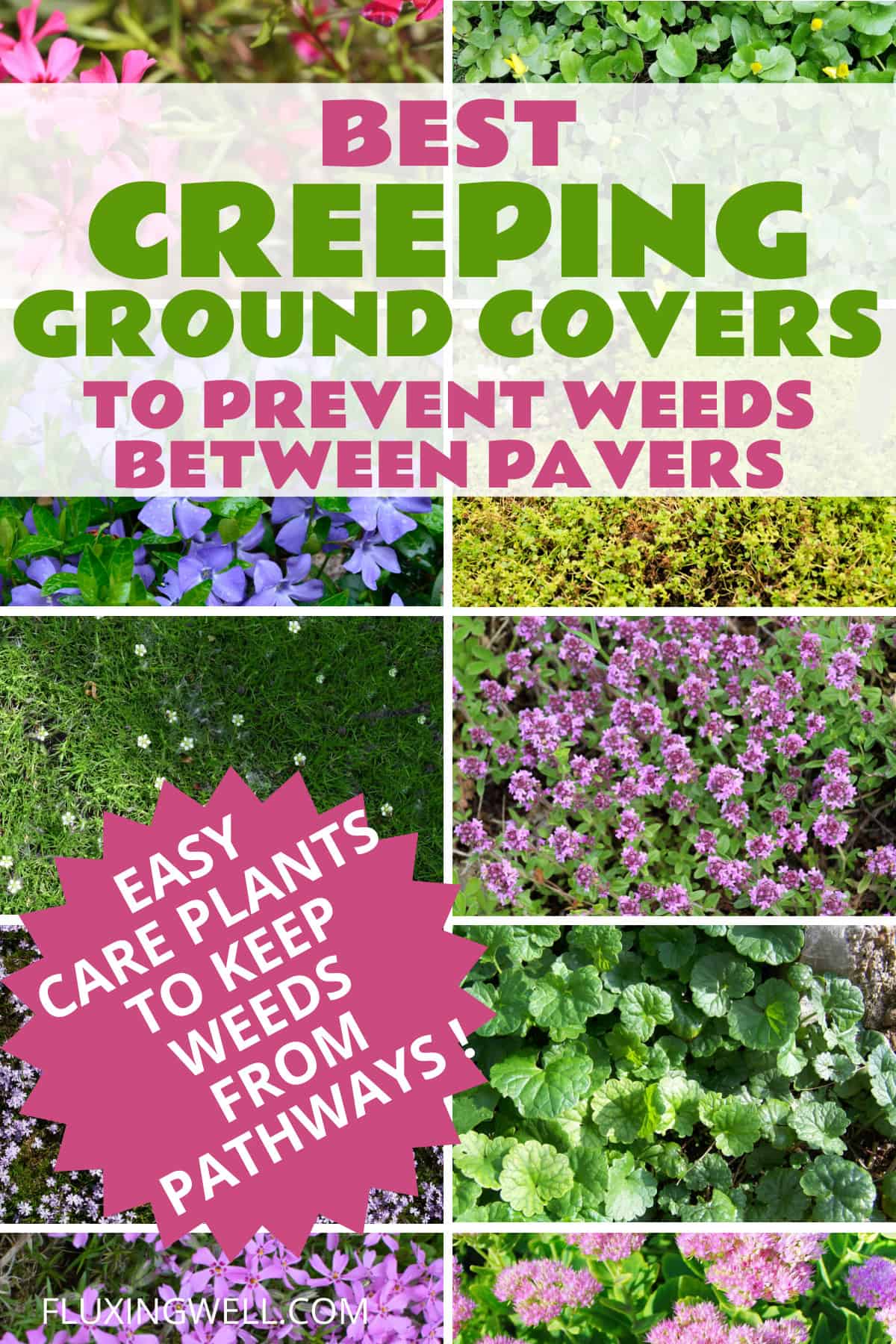
The trick is to choose a type of low-growing plant that can withstand foot traffic. Ideally, the plant would be well-behaved and grow only between the pavers without taking over the actual paver stones. We found that creeping thyme looked lovely for a few years and filled in the gaps nicely. Eventually, we had to pull it out because it was growing too well, and we had to spend a lot of time keeping it from covering the stones themselves. It, or another similar groundcover plant, might be a good weed-preventing solution for you. Here are ground cover options that might work well, along with brief descriptions:
Creeping Thyme
One of the most popular choices for growing between paving stones, creeping thyme forms a dense mat of fragrant foliage and produces tiny pink, purple, or white flowers in summer. It tolerates light foot traffic, drought, and poor soil once established.
Irish Moss
Despite its name, Irish moss is not a true moss. It creates a lush, carpet-like layer of bright green foliage and is covered with small white flowers in late spring. It works best in cooler climates and areas with moderate moisture.
Corsican Mint
This low-growing herb spreads quickly between stones and releases a refreshing minty scent when stepped on. It prefers some moisture and partial shade, making it ideal for pathways that do not dry out completely.
Blue Star Creeper
A favorite for garden paths, blue star creeper forms a dense mat of tiny green leaves and delicate blue flowers. It tolerates occasional foot traffic and can fill gaps between pavers relatively quickly.
Creeping Jenny
Known for its bright chartreuse foliage, creeping Jenny adds a splash of color between stones. It spreads readily and helps suppress weeds while thriving in both sun and partial shade.
Sedum
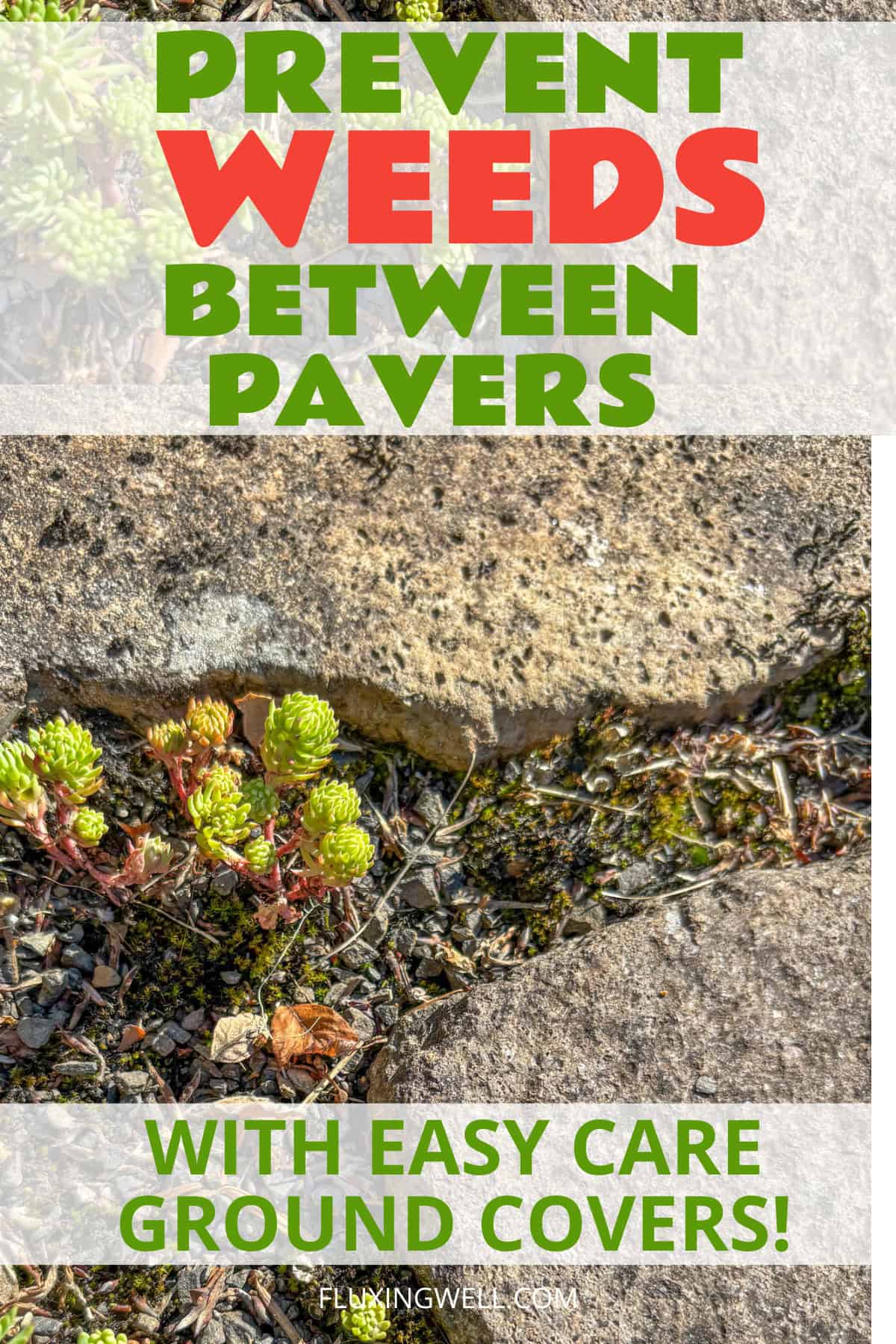
Many low-growing sedum varieties are excellent for sunny pathways. Their succulent leaves store water, making them extremely drought tolerant. They come in a range of foliage colors and often produce clusters of flowers that attract pollinators.
Woolly Thyme
This unique thyme variety has soft, silvery-gray foliage that creates a textured look between pavers. It requires very little water and thrives in hot, sunny locations with good drainage.
Mazus
Mazus is a fast-spreading ground cover with attractive purple-blue flowers in spring and early summer. It forms a thick mat that helps crowd out weeds and tolerates occasional foot traffic.
Creeping Phlox
This colorful ground cover produces masses of flowers in spring and evergreen foliage in many climates. It works especially well between larger paving stones where there is room to spread.
Dwarf Mondo Grass
Dwarf mondo grass creates neat clumps of dark green, grass-like foliage that gradually fill spaces between stones. It is highly durable, shade-tolerant, and remains attractive year-round in mild climates.
For sunny, dry pathways, creeping thyme, woolly thyme, and sedum are usually the most successful choices. For shadier or moister locations, Irish moss, Corsican mint, and dwarf mondo grass tend to perform better while still helping prevent weeds naturally. Keep a careful eye on whatever you choose, as you may need to rein in aggressive, spreading growth if the plants, like our creeping thyme, grow too vigorously.
Other Ways to Prevent Weeds Growing Between Pavers
Install Landscape Fabric Beneath Pavers
Although we have used landscape fabric in other areas of our yard, we didn’t use it under our walkway. It is a possibility, but you would want to make sure that you fill in the gaps between pavers with sand or pea gravel in order to hide the fabric from view. When building a new patio or walkway, placing landscape fabric beneath the base layer can help block weeds from growing up through the soil. While it won’t stop every weed, especially those that germinate from windblown seeds above, it can reduce the number of weeds emerging from below.

Use a Propane Weed Torch
We haven’t had to resort to this strategy, but what a great idea. A propane weed torch quickly destroys weeds by exposing them to intense heat. This method is often used on driveways, patios, and walkways where weeds repeatedly emerge. Always follow safety guidelines and avoid using a torch near dry vegetation or flammable materials.

Free Online Garden Planner Layout Template
Now that you know how to prevent weeds from growing between your garden pavers, you might need a way to plan your landscape or garden layout. This online garden planner can help you visualize your design and bring it to life. With garden tasks that need your attention, this is one way to save time.

Get my free online garden layout planner template!
It’s fully customizable when you make your own copy and includes two editable chart pages for noting planting specifications.
Organize Your Garden Tasks with a Free Garden Planner Notebook
As a result of needing to keep track of garden tasks throughout the year, I decided to begin a garden planner notebook. It has a page for each month, along with notes pages. If a garden planner notebook seems like a good idea to you, good news! You can get it here!

Get the garden notebook!
Other Garden Posts You Might Enjoy
If you are artistically challenged like I am, here’s how to plant flower containers with confidence. Looking for an easy way to add some vertical interest to your vegetable garden? Check out this post about making an easy DIY pole bean tower. If you’re a fan of dahlias and want to learn how to fearlessly divide dahlia tubers, I’ve got you covered. If the weather is too crummy to go outdoors, create some garden-inspired art with this easy pointillism project.
Whatever method you choose to prevent weeds from growing between pavers, I wish you great success. May you enjoy a weed-free (or as weed-free as possible) walkway for many years to come!

Lisa Mitchell is a wife, mom, and school librarian who likes to grow fruit, herbs, vegetables, and flowers on her family’s small Pacific Northwest farm. To learn more about what this website has to offer gardeners, click on over to the Garden page.
Want more great garden, food, or travel ideas? Follow FluxingWell on Pinterest, Facebook, Instagram, and X for the latest posts, tips, and inspiration.
Such an awesome post! My grandparents have a very lovely home, and it’s very well kept! The front yard looks really good and healthy! I wonder if they use some of these ideas to take care of the yard. My grandfather also constructed the pave way just like you! These tips are awesome! I need to ask my grandparents how they deal with weeds! Thankyou for sharing!
You are most welcome! I’d be happy to learn any yard care tips your grandparents would care to share.=)
I’ve been bothered by weeds – so these tips on how to take of weeds between pavers are helpful. Need to figure out which to use and which will be successful for torpedo grass.
I’ll have to look up torpedo grass. I don’t know if we have it where I live. May you have success in your weed-fighting efforts!
Thank you for these helpful tips on how to keep my garden path weed free! I’m excited to try the boiling water tip for a chemical-free method.
Yes, the boiling water method is quick, easy, and without chemicals. It’s my favorite speedy solution for weeds in the cracks of pavement as well.
What a great resource for preventing weeds between paver stones! You have some excellent strategies, and I especially like all of the ground cover suggestions.
Oh, thank you! I’d much rather have lovely, fragrant flowering thyme between my paver stones than pesky weeds. Glad you liked the suggestions!
Thank you, thank you for these easy solutions to preventing weeds between paver stones. We have a variety of different types in our landscape and I am forever trying to get rid of them. I will use your ideas for sure!
Oh, you are so welcome. Yes, anytime a see a pesky weed pop up in between paving stones, I have a variety of quick and easy strategies to choose from.