
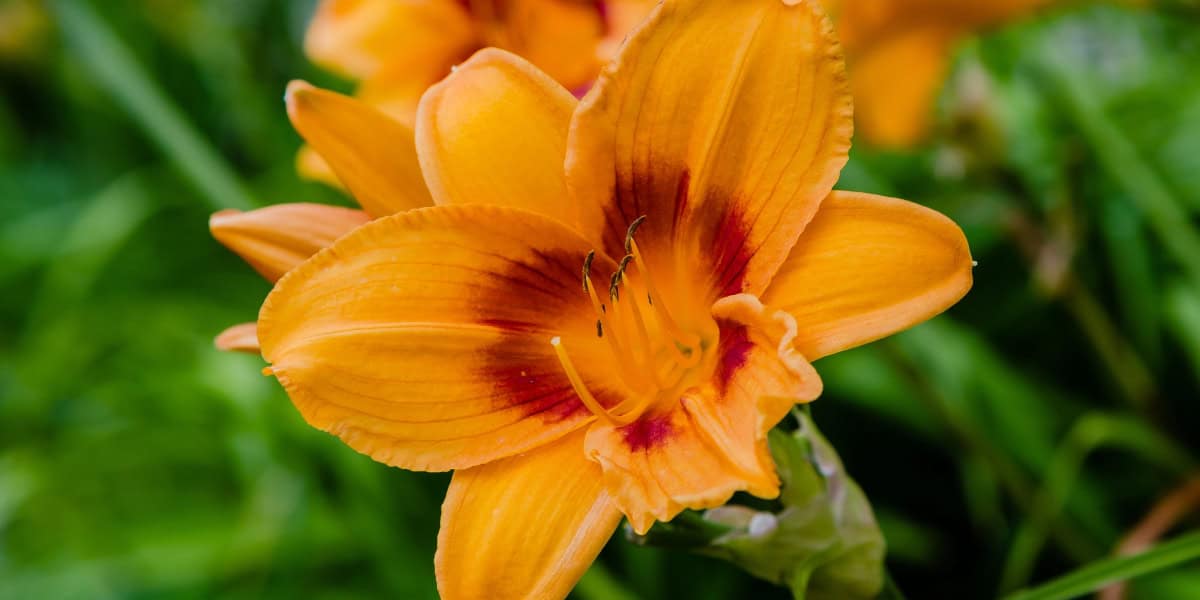
Daylilies are among the easiest and most rewarding perennials to grow, but the right companion plants can make them even more spectacular. I have had daylilies growing in our USDA Plant Hardiness Zone 8b perennial garden and other areas of our landscape for years, and they are so easy to care for. Whether you’re planning a beautiful daylily garden, looking for daylily garden ideas for flower beds, or wondering what to plant with daylilies, choosing complementary flowers, shrubs, and grasses adds color, texture, and season-long interest. From cheerful yellow daylily companion plants to classic perennial pairings, these combinations will help you create a landscape that’s as beautiful as it is easy to maintain. Read on to get the daylily companion plant ideas!
My Daylily Backstory
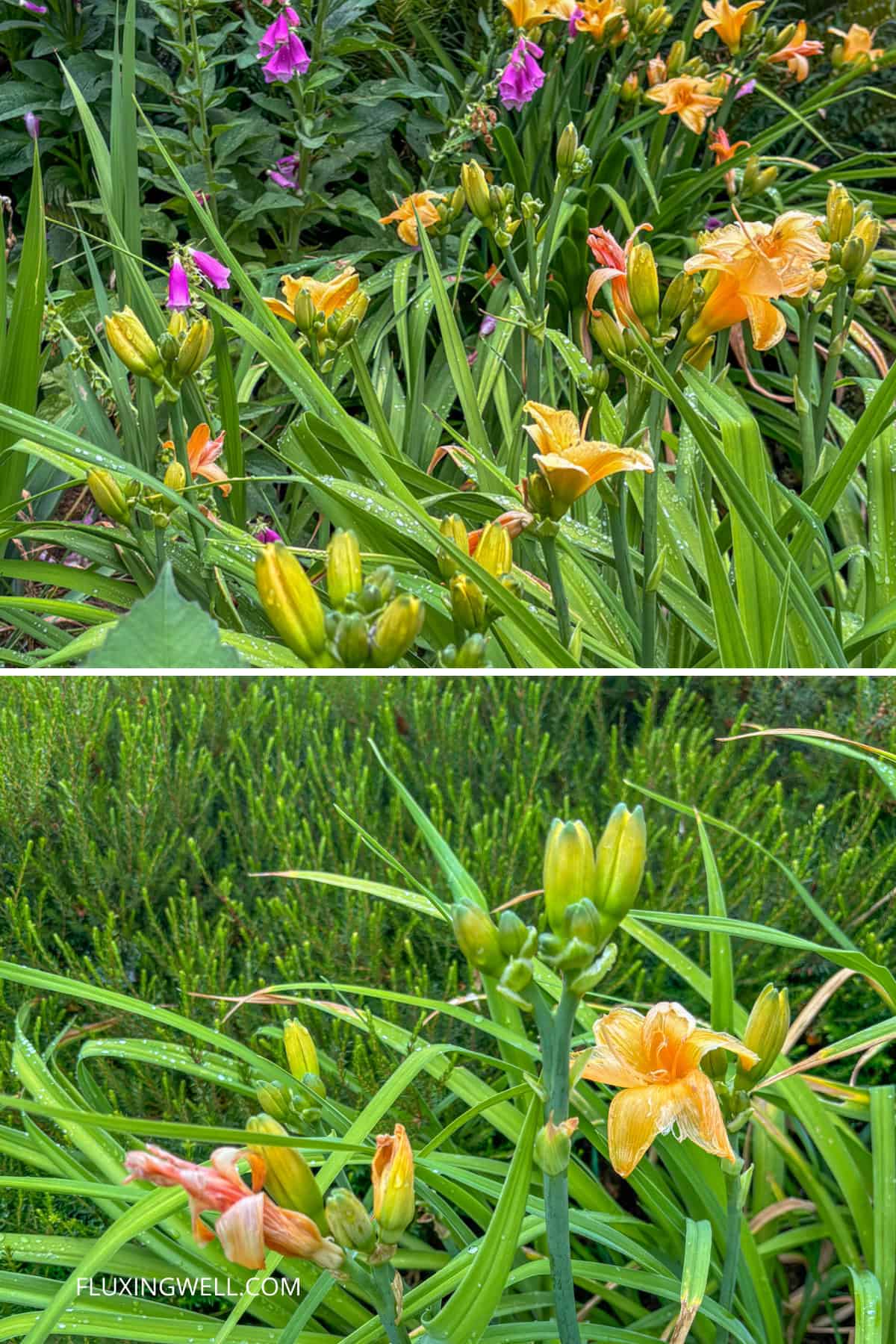
When we planted our first daylily years ago, I didn’t know much about the care of these perennials. As the years went by, I came to appreciate their low-maintenance nature and the ease of dividing them to propagate more plants. Now we have them in multiple locations in our yard, and they faithfully return each summer to add a welcome spot of brightness. If you are looking for an easy-to-grow summer-blooming addition to your perennial garden or landscape, look no further than daylilies. They grow well with a variety of other plants, as you will see.
Daylily Companion Plants: Flowers
Coneflower (Echinacea): Tall, daisy-like blooms provide striking contrast to the arching foliage of daylilies while attracting bees, butterflies, and other pollinators throughout the summer.
Black-Eyed Susan: Bright golden flowers bloom around the same time as many daylilies, creating a cheerful, low-maintenance display with similar growing requirements.
Salvia: Upright flower spikes add vertical interest and attract hummingbirds and pollinators while complementing the rounded shape of daylily clumps.
Shasta Daisy: Classic white blooms brighten flower beds and pair beautifully with nearly every daylily color, creating a fresh cottage garden look.
Coreopsis: Long-blooming yellow or gold flowers blend naturally with daylilies and continue adding color after many daylily varieties have finished flowering.
Bee Balm: Colorful blooms attract hummingbirds, butterflies, and bees while adding height and vibrant midsummer color.
Yarrow: Flat flower clusters bloom for weeks and tolerate hot, dry conditions similar to established daylilies.
Garden Phlox: Large clusters of fragrant flowers extend the season of color and create a lush backdrop for daylily blooms.
Blanket Flower: Bright red, orange, and yellow blooms thrive in sunny locations and complement warm-toned daylilies beautifully.
Catmint: Soft lavender-blue flowers bloom for months and create an attractive edging plant that softens the base of taller daylilies.
Coral Bells: Colorful foliage provides season-long interest even when daylilies are not in bloom, making beds attractive from spring through fall.
Sedum: Succulent foliage and late-season flowers help maintain color after daylily blooms fade while thriving in similar conditions.
Liatris: Tall purple flower spikes add dramatic vertical texture and attract butterflies during the summer.
Astilbe: Feathery flower plumes pair well with daylilies in gardens that receive partial shade and consistently moist soil.
Hosta: Textured leaves provide a beautiful contrast to the narrow foliage of daylilies, especially in partly shaded gardens, but make sure they are smaller varieties so as not to overshadow and block daylilies from sun.
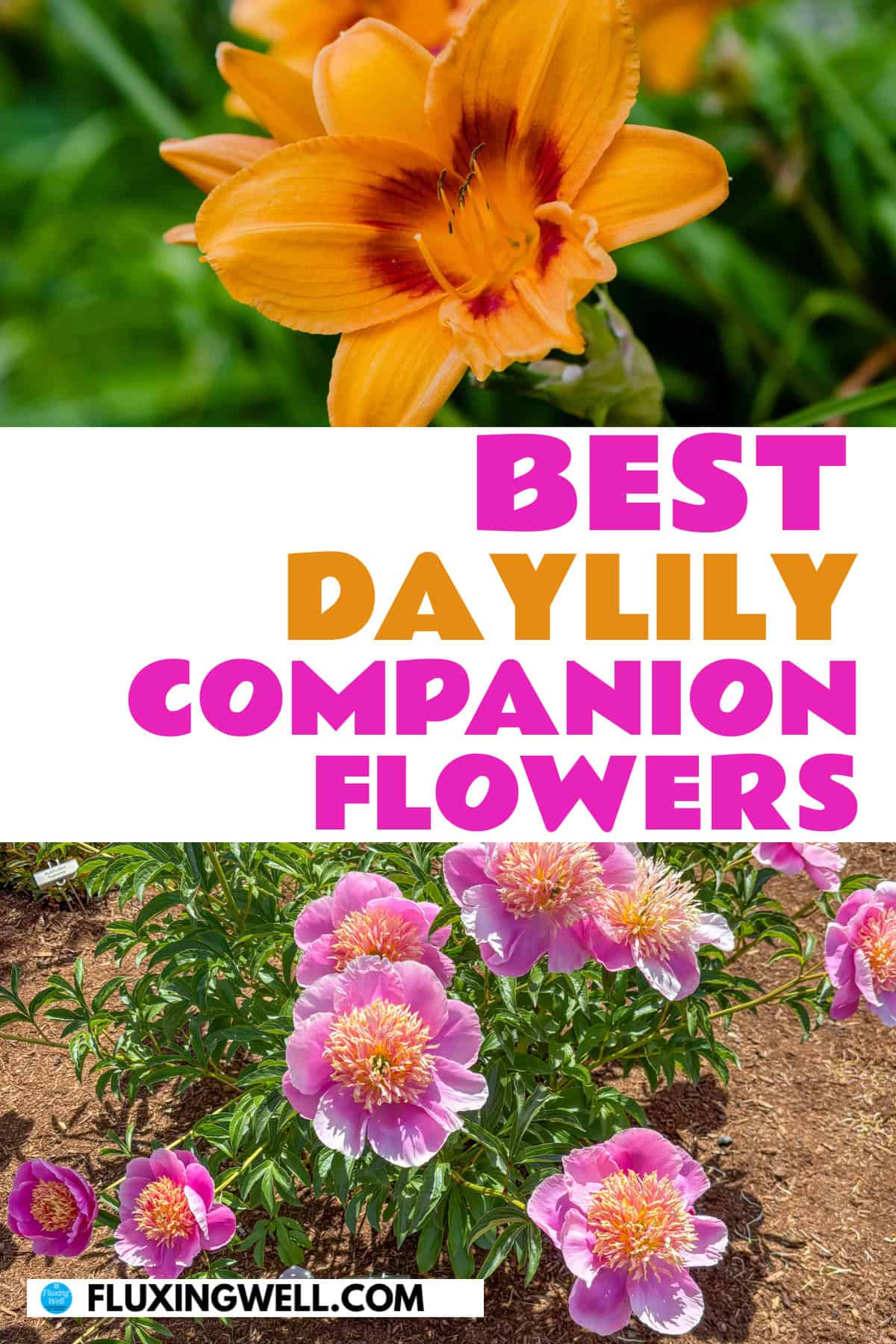
Peony: Their lush spring blooms complement early-season daylily foliage, while the attractive leaves continue adding structure throughout summer.
Iris: Sword-like foliage pairs naturally with daylilies, and many iris varieties bloom just before daylilies begin flowering.
Daylily Companion Plants: Herbs
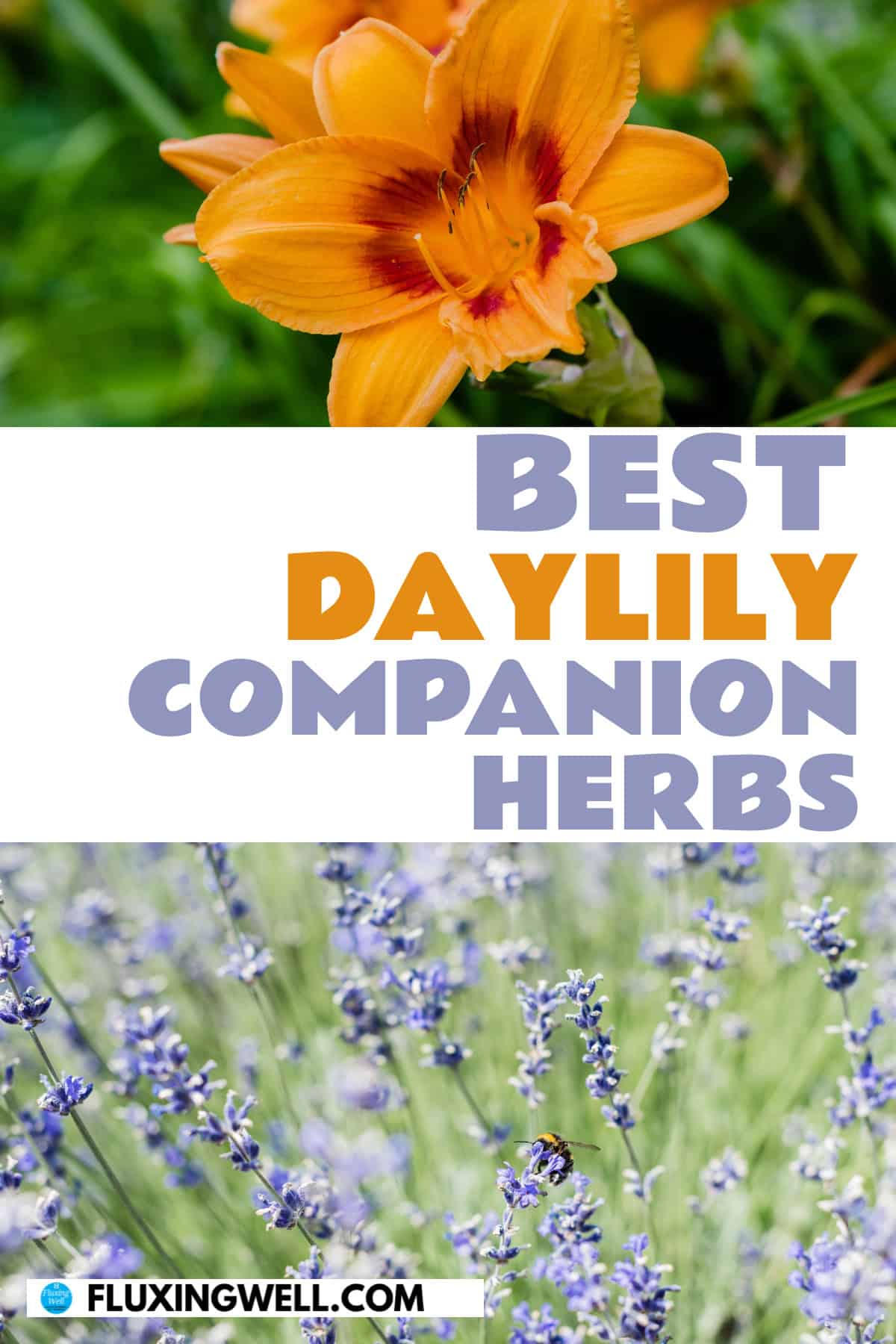
Chives: Attractive purple flowers draw pollinators while their grassy foliage blends naturally with daylilies.
Lavender: Fragrant flowers attract bees and butterflies while its silvery foliage creates beautiful contrast with green daylily leaves.
Thyme: Forms a dense, low-growing ground cover that helps suppress weeds around daylily clumps.
Oregano: Produces clusters of flowers loved by pollinators and serves as an attractive filler plant between larger perennials.
Sage: Silvery foliage contrasts beautifully with daylilies, and its flowers attract beneficial insects throughout the growing season.
Lemon Balm: Bright green foliage fills empty spaces and attracts pollinators, although it should be monitored since it spreads readily.
Parsley: Creates attractive mounds of foliage and provides nectar for beneficial insects and swallowtail butterfly caterpillars.
Daylily Companion Plants: Shrubs
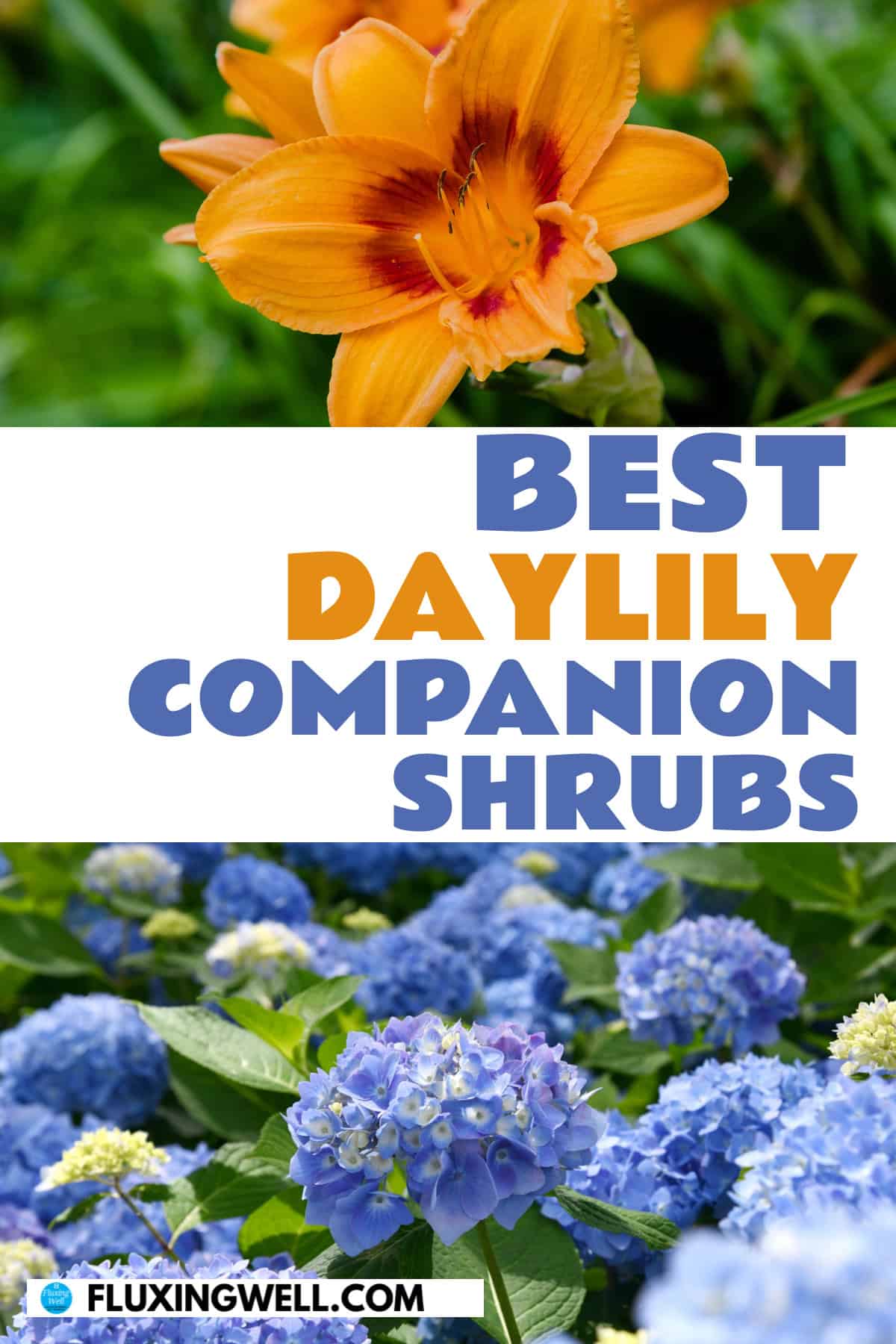
Spirea: Colorful spring and summer blooms provide a beautiful backdrop while sharing similar sun and soil preferences with daylilies.
Hydrangea: Large flower heads contrast beautifully with daylily blooms, especially in gardens with morning sun and afternoon shade.
Boxwood: Evergreen structure keeps flower beds attractive year-round and highlights colorful daylily flowers during summer.
Ninebark: Colorful foliage varieties add season-long interest and provide excellent contrast with daylily leaves.
Potentilla: Long-lasting blooms continue flowering before, during, and after daylily season, extending color in the landscape.
Abelia: Delicate flowers attract pollinators for months while its graceful branching softens perennial borders.
Rose: Roses and daylilies share similar growing conditions, and the daylily foliage helps fill bare spaces beneath rose bushes.
Weigela: Colorful spring flowers attract hummingbirds, while its dense foliage creates an attractive backdrop for daylily plantings.
Dwarf Japanese Spirea: Compact varieties work especially well in smaller flower beds, providing colorful foliage and long-lasting blooms without overwhelming nearby daylilies.
What Not to Plant with Daylilies
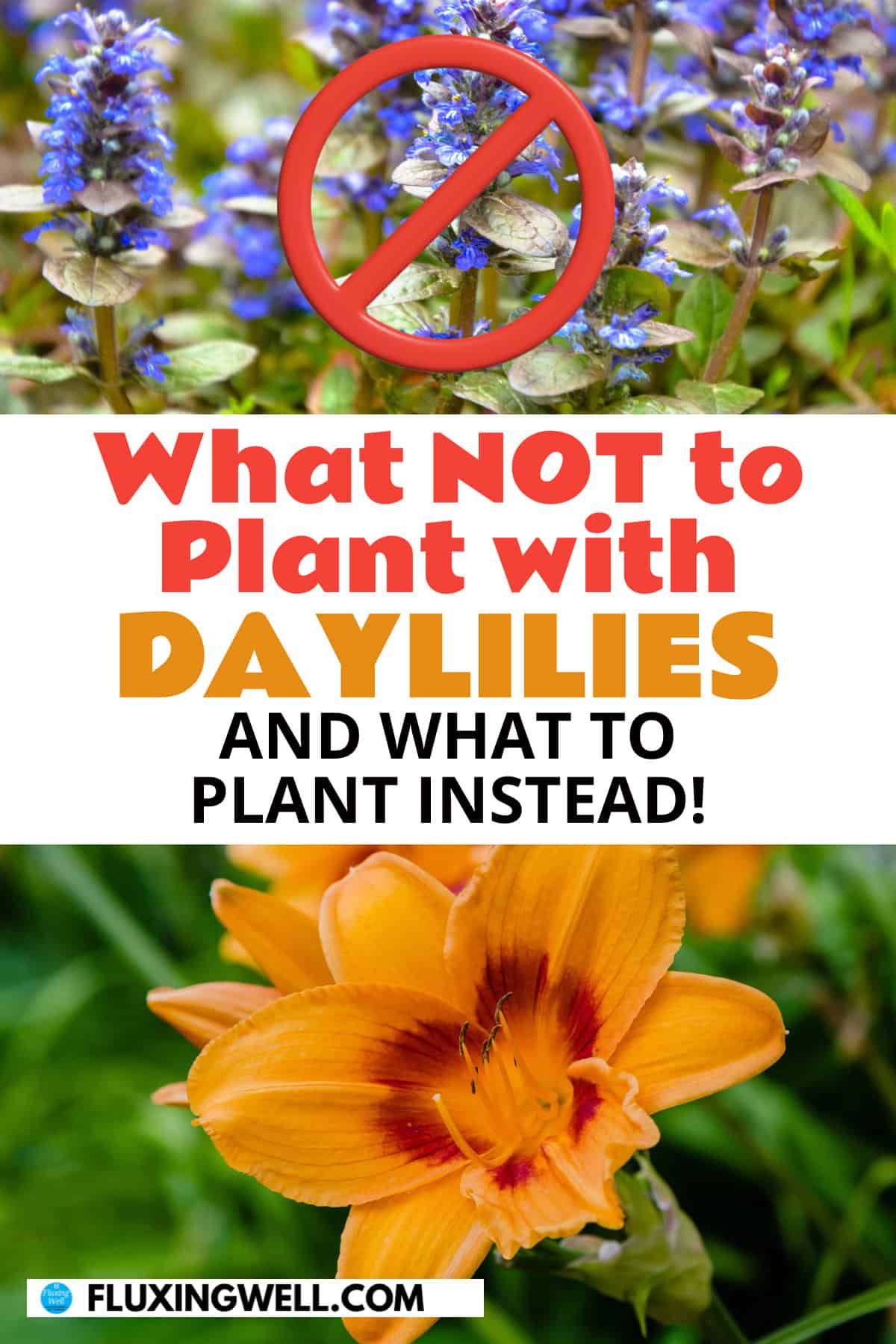
Aggressive Ground Covers: Fast-spreading plants such as ivy, ajuga, or creeping Jenny can quickly crowd daylilies, competing for water, nutrients, and space while making routine maintenance more difficult.
Bamboo: Running bamboo spreads aggressively through underground rhizomes and can quickly overtake garden beds, leaving little room for daylilies to thrive.
Black Walnut Trees: Black walnut trees produce juglone, a natural chemical that can inhibit the growth of many nearby plants. While daylilies are fairly tolerant, growing beneath these trees often results in poor flowering due to shade and root competition.
Butterfly Bush: Although attractive to pollinators, butterfly bushes become large over time and can overshadow daylilies, reducing the sunlight they need for abundant blooms.
English Ivy: English ivy spreads rapidly across the soil surface, smothering daylily crowns and competing aggressively for moisture and nutrients.
Japanese Knotweed: This invasive plant grows vigorously and forms dense colonies that easily outcompete ornamental perennials, including daylilies.
Large Hostas: Oversized hosta varieties can eventually shade nearby daylilies, especially in smaller garden beds where space is limited. The reduced sunlight often leads to fewer blooms.
Mint: Mint spreads aggressively through underground runners and can quickly invade daylily beds, making it difficult to control without frequent digging.
Norway Maple: The dense canopy and shallow, thirsty roots of Norway maple trees create dry, heavily shaded conditions that are unfavorable for healthy daylily growth.
Russian Sage: Russian sage prefers much drier soil than daylilies. Growing these plants together often means one receives too much or too little moisture to perform well.
Tree Roots from Large Shade Trees: Large trees such as maples, oaks, and poplars have extensive root systems that compete heavily for water and nutrients while creating dense shade that limits flowering.
Trumpet Vine: Trumpet vine spreads aggressively by runners and can quickly overwhelm neighboring perennials, making it a poor companion for daylilies.
Wisteria: Wisteria is a vigorous climber with an extensive root system that competes strongly for moisture and nutrients. Its dense growth can also cast significant shade over nearby daylily plantings.
Daylily Companion Plants: Quick Reference Chart
| Daylily Companion Plants | |
| Daylily Companion Plants: Flowers | Daylily Companion Plants: Shrubs |
| Astilbe | Abelia |
| Bee Balm | Boxwood |
| Black-Eyed Susan | Dwarf Japanese Spirea |
| Blanket Flower | Hydrangea |
| Catmint | Ninebark |
| Coneflower | Potentilla |
| Coral Bells | Rose |
| Coreopsis | Spirea |
| Garden Phlox | Weigela |
| Hosta | |
| Iris | Worst Daylily Companion Plants |
| Liatris | Aggressive Ground Covers |
| Peony | Bamboo |
| Salvia | Black Walnut Trees |
| Sedum | Butterfly Bush |
| Shasta Daisy | English Ivy |
| Yarrow | Japanese Knotweed |
| Large Hostas | |
| Daylily Companion Plants: Herbs | Mint |
| Chives | Norway Maple |
| Lavender | Russian Sage |
| Lemon Balm | Tree Roots from Large Shade Trees |
| Oregano | Trumpet Vine |
| Parsley | Wisteria |
| Sage | |
| Thyme | |
Tips for Planting and Caring for Daylilies
Planting Daylilies
Plant daylilies in a location that receives at least six hours of direct sunlight each day for the best flowering, although many varieties tolerate light afternoon shade. They grow best in well-drained soil enriched with compost or other organic matter. Space plants about 18 to 24 inches apart to allow room for mature clumps and good air circulation. Set the crown about 1 inch below the soil surface, then water thoroughly after planting to help establish strong roots.
Watering Daylilies
Water newly planted daylilies regularly during their first growing season to encourage deep root development. Once established, they are fairly drought tolerant but bloom best with about 1 inch of water each week from rainfall or irrigation. Water deeply rather than frequently, and apply mulch around plants to help conserve moisture and reduce weed growth.
Fertilizing Daylilies
Daylilies are light feeders and usually perform well in moderately fertile soil. Apply a balanced, slow-release fertilizer or work compost into the soil in early spring as new growth begins. Avoid excessive nitrogen, which encourages leafy growth at the expense of flowers. A light feeding after the first flush of blooms can help reblooming varieties continue producing flowers throughout the season.
Propagating Daylilies
The easiest way to propagate daylilies is by dividing mature clumps every three to five years. Divide plants in early spring as new shoots emerge or in late summer after flowering has finished. Dig up the entire clump, separate it into smaller sections with healthy roots and fans of leaves, and replant them promptly at the same depth. Dividing not only creates new plants but also rejuvenates older clumps, improving their vigor and flower production.
Common Pests and Diseases
Common Daylily Pests
Aphids: Aphids cluster on tender new growth and flower buds, weakening plants and leaving sticky honeydew behind. A common remedy is to spray them off with a strong stream of water or treat infestations with insecticidal soap or neem oil, repeating as needed.

Spider mites: Spider mites thrive in hot, dry conditions and cause stippled, faded foliage with fine webbing. Increasing humidity with regular deep watering, rinsing foliage, and using insecticidal soap or horticultural oil helps control outbreaks.
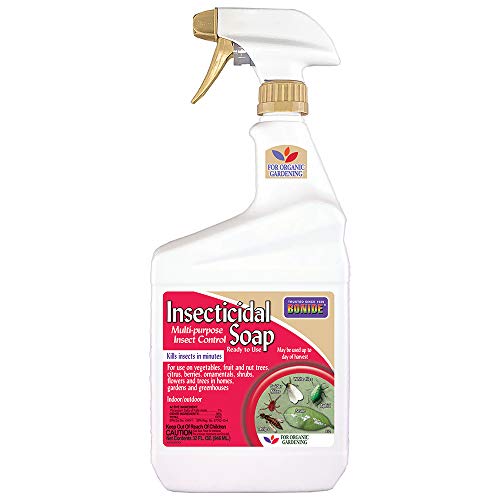
Thrips: Thrips damage buds and flowers, causing streaked, distorted, or incomplete blooms. Removing affected buds and applying insecticidal soap or spinosad can reduce populations, especially when started early.
Slugs and snails: These pests chew irregular holes in leaves and are most active in damp, shaded areas. Hand-picking in the evening, using iron phosphate bait, and reducing mulch buildup around crowns are effective controls.

Deer and rabbits: Browsing can damage young shoots and flower stems, especially in early spring. Repellents, physical barriers like fencing, and planting less-palatable companions nearby are common deterrent methods.
Common Daylily Diseases
Daylily leaf streak: This fungal disease causes yellow or brown streaking along leaves, often progressing in humid weather. Removing and disposing of infected foliage and improving air circulation are key remedies, along with avoiding overhead watering.
Crown rot: Crown rot leads to soft, foul-smelling tissue at the base of the plant and plant collapse, usually in poorly drained soil. Digging up and discarding affected plants, then improving drainage with compost or raised beds, is the best solution.
Rust: Rust appears as orange-brown pustules on leaves and spreads in crowded plantings. Removing infected leaves, spacing plants properly, and applying a fungicide labeled for rust can help manage it.

Fungal leaf spot: Small dark lesions appear on foliage, especially during wet periods or when watering overhead. Removing affected leaves, watering at the base, and applying a fungicide when necessary helps limit spread.
Varieties of Daylilies
Stella de Oro: A compact, reblooming daylily with bright golden-yellow flowers that bloom heavily from early summer through fall and work well in borders and containers.
Happy Returns: A soft lemon-yellow rebloomer known for its long bloom season and tidy clumps that stay attractive in smaller garden spaces.
Pardon Me: A deep red, reblooming variety with a yellow-green throat that adds bold contrast and repeat color to sunny flower beds.
Stella Supreme: An improved version of Stella de Oro with larger golden blooms and a longer bloom period for extended garden color.
Rosy Returns: A soft pink daylily with a yellow throat that reblooms reliably and adds a gentle pastel tone to mixed perennial borders.
Bitsy: A miniature daylily with small yellow blooms and a very compact habit, ideal for edging, rock gardens, or tight spaces.
Fooled Me: A striking purple and cream bicolor with ruffled petals that adds unique contrast and visual interest to daylily collections.
Strawberry Candy: A pink blend with a bold red eye and ruffled petals that brings a vibrant, cheerful look to summer garden beds.
Chicago Apache: A classic red daylily with a yellow throat and strong garden performance, known for its reliability and heat tolerance.
Hyperion: A tall, fragrant heirloom variety with large, pale yellow blooms that open in the evening and create a soft, elegant garden presence.
Catherine Woodbury: A lavender-pink daylily with a soft fragrance and graceful form that pairs beautifully with cottage garden plantings.
Frans Hals: A striking bicolor with alternating red and yellow petals that creates a bold, eye-catching display in sunny borders.
Need More Planting Ideas?
Check out the tips for the best companion plants for eggplant to learn what to grow with those beauties. If you like the idea of companion planting, you might be interested in reading about the best companion plants for pumpkins, irises, sunflowers, garlic, asparagus, rosemary, radishes, beetroot (beets), thyme, parsley, lupine, borage, stevia, kale, lemon balm, gladiolus, asters, or the best companion plants for lavender. Get tips for growing stunning dahlias or vintage roses. Are you a beginning gardener? Try planting some foolproof, easy-care perennials, or learning about the best companion plants for columbine. There are so many exciting plants to grow!
Keep Track of Your Garden with a Journal Logbook
Now that you have learned about some compatible companion plants, keep track of your planting ideas, goals, and plans with a printable, editable free garden journal logbook. Choose the pages you want to use and customize them as you wish to record monthly, weekly, and daily garden tasks, lists, weather, and planting arrangements. There are also grid pages for easily designing the layout of your vegetable garden, flower garden, or landscape. Print it out and put it into a notebook you can take with you to the garden (that’s what I do). It’s nice to have all of your garden information in one place.
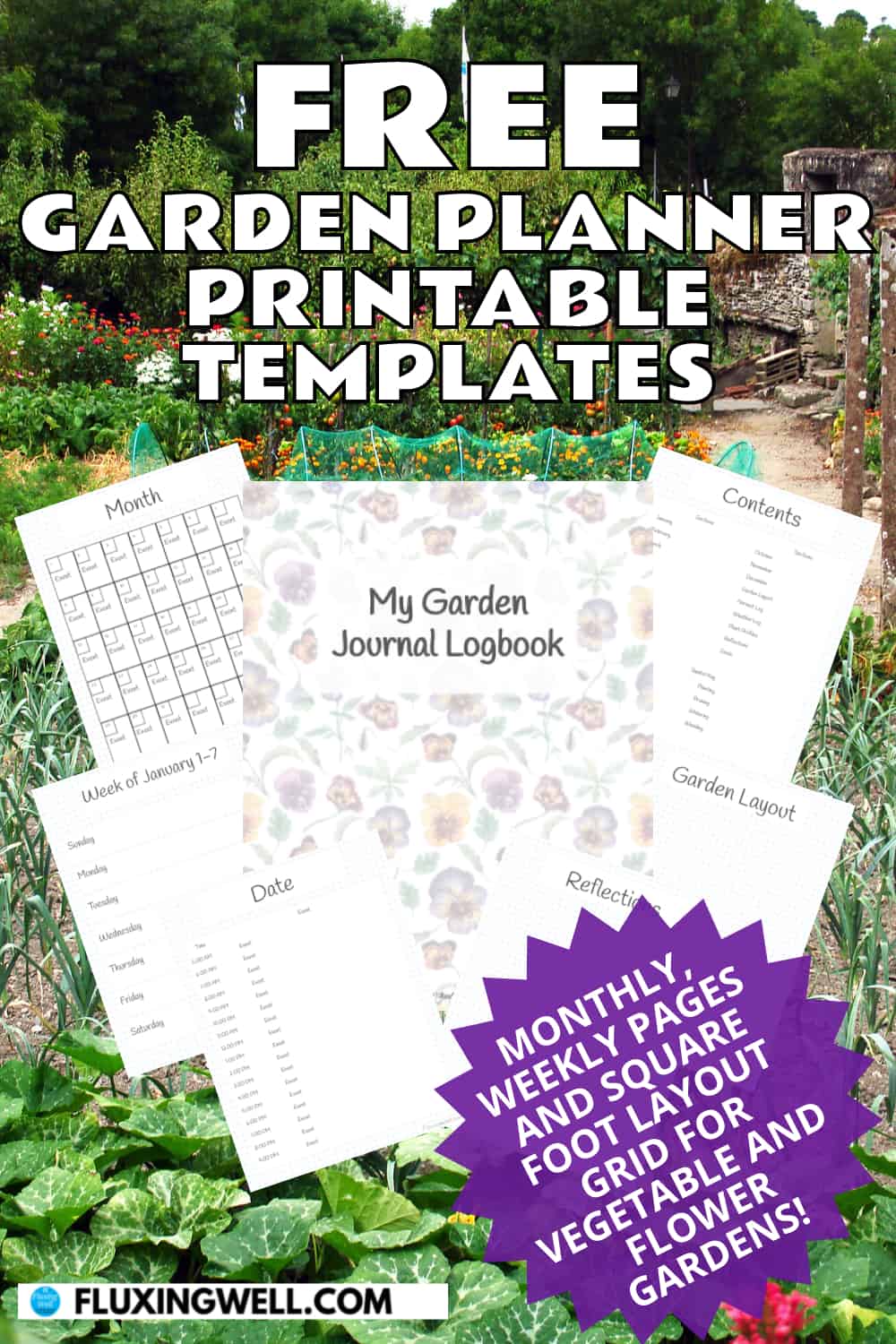
Get the garden journal logbook!
Free Online Garden Planner Layout Template
Now that you know which are the best companion plants for daylilies, you might need a way to plan your garden layout. Whether you are planting vegetables, flowers, or herbs near your lupine plants, this online garden planner can help you visualize your design and bring it to life. Arrange and rearrange the plants over and over, then print the layout when you are satisfied. With garden tasks that need your attention, this is one way to save time.
It’s fully customizable when you make your own copy and includes two editable chart pages for noting planting specifications.

Get my free online garden layout planner template!
Have a wonderful day, and may all of your daylily-growing endeavors meet with success!

Lisa Mitchell is a wife, mom, and school librarian who likes to grow fruit, herbs, vegetables, and flowers on her family’s small Pacific Northwest farm. To learn more about what this website has to offer gardeners, click on over to the Garden page.
Want more great garden, food, or travel ideas? Follow FluxingWell on Pinterest, Facebook, Instagram, and X for the latest posts, tips, and inspiration.
Great roundup! I especially like the emphasis on mixing different textures and bloom times. Daylilies really shine when paired with complementary plants instead of planted on their own. Thanks for the inspiration!
You are most welcome! I keep discovering great flower combinations, and daylilies are so easy to grow.
I need see about a few of these companion plants for daylilies. I have daylilies planted in my front yard. The best plants ever.
I agree! How nice that you already have some. Happy gardening!
Such a lovely post Lisa! The pics are so beautiful! I love taking pics of flowers! I didn’t think I was good at taking pics, but after taking a digital photography class in college, I discovered I’m not too bad of a photographer! One picture I took was of beautiful plants in a park! It came out so nice! I love the bright colors of the Daylily! Bright colors make me so happy!
I’m glad you enjoy taking photos of plants. That is a great skill to have, and I’m glad you liked the post.
Thank you for this helpful list of the best daylily companion flowers as well as plants. I planted some in my garden at my old home, but inspired to add some at my new house, too!
Oh, great! I hope you get the chance to plant some daylilies soon.
I appreciate your valuable insight on daylily companion plants. Daylilies grow well in my yard, so I will refer to this when I plant next. So many great tips!
You are very welcome! I’m glad daylilies grow well for you in your area, and I’m always happy to share any tips I have.=)
I love daylilies and want to grow more of them. Thank you for the list of a wide variety of companion plant options. Good to know that there are great shrubs, flowers, and herbs to choose from that grow well with daylilies.
Yes, many plants grow well with daylilies. Happy daylily-growing!