

Looking for the perfect origami paper substitute to bring your paper folding creativity to life? Whether you’re into hand made things with paper or searching for easy gift ideas for friends, these origami paper substitute ideas can help you source materials from your home to complete your projects. Origami paper alternatives can be everyday materials you might not have thought of. No origami paper on hand for your creative paper craft ideas? Never fear! A budget-friendly option might be closer than you think. These materials are great for trying out different textures, patterns, and sizes without needing to buy origami paper. Read on for a list of DIY origami paper choices that won’t break the bank!

My Origami Backstory
Origami is the Japanese art of folding paper into decorative shapes. I first became acquainted with it years ago, when I was in college and I had the opportunity to travel to Japan. The people there were very welcoming, hospitable, and were always sharing simple gifts. I stayed with a few host families, and it seemed to give them great pleasure to present me with beautiful tokens of friendship. I have many treasured keepsakes from my time there, and when I returned to the U.S., I continued trying to improve my origami skills by making greeting cards, paper cranes, and candy boxes for dinner parties. When paper folding inspiration struck, I wasn’t always prepared with origami paper. Here are my favorite origami paper alternatives, along with a quick, easy way to make a square sheet when you don’t have a paper cutter.
Steps to Getting a Square Piece of DIY Origami Paper
No matter which of the origami paper substitutes you choose, having a square piece of paper is important to origami success. Don’t worry, you won’t need a paper cutter. When you have a piece of paper that is a rectangle but not a square, you can follow these easy steps. This technique works with newspaper, copier paper, pages from books, and any other paper that has straight edges.
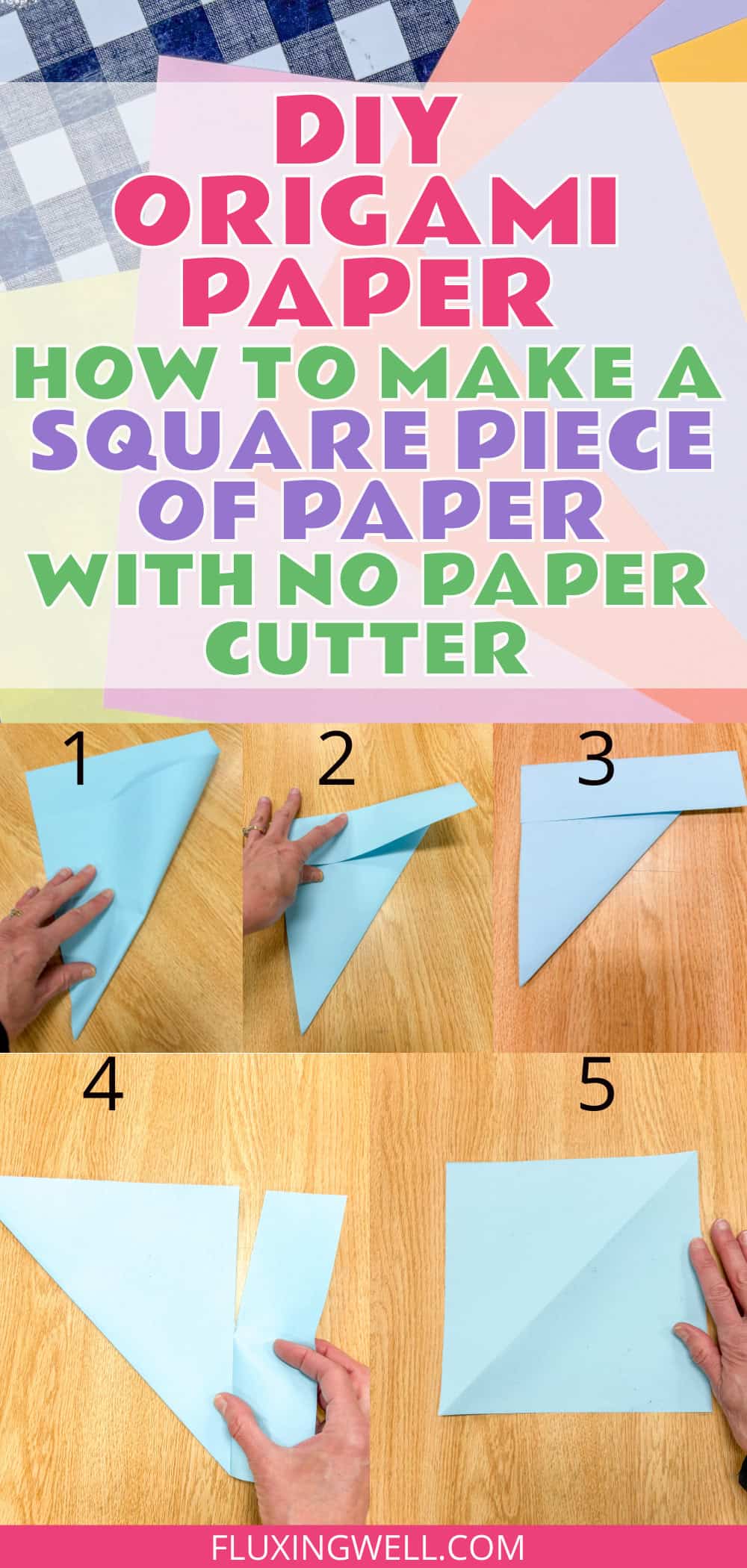
First, fold one corner of the paper so that it lines up with the opposite side of the sheet.
Next, fold the extra top flap back and forth, making a crease that lines up with the top edge of the fold.
After that, carefully tear the top part of the paper and separate it from the bottom of the sheet.
Finally, unfold the paper to make your square.
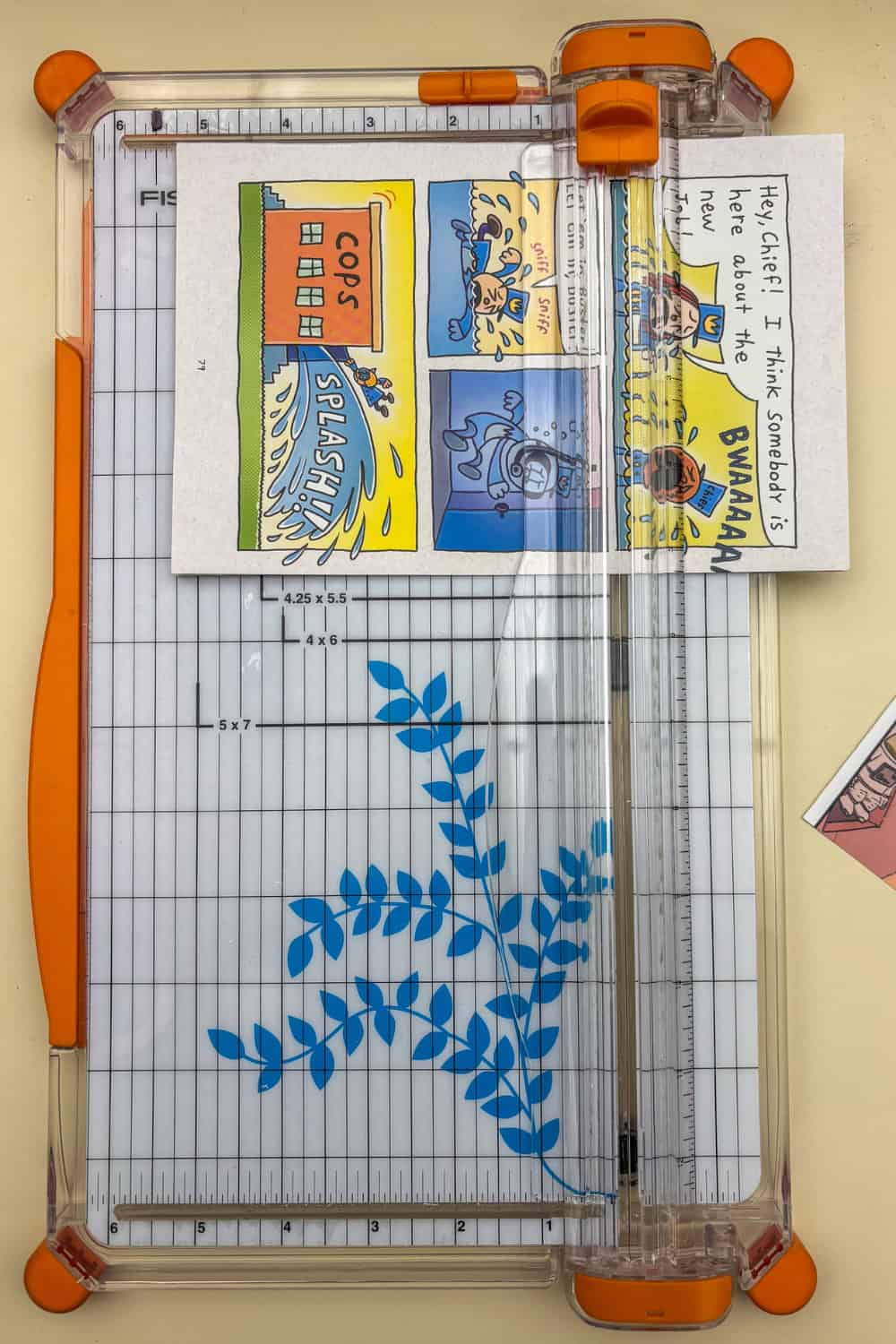
If your paper has a side that is not straight, such as a book or magazine page that has a jagged edge, you can use a simple small paper cutter to trim a straight side, then trim the other sides to make a square. There is a small blade inserted into the plastic handle so you can slide the cutter safely in its track.

This kind of paper trimmer is best for just a few sheets of paper, and is a lot less intimidating than one with a huge blade that you pull down. Here’s a cutter with a ruler similar to the ones I use in the libraries where I work.

For smaller pieces of paper, such as pages that have fallen out of a graphic novel, a smaller bladed cutter would be perfect.
Colored Copier Paper
This is the origami paper substitute I use most frequently for school projects.

Advantages: Affordable, accessible, and ideal for beginners, printer paper has the perfect balance of thickness and flexibility. Available in different colors, colored copier paper is perfect for folding origami shapes for a variety of themes. Slightly thicker than origami paper, it is useful for larger origami designs, like paper candy boxes and large paper cranes.
Disadvantages: It has the same color on both sides, so complicated origami directions that rely on one side of the paper being white might be difficult to follow. It can be a bit plain and not as visually appealing for decorative projects.
Wallpaper

Advantages: Wallpaper is thick, sturdy, and often has beautiful patterns that add a unique touch to your origami. Its durability makes it great for complex or long-lasting projects. The back side is usually off-white, which helps when following complex origami directions.
Disadvantages: It can be too thick for intricate folds and may not hold creases well. Some wallpapers are textured or coated, which can crack when folded.
Wrapping Paper

Advantages: Lightweight and available in endless patterns and colors, wrapping paper is perfect for festive and decorative origami pieces. Like wallpaper, the back side is usually blank, which is useful when creating complex origami designs.
Disadvantages: It’s often too thin and can tear easily, especially with detailed folds. Glossy finishes may not hold creases well.
Scrapbook Paper

Advantages: Available in many designs and typically thicker than standard paper, scrapbook paper makes origami colorful and decorative.
Disadvantages: The thickness may make complex models harder to fold. Some types may crack or resist sharp creases.
Book Pages from Discarded Books
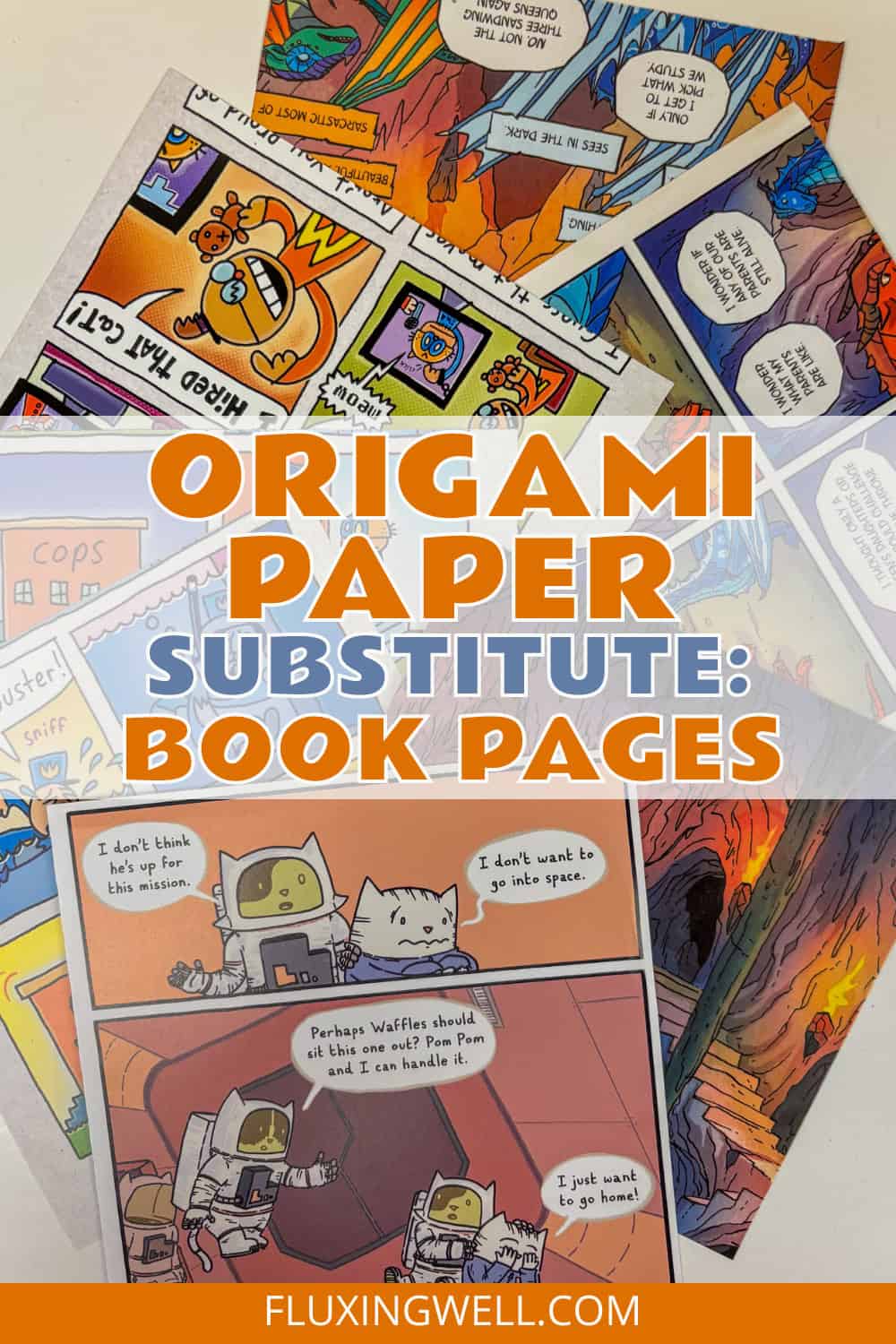
Advantages: Book pages give a vintage, literary aesthetic to your creations and promote recycling. They are typically the right thickness for folding. Pages from graphic novels (which fall out of books often due to high use) are colorful and fun. (Don’t worry, I didn’t go around tearing pages out of perfectly good books. The pages pictured had already fallen out.) Colored pages from graphic novels can add a festive touch to a party. Text pages from novels can add a classy touch to party decor.
Disadvantages: Text can distract from the shape of the origami, and older paper may be brittle and prone to tearing.
Newspaper

Advantages: Readily available and eco-friendly, newspaper is lightweight and folds easily—great for practice.
Disadvantages: Ink can smudge, and it’s not very durable. The print may overpower or obscure the design of the origami.
Magazine Paper

Advantages: Glossy magazine pages add a sleek, polished look to your paper crafts and are flexible for folding.
Disadvantages: They are slippery and may not hold folds well. Some pages are too thin or prone to tearing with repeated creases.
Sticky Notes

Advantages: Pre-cut squares are perfect for quick folding, and the sticky strip can help secure folds. Great for mini origami.
Disadvantages: The adhesive can make folding uneven, and the paper is small and thin, limiting design complexity.
Tissue Paper

Advantages: Delicate and lightweight, tissue paper allows for graceful, flowing folds—ideal for flowers or ethereal designs.
Disadvantages: Extremely fragile and tears easily. Difficult to work with for precise folds or detailed models. Trimming into a square can be a challenge.
Paper Bags
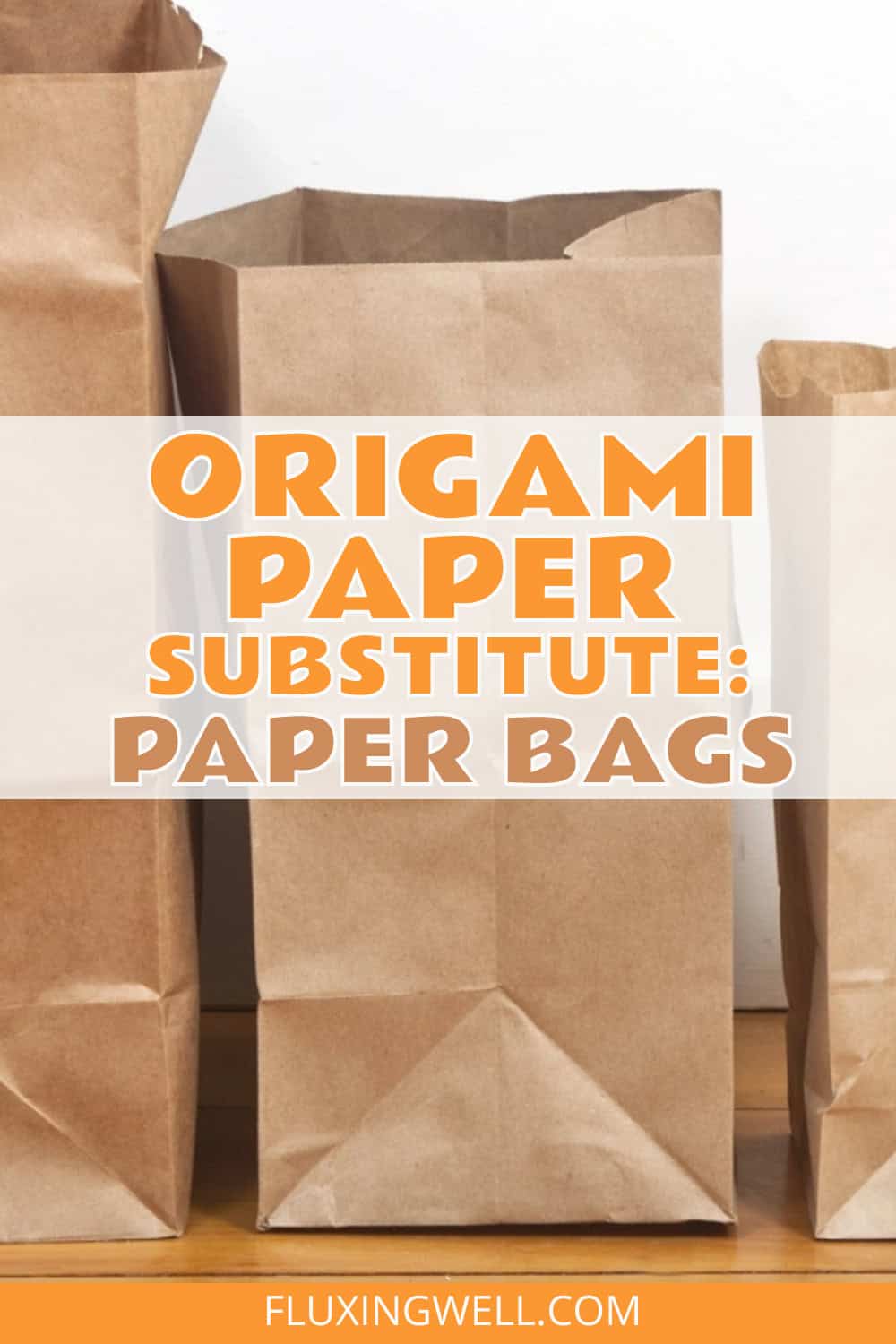
Advantages: Durable and textured, paper bags, especially the ones made with brown paper, are great for rustic-looking origami or large pieces like boxes and animals.
Disadvantages: It’s thick and can be difficult to crease neatly. Uneven surfaces may cause folds to slip or warp.
Old Calendars

Advantages: Calendars often feature high-quality, colorful images, and the paper is a good medium weight for folding. You can use either the decorative images or the numbered monthly pages for different effects and themes.
Disadvantages: Glossy coating can resist folding and might crack. Size and thickness vary, so some pages may be unsuitable.
Include Origami in Your Next Party
Origami can add a unique element of fun to any festive gathering. Whether you are planning a holiday gathering, a watermelon party theme, a sunflower-themed party, a lemon-themed party, an apple-themed party, dahlia-themed party, a chicken-themed party, an elephant-themed party, a butterfly-themed party, or a tea party, here’s a FREE monthly planner you can use to plan your party or any other event. Use it throughout the year to keep daily, weekly, and monthly tasks organized. Since it’s undated, you can print out a new planner each year or anytime you need a fresh place to put your ideas. Put your origami skills to good use and include folded paper shapes in your next party plan!

Get the planner!
May all of your origami and party endeavors turn out well!

Lisa Mitchell is a wife, mom, and teacher who gets inspiration for craft projects and parties from the beautiful outdoors surrounding her family’s small Pacific Northwest farm. To learn more about what this website has to offer, click on over to the About page.
Thanks for the easy and step-by-step instructions for making DIY Origami paper squares. Very helpful!
You’re welcome! I love an easy DIY paper craft.
That’s such a fun and creative idea—love how simple origami paper substitute is to use. Thanks for a great guide!
Of course! If you ever need to make your own origami paper substitute, I hope this will make it easy for you.
Thank you for this helpful guide for selecting some DIY paper origami as well as how to make a square piece of paper with no paper cutter. I love scrapbooking and have tons of extra paper around my house. Great tip to use some extra up with paper origami!
Awesome! Scrapbooking paper is the perfect origami paper substitute.
I love your creative ideas about origami paper substitutes! You are right: I have several of these at home. Thanks for this fun article that sparks creativity and enjoyment!
Glad you have some of these origami paper substitutes around. Have fun!
Thank you for these origami paper substitute ideas. I live in a rural area and origami paper is not a common item. I could order some, but your suggestions are so much less expensive. Appreciate the tips!
I’m so glad you like the origami paper substitute options. Happy folding!