

Looking to boost your garden harvest? Discover the power of Brussels sprouts companion plants in this ultimate Companion Planting Guide! Whether you’re just learning how to grow Brussel sprouts, curious about when to harvest Brussel sprouts, or fine-tuning your skills in growing Brussel sprouts gardens, the right plant partners make all the difference. From protecting your Brussel sprout plant against pests to improving flavor, companion planting is the secret to thriving garden Brussel sprouts. Let’s dig in and learn how to grow Brussel sprouts with success, plus get an easy Brussels sprouts recipe at the end of the post.
Is it Brussels Sprouts or Brussel Sprouts?
According to a variety of reliable sources (Grammarist, Linguist, and Oxford Reference), the correct term is Brussels sprouts with an “s” at the end of “Brussels.” This isn’t just a spelling quirk. The vegetable is named after Brussels, the capital of Belgium, so the name rightly reflects its place of origin. Some people also get confused about the singular version of the name. The correct singular name is Brussels sprout, not Brussel sprout. Just remember the capital of Belgium is Brussels, and you’re all set.
Why I Love Brussels Sprouts
As a gardener in USDA Plant Hardiness Zone 8b with mild winters, I love that Brussels sprouts have plenty of time to mature if I decide to do a fall planting (they need 90–120 days). Sprouts taste sweeter after a light frost, and my zone often provides just enough cool weather to enhance flavor without harsh freezes. A single plant can produce 2–3 pounds of sprouts, making them space-efficient.
Brussels sprouts are packed with vitamin C, K, fiber, and antioxidants, which are great for healthy winter eating straight from my garden. Their tall, sturdy stalks dotted with little “mini cabbages” are fun to grow and eye-catching in the garden. Plus, they grow well with a large variety of companion plants. Read on for the companion plant ideas!
Brussels Sprouts Companion Plants: Flowers
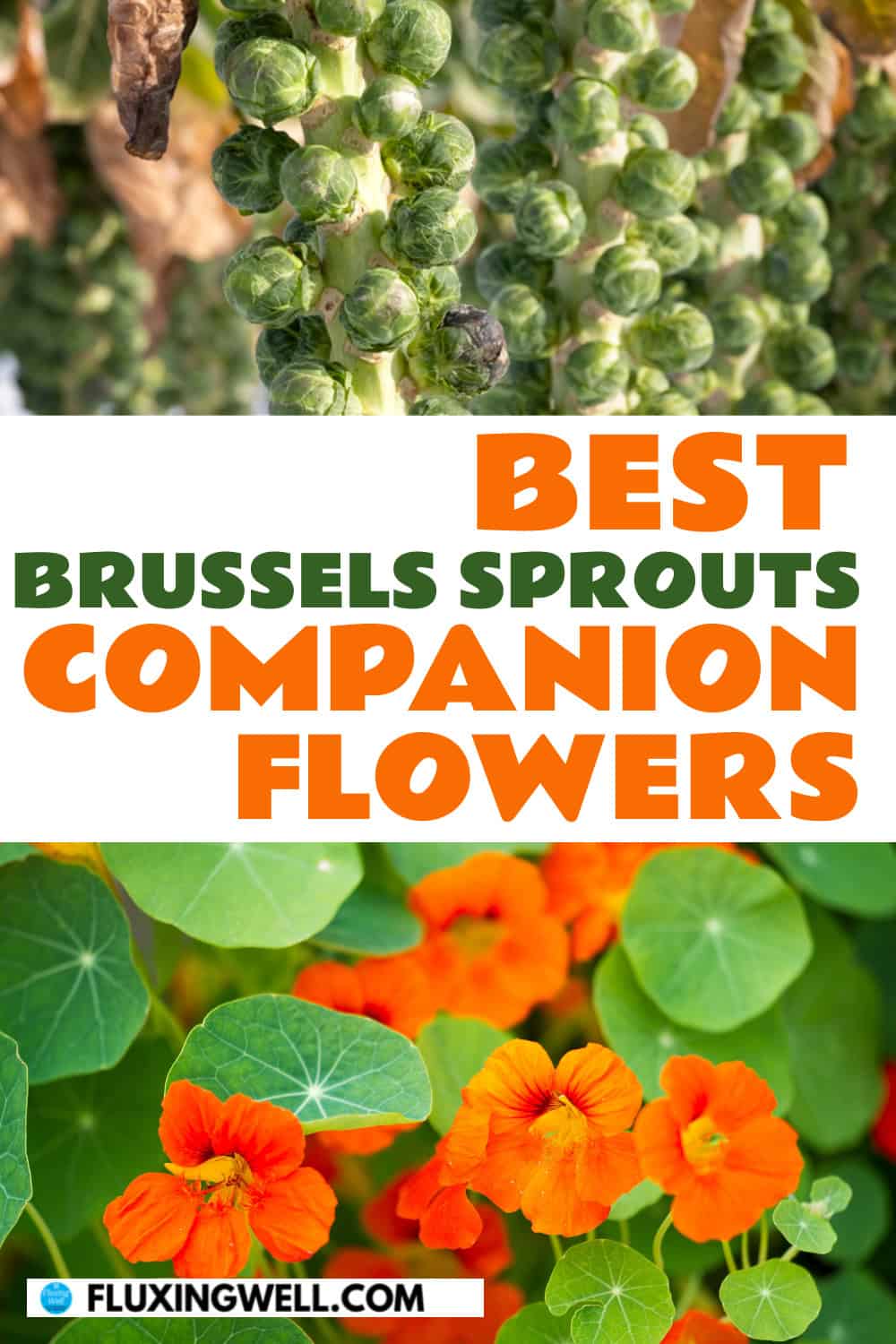
Brussels sprouts are heavy feeders and can attract pests like aphids, cabbage worms, and flea beetles. Pairing them with the right flowers helps with pollination, pest control, and biodiversity. Here are some of the best companion flowers for Brussels sprouts.
Nasturtiums: Act as a trap crop for aphids, flea beetles, and cabbage worms, keeping them away from your Brussels sprouts. They also bring in pollinators.
Calendula (Pot Marigold): Attracts ladybugs and hoverflies, which eat aphids and caterpillars. Its sticky pollen can even trap pests.
Marigolds (Tagetes spp.): Known for repelling nematodes and other soil-borne pests, plus they attract beneficial insects.
Sweet Alyssum: A low-growing flower that draws in predatory insects like lacewings and parasitic wasps, great for pest balance.
Lavender: Repels moths (including cabbage moths) and attracts pollinators.
Cosmos: Tall, airy blooms that draw predatory wasps and hoverflies, while adding height and beauty to the bed.
Brussels Sprouts Companion Plants: Herbs
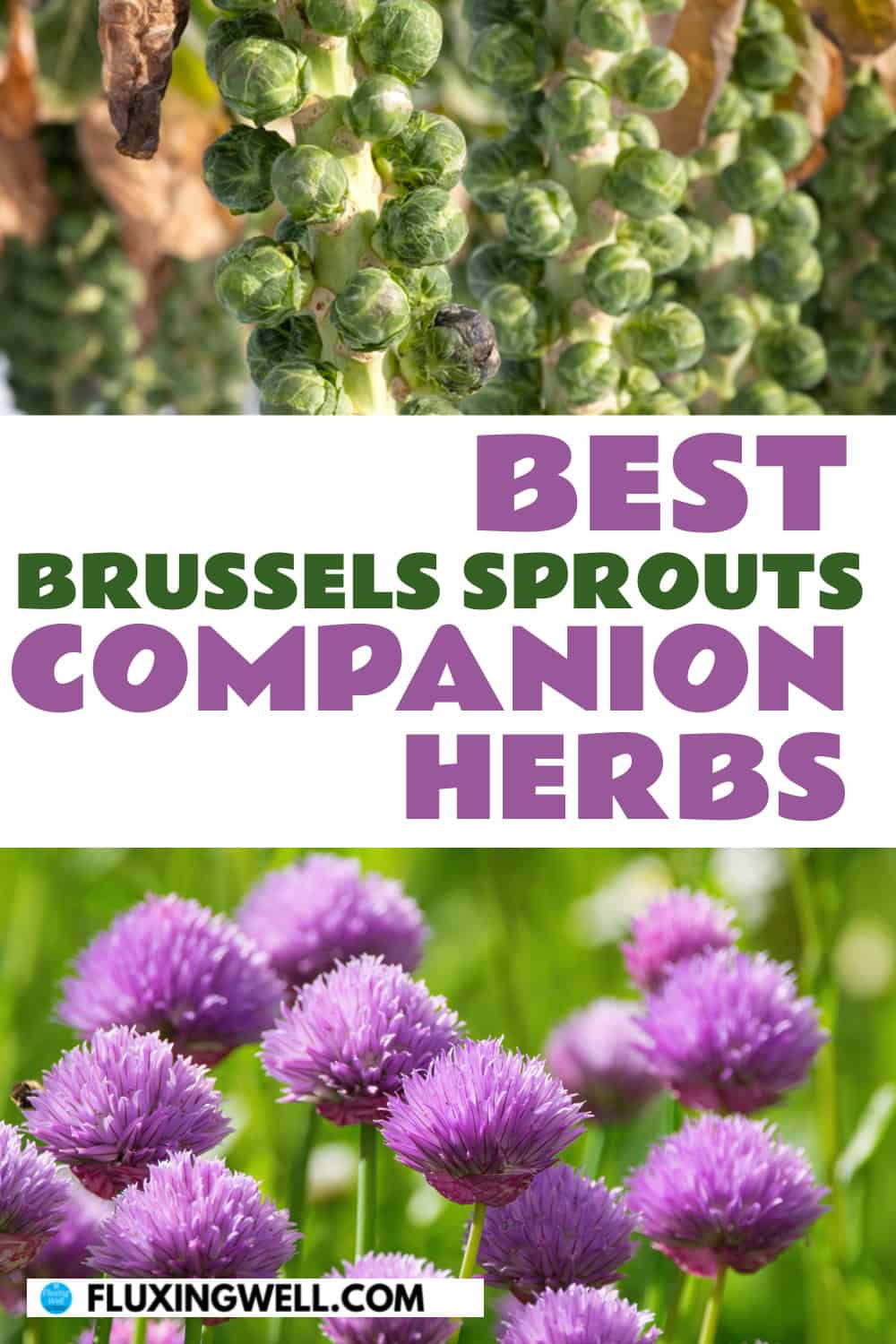
Herbs are some of the best companions for Brussels sprouts because their strong scents can confuse or repel pests like cabbage moths, aphids, and flea beetles while also attracting helpful insects. Here are the top choices.
Dill: Attracts predatory wasps, hoverflies, and ladybugs that eat aphids and caterpillars. Plant it nearby but not too close (it can bolt quickly).
Mint: Repels cabbage moths, aphids, and flea beetles. Best kept in a pot near your sprouts since it spreads aggressively.
Rosemary: Strong scent deters cabbage moths and carrot flies, plus it thrives in sunny borders.
Sage: Repels cabbage moths and beetles, also adds lovely flowers for pollinators if allowed to bloom.
Thyme: Excellent for repelling cabbage worms and attracting pollinators. Works well as a low-growing ground cover around sprouts.
Chamomile: Improves the flavor of brassicas, attracts pollinators, and can be made into a tea for plant health.
Chives: Repel aphids and improve soil health; their flowers draw pollinators.
Brussels Sprouts Companion Plants: Vegetables
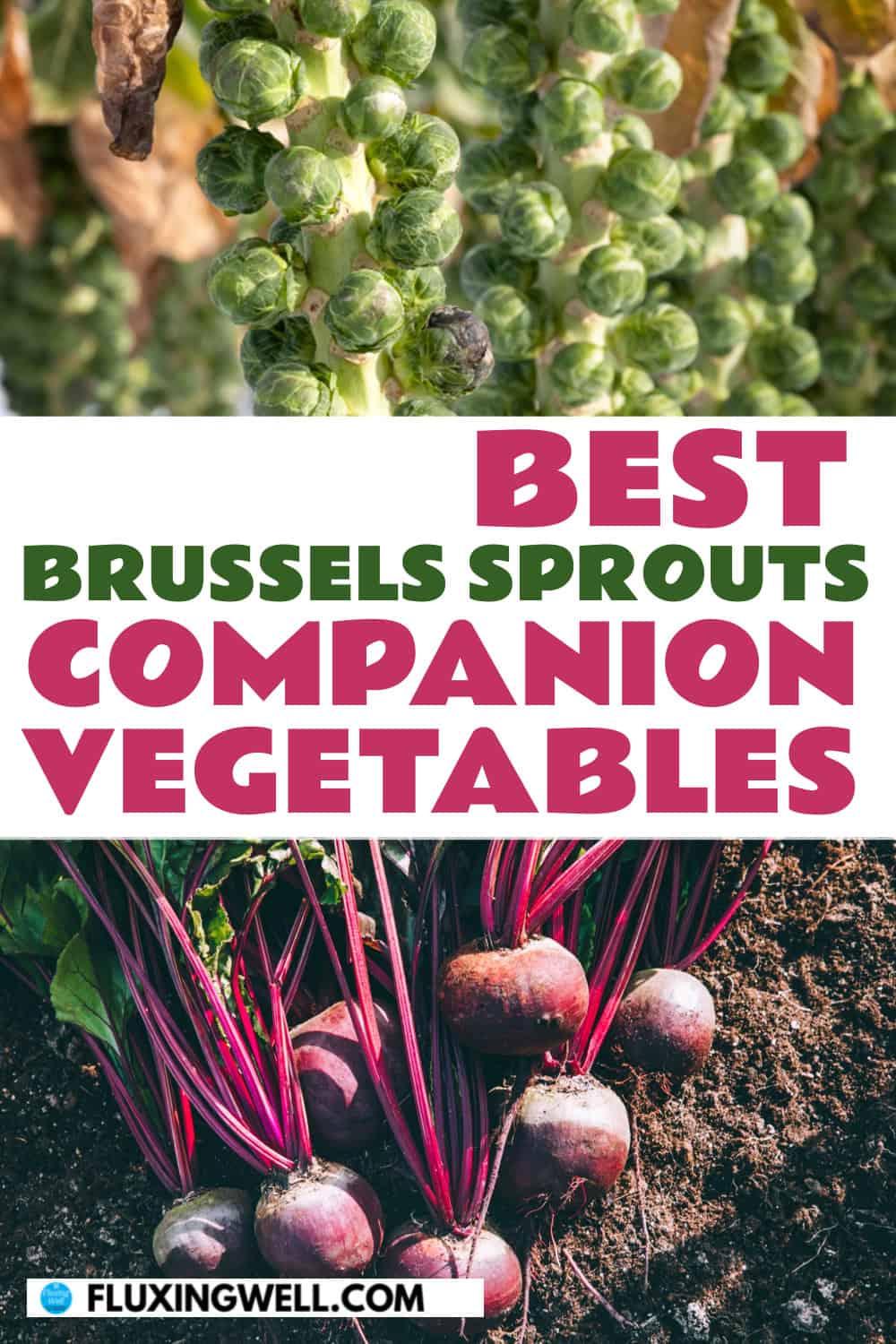
Brussels sprouts can form an important part of the vegetable garden, growing alongside these tasty garden staples.
Beets: Grow well without competing
Onions & Garlic: Repel aphids & caterpillars
Celery: Confuses pests
Potatoes: Work well alongside
Spinach and Lettuce: Quick crops before Brussels spread out
What Not to Plant with Brussels Sprouts
When planting Brussels sprouts, avoid these plants, as they can compete for nutrients, attract pests, or hinder growth.
Rue: Can stunt Brussels sprouts
Strawberries: Compete for nutrients & attract pests
Other Brassicas (cabbage, kale, cauliflower, broccoli): Share the same pests & diseases
Brussels Sprouts Companion Planting Chart
| Brussels Sprouts Companion Plants | |
| Brussels Sprouts Companion Plants: Flowers | Brussels Sprouts Companion Plants: Herbs |
| Calendula | Chamomile |
| Cosmos | Chives |
| Marigolds | Dill |
| Lavender | Mint |
| Nasturtiums | Rosemary |
| Sweet Alyssum | Sage |
| Thyme | |
|
Brussels Sprouts Companion Plants: Vegetables
|
|
| Beets | Worst Brussels Sprouts Companion Plants |
| Celery | Broccoli |
| Garlic | Cabbage |
| Letuce | Cauliflower |
| Onions | Kale |
| Potatoes | Rue |
| Spinach | Strawberries |
Common Brussels Sprouts Questions

Can Brussels sprouts be grown in containers?
Brussels sprouts can be grown in containers if you give them enough space and care. Choose a large pot (at least 5–7 gallons per plant), fill it with rich, well-draining soil, and place it in full sun for 6+ hours daily. Because they’re heavy feeders, mix in compost and fertilize regularly, and keep the soil consistently moist since containers dry out quickly. Tall plants may need staking for support, and you can harvest sprouts from the bottom up once they’re firm and about 1–2 inches wide. Growing in containers works especially well in Zone 8b (my garden zone), where pots can be moved for protection from heat or frost.
Where is the best place to plant Brussels sprouts?
Plant Brussels sprouts in a sunny spot with at least 6 hours of direct light daily. They thrive in rich, well-drained soil with plenty of organic matter and a slightly acidic to neutral pH (6.0–7.5). Give them space. Plants grow tall and wide, so allow about 18–24 inches between plants and 2–3 feet between rows. Rotate them away from where other brassicas (cabbage, kale, broccoli, cauliflower) grew in the past 2–3 years to reduce pests and disease.
When is the best time to plant Brussels sprouts?
Plant Brussels sprouts in early spring for a fall harvest, or in late summer for a winter harvest (in mild climates). They prefer cool weather and grow best when maturing in temperatures between 45–75°F (7–24°C). Start seeds indoors 4–6 weeks before your last spring frost, or sow directly outdoors in midsummer for fall crops.
What are some common pests and diseases of Brussels sprouts?
Brussels sprouts are prone to common brassica pests like aphids, cabbage worms, cabbage loopers, cutworms, and flea beetles, which chew leaves and stunt growth, while harlequin bugs and cabbage root maggots can also cause damage. They’re also vulnerable to diseases such as clubroot, black rot, downy mildew, and powdery mildew, which thrive in damp or poorly drained soil. Regular crop rotation, good spacing for airflow, removing plant debris, and using row covers can help prevent many of these problems.
How tall do Brussels sprouts grow?
Brussels sprouts plants usually grow 2–3 feet tall, but in good conditions they can reach up to 4 feet. The tall, upright stalk thickens as the plant matures, and the sprouts form along the stem in the leaf axils from the bottom upward. Because of their height, they sometimes need staking or support in windy gardens.
Do Brussels sprouts plants keep producing?
Brussels sprouts plants are indeterminate to a degree, meaning they produce multiple sprouts over time rather than all at once. The lower sprouts mature first, and the plant continues forming new sprouts higher up the stalk. They can keep producing for 2–3 months in cool weather. After harvesting most sprouts, you can cut off the top of the stalk to encourage the remaining upper sprouts to grow faster.
How are Brussels sprouts harvested?
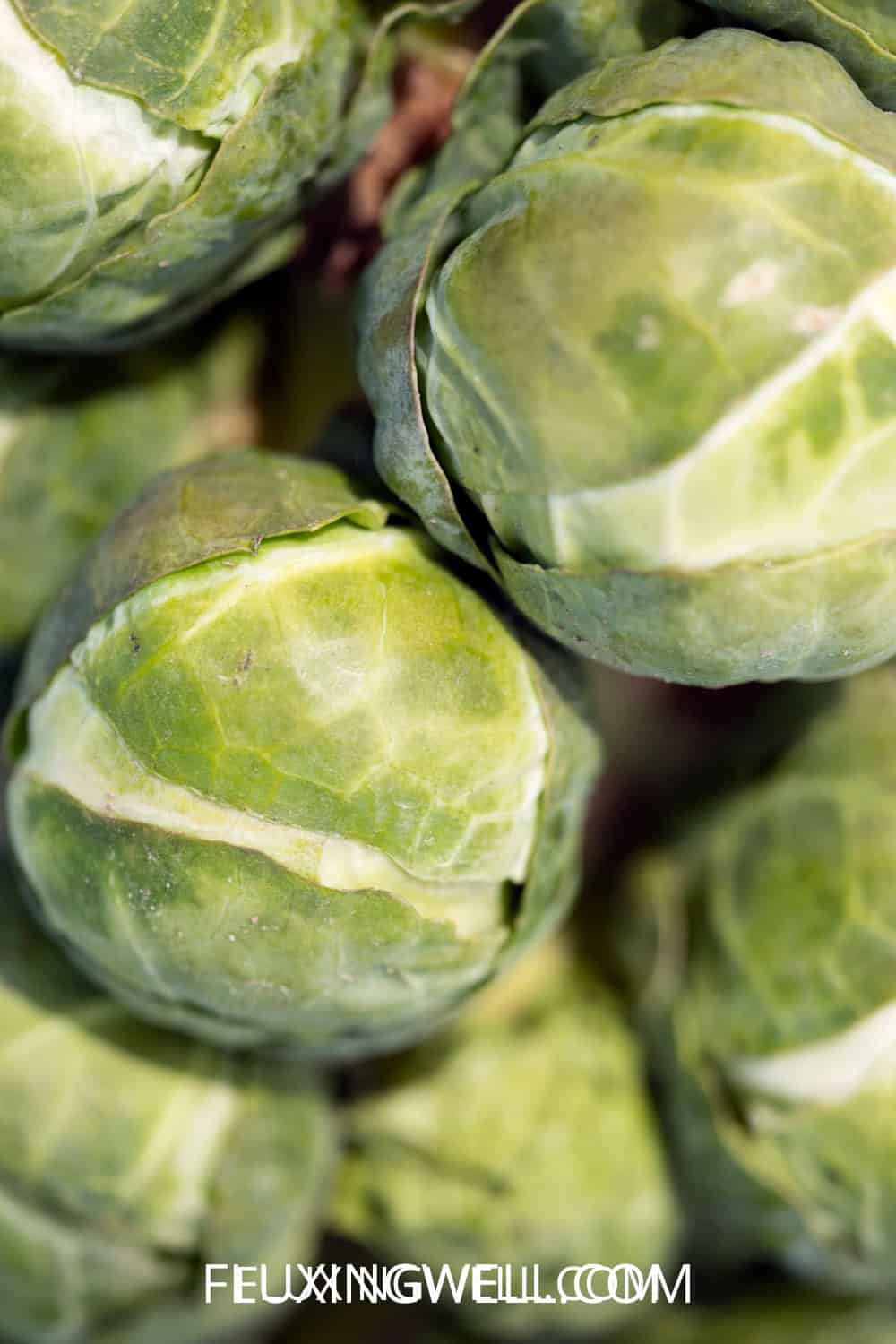
Brussels sprouts are harvested from the bottom of the stalk upward once the small heads are firm, compact, and about 1–2 inches in diameter. Use a sharp knife or twist them off by hand, removing the lower leaves as you go to encourage the upper sprouts to mature. Harvesting usually begins 85 to 110 days after planting, and because sprouts don’t ripen all at once, you can pick them every week or two over several weeks until the plant is finished producing. Nice!
Easy Brussels Sprouts Recipe for the Air Fryer
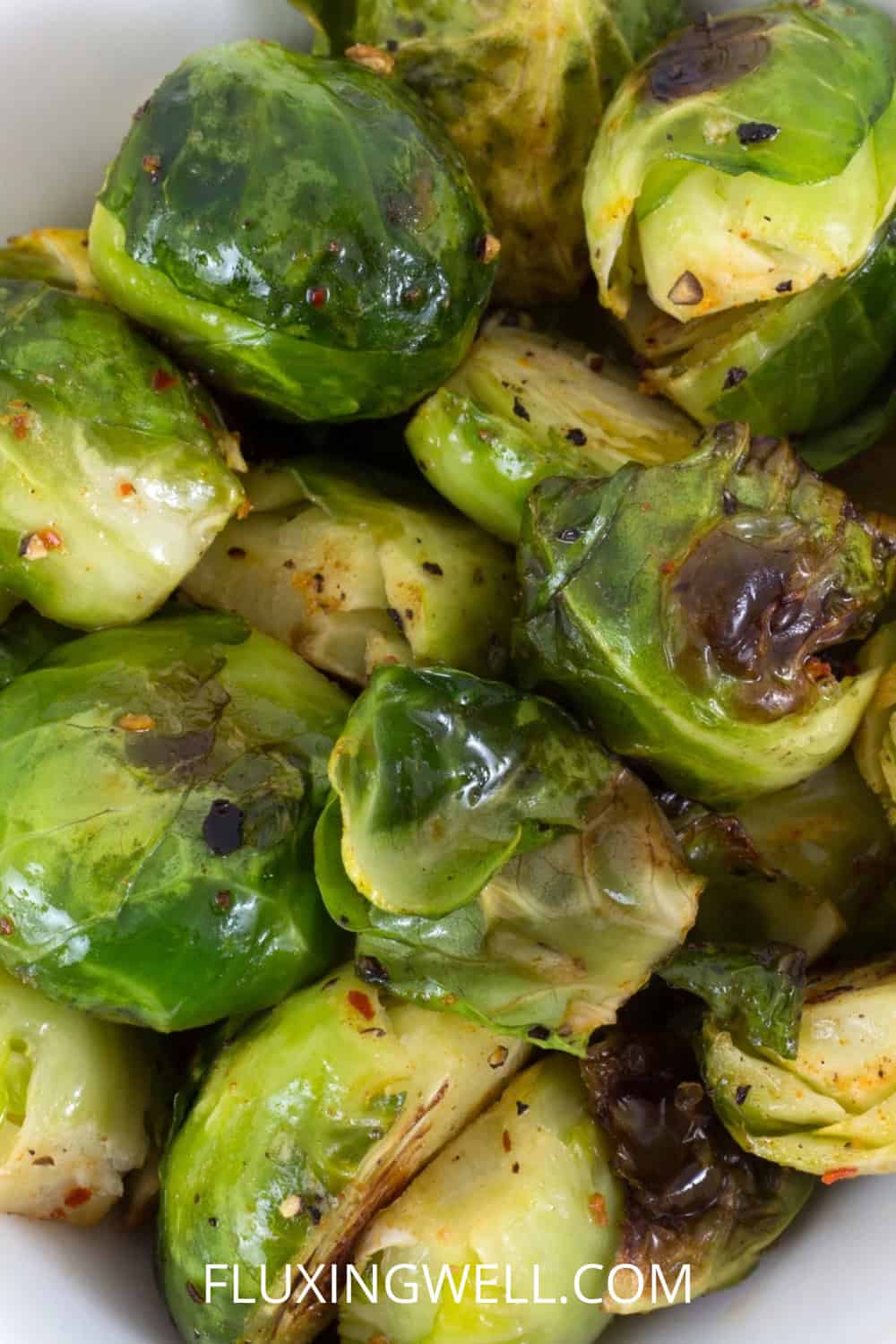
Not sure how to cook Brussels sprouts? Here’s an easy recipe for the air fryer that’s tangy and delicious.

Air Fryer Balsamic Brussels Sprouts
Ingredients (for 2–4 servings):
1 lb Brussels sprouts, trimmed and halved
1–2 tbsp olive oil
Salt & pepper, to taste
1–2 tsp garlic powder (optional)
1–2 tbsp balsamic vinegar
1 tsp honey or maple syrup (optional, for caramelization)
Instructions:
Preheat air fryer to 375°F (190°C).
Toss sprouts in olive oil, salt, pepper, and garlic powder if using.
Place in air fryer basket in a single layer (you may need two batches).
Cook for 12–15 minutes, shaking halfway, until crisp on the edges and tender inside.
Drizzle balsamic vinegar (and honey/maple syrup if desired) over hot sprouts. Toss gently.
Serve immediately as a sweet-savory, crispy side dish!
Note: For extra crispiness, cut larger sprouts in quarters.
Add parmesan or toasted nuts after cooking for extra flavor and texture.
Need More Planting Ideas?
Check out the tips for the best companion plants for eggplant to learn what to grow with those beauties. If you like the idea of companion planting, you might be interested in reading about the best companion plants for pumpkins, pulmonaria, tarragon, irises, cosmos, sunflowers, garlic, asparagus, rosemary, radishes, beetroot (beets), thyme, parsley, lupine, borage, stevia, kale, dahlias, lithodora, leeks, or the best companion plants for lavender. Get tips for growing stunning dahlias or vintage roses. Are you a beginning gardener? Try planting some foolproof, easy-care perennials, deer-resistant perennials, or learning about the best companion plants for columbine. There are so many exciting plants to grow!
Keep Track of Your Garden with a Journal Logbook
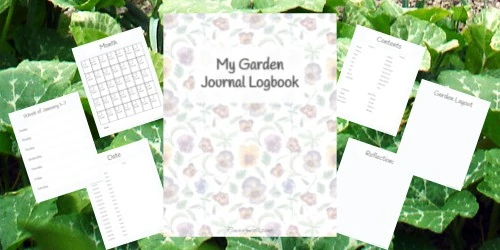
Now that you have learned about some compatible companion plants, keep track of your planting ideas, goals, and plans with a printable, editable free garden journal logbook. Choose the pages you want to use and customize them as you wish to record monthly, weekly, and daily garden tasks, lists, weather, and planting arrangements. There are also grid pages for easily designing the layout of your vegetable garden, flower garden, or landscape. Print it out and put it into a notebook you can take with you to the garden (that’s what I do). It’s nice to have all of your garden information in one place.
Free Online Garden Planner Layout Template
Now that you know which are the best companion plants for Brussels sprouts, you might need a way to plan your garden layout. Whether you are planting vegetables, flowers, or herbs near your collard plants, this online garden planner can help you visualize your design and bring it to life. Arrange and rearrange the plants over and over, then print the layout when you are satisfied. With garden tasks that need your attention, this is one way to save time.

It’s fully customizable when you make your own copy and includes two editable chart pages for noting planting specifications.
Get my free online garden layout planner template!
Have a wonderful day, and may all of your Brussels sprouts planting endeavors meet with success!

Lisa Mitchell is a wife, mom, and school librarian who likes to grow fruit, herbs, vegetables, and flowers on her family’s small Pacific Northwest farm. To learn more about what this website has to offer gardeners, click on over to the Garden page.
Thanks for these valuable tips on growing brussel sprouts in a flower garden. They are very helpful indeed!
Great! I hope you’re able to make Brussels sprouts part of your garden.
Thank you for this great guide on growing Brussels sprouts in flower gardens. You’ve made it so easy to know the proper companion plants and flowers. I’m excited to try the air fryer balsamic Brussels Sprouts recipe for a twist on my usual oven-roasted recipe!
Great! I love cooking Brussels sprouts in the air fryer.
Thanks for all this great information on Brussels sprouts companion plants! And thanks for the recipe as well–sounds delicious! I love roasting Brussels sprouts on their own or with other veggies. I don’t have an air fryer, but I bet I can adapt your recipe for roasting.
Yes, that would be easy, and the flavor of the balsamic vinegar on the Brussels sprouts would shine through well.
Another helpful and informative article in your gardening series! Thanks for sharing this helpful info about the best Brussels sprouts companion plants! I love the recipe, too.
Fabulous! I hope you get to try the Brussels sprouts recipe soon.
I love that you have now added Brussels sprout companion plants to your growing list of plant companions. I am planning to try a late summer planting of Brussels sprouts this year. Perfect timing!
Awesome! I’m going to be planting a late summer crop of Brussels sprouts soon as well. Happy planting!