
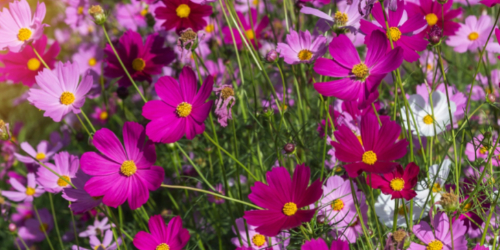
Looking for fresh cosmos flower garden ideas? Planting the right cosmos companion plants not only makes your cosmos flowers in pots or beds pop with color, but also helps with attracting beneficial insects, attracting bees, and boosting your harvest. Whether you’re filling a sustainable garden with pink cosmos for cutting or mixing companion flowers into your cosmos in garden designs, these cosmos planting ideas will inspire beautiful, pollinator-friendly spaces.
Why I Love Growing Cosmos
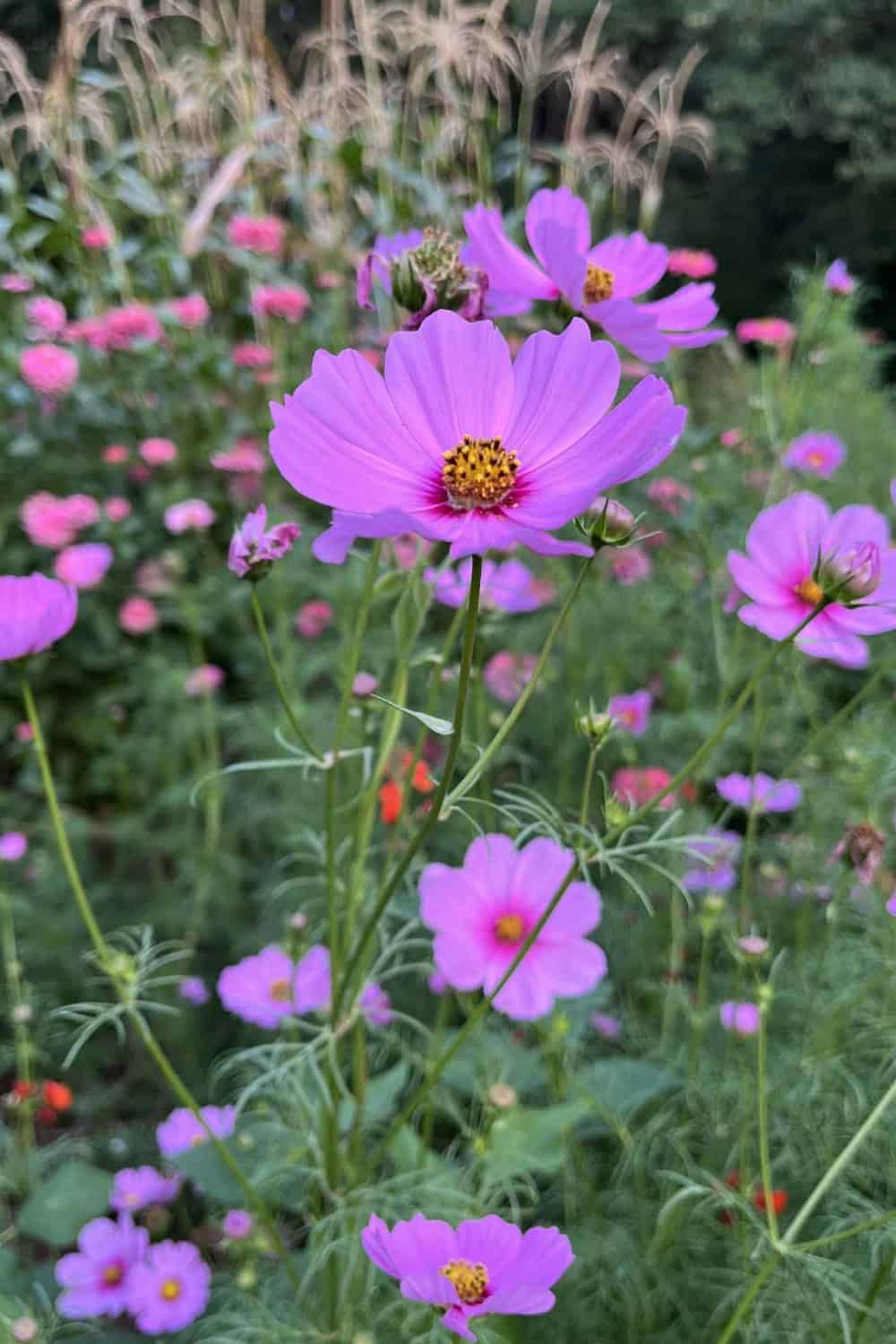
Growing cosmos is a gardener’s delight. They’re low-maintenance, drought-tolerant, and thrive in poor soil. Their colorful blooms attract bees, butterflies, and other pollinators, adding beauty while supporting a healthy, thriving garden ecosystem. I love that they bloom in the late summer and early fall in my USDA plant hardiness Zone 8 garden with zinnias and dahlias so I can create flower arrangements with a variety of blooms. Here I am on the first day of school, getting ready to go to work.

Cosmos Companion Flowers
Here are some great flower companions for cosmos. There are many options to choose from, along with the reasons each is of benefit to cosmos.
Ageratum: Attracts butterflies and provides a soft blue contrast to cosmos’ airy blooms
Bachelor’s Button: Attracts bees and predatory insects while matching cosmos’ carefree look
Calendula: Draws pollinators while repelling some harmful insects
Coreopsis: Thrives in similar conditions and extends seasonal color alongside cosmos
Echinacea: Tall, sturdy flowers that lure in bees and butterflies
Gaillardia (Blanket Flower): Thrives in dry, sunny conditions and supports pollinators
Larkspur: Offers vertical spikes of color that contrast with cosmos’ airy blooms
Marigold: Repels aphids and nematodes, protecting cosmos plants
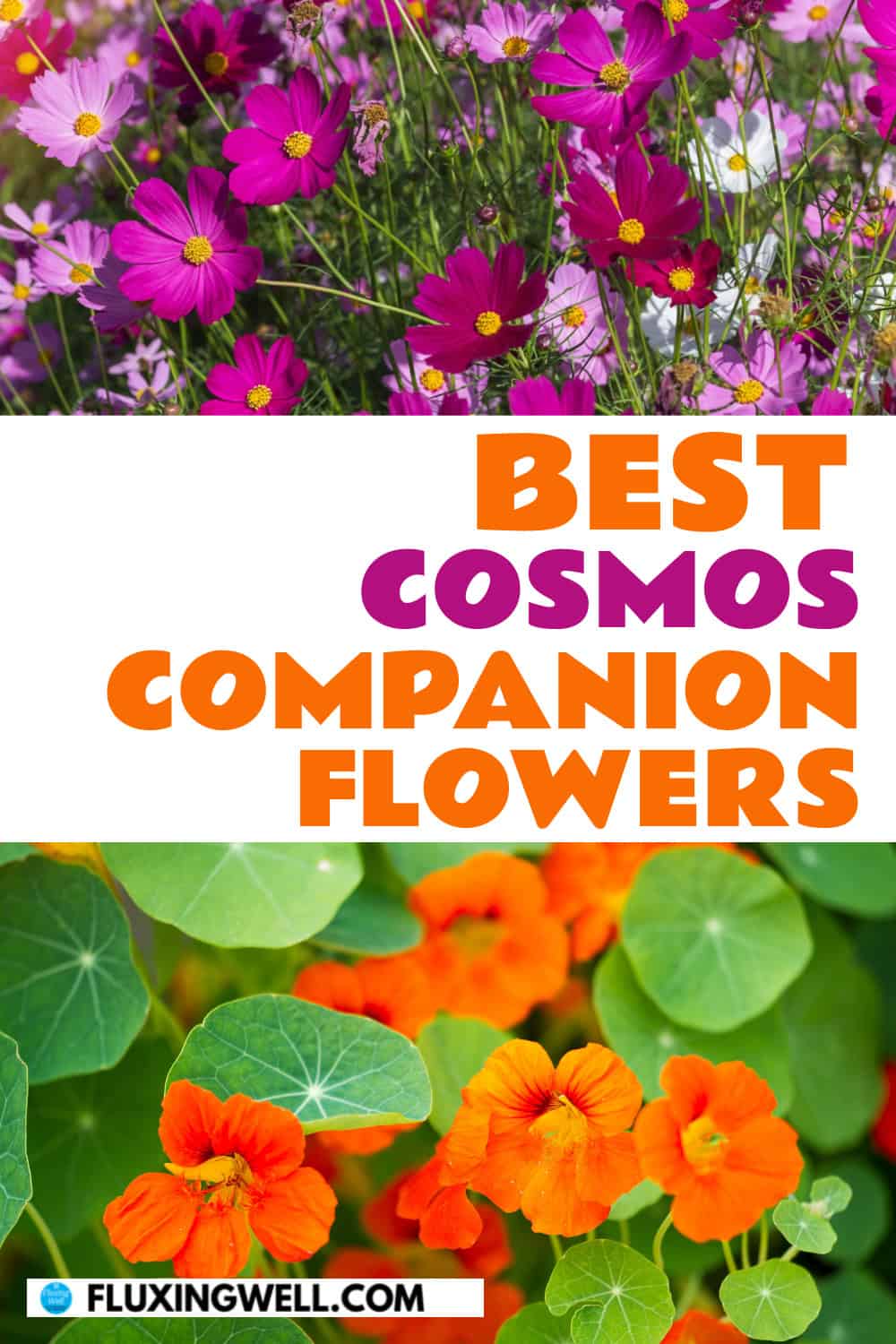
Nasturtium: Acts as a trap crop for aphids and adds trailing ground cover color
Rudbeckia (Black-Eyed Susan): Draws pollinators and provides sturdy structure alongside cosmos
Snapdragon: Creates vertical contrast and attracts pollinators
Sunflower: Offers height and structure while drawing pollinators to the garden
Verbena: Attracts butterflies and adds ground-level color beneath taller cosmos
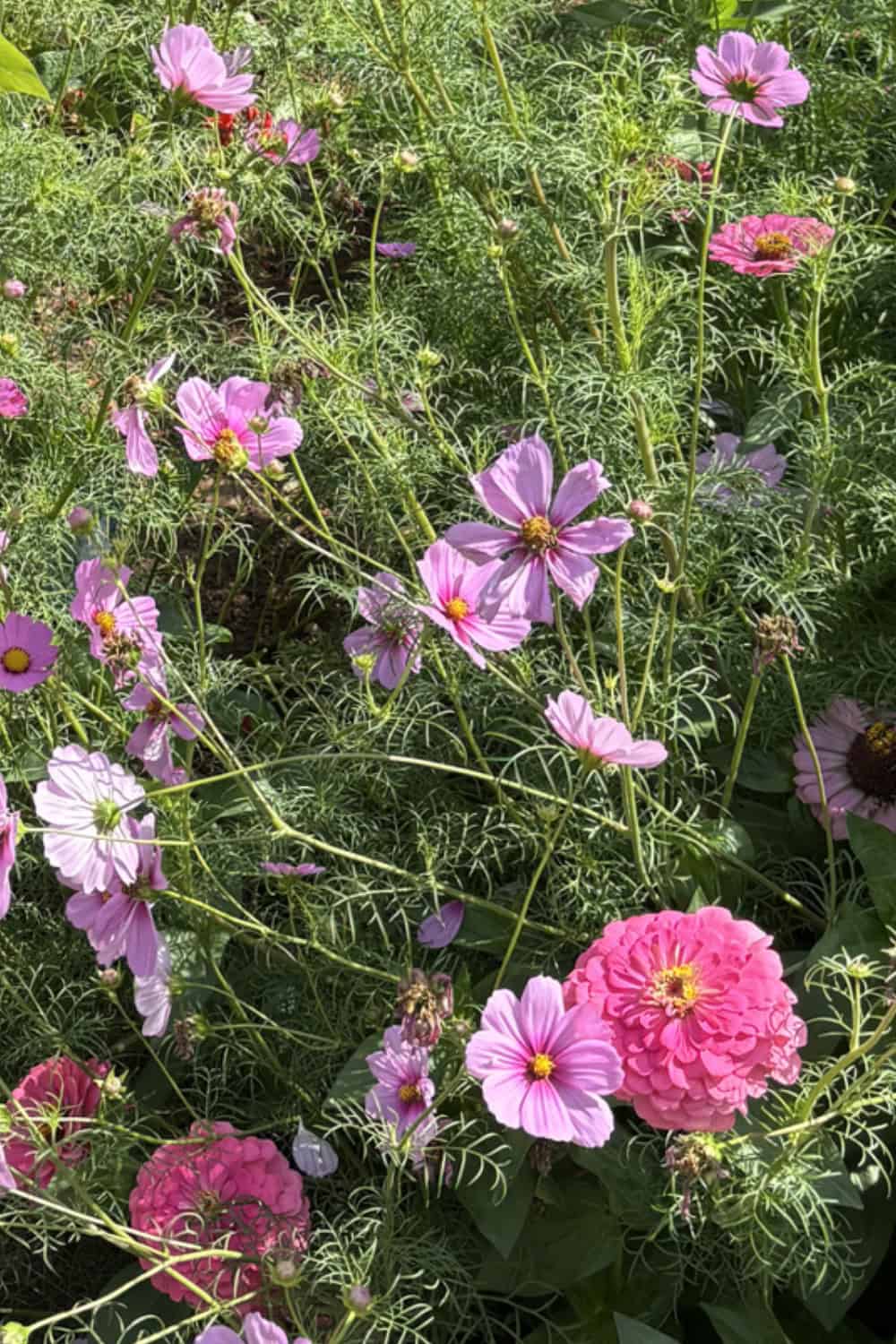
Zinnia: Shares growth habits with cosmos and provides abundant blooms for pollinators as well as complementary flowers for arrangements, as you can see with the colors of the blooms above
Cosmos Companion Herbs
Growing herbs and flowers together creates a colorful, practical garden area. Here are some excellent herbal companions to cosmos.
Basil: Repels pests like thrips and mosquitoes while attracting bees
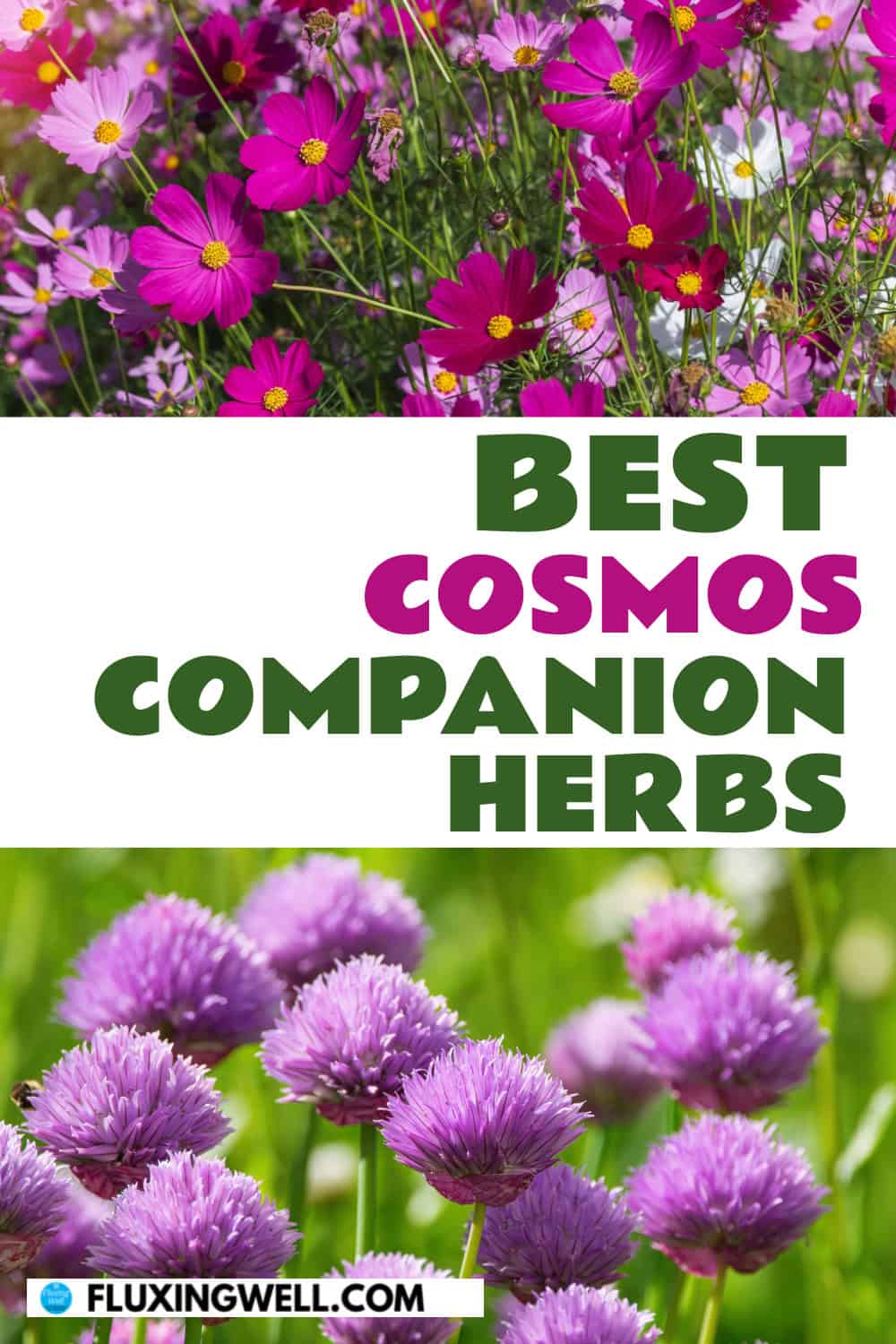
Chives: Repels aphids and thrips while their purple blooms attract pollinators
Cilantro: Produces umbrella-like flowers that lure in hoverflies and parasitic wasps
Dill: Lures in beneficial predatory insects such as ladybugs and lacewings
Fennel: Attracts predatory wasps and butterflies with its umbrella-like flowers
Oregano: Acts as a living mulch, suppressing weeds and drawing pollinators with small flowers
Thyme: Low-growing, drought-tolerant herb that attracts bees and helps conserve soil moisture
Cosmos Companion Vegetables
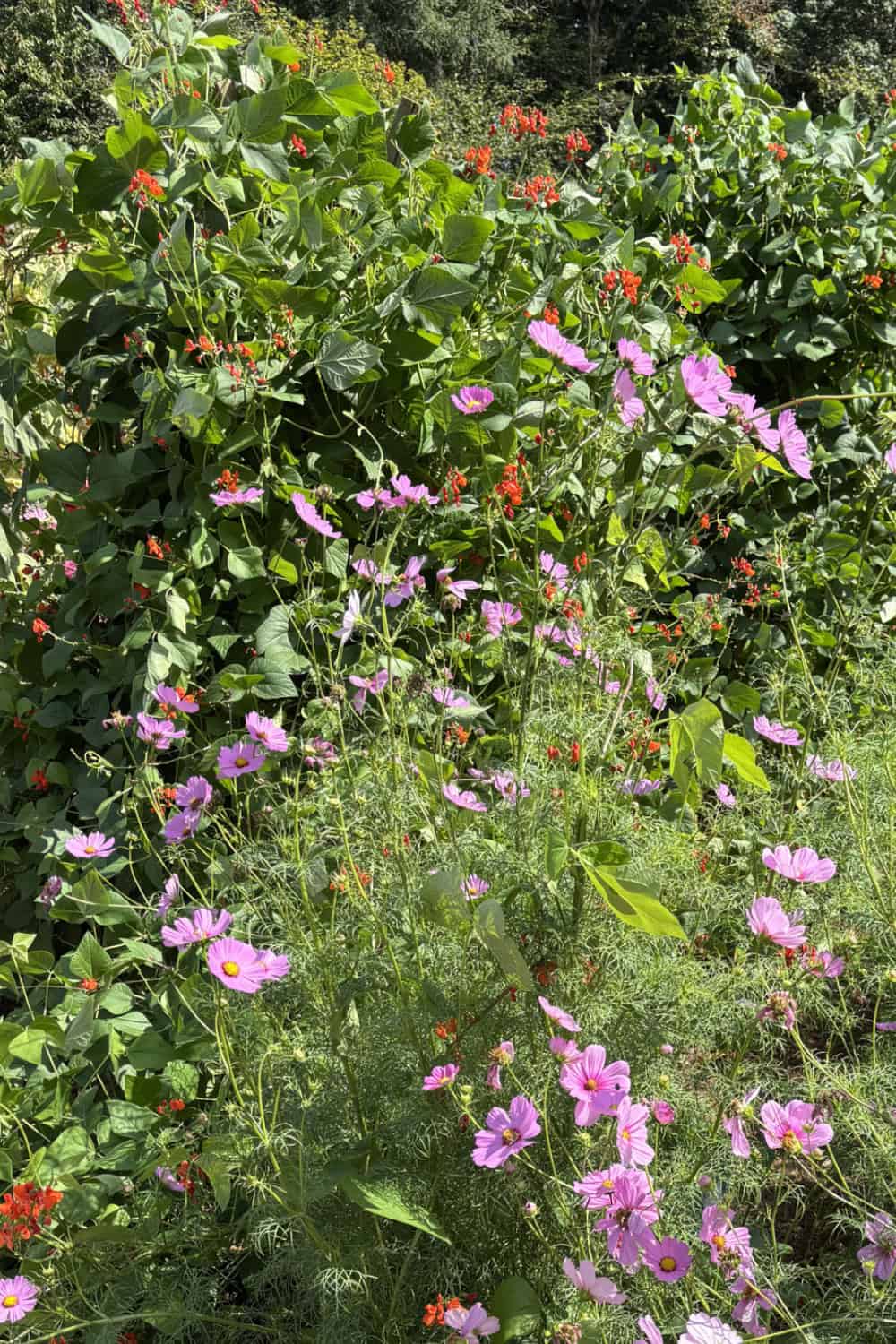
I have a combination vegetable garden and cutting garden. The vegetables and flowers thrive alongside each other. If you decide to plant cosmos near beans, as I do with my scarlet runner beans, just watch for bean shoots that might want to wind around the cosmos stems. The stems of cosmos aren’t sturdy enough to hold the shoots without bending. Here are the vegetables that make good cosmos companions.
Beans: Fix nitrogen in the soil, which supports cosmos growth
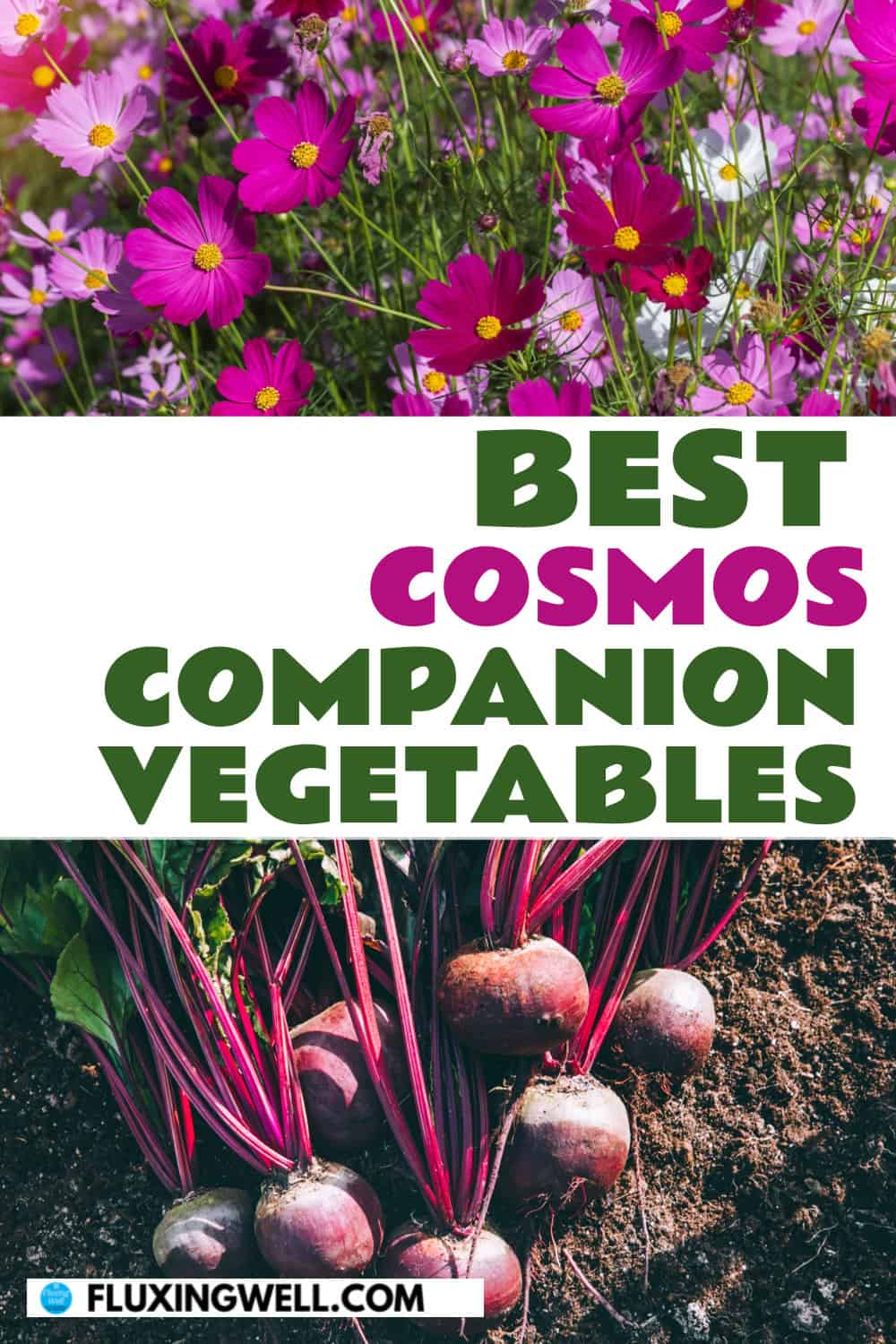
Beets: Benefit from pollinators attracted to cosmos and fit well beneath taller flowers
Carrots: Their feathery foliage complements cosmos and helps improve soil aeration
Corn: Provides vertical structure and attracts beneficial insects
Cucumber: Benefits from pollinators that cosmos attracts
Lettuce: Gains partial shade from cosmos’ airy foliage, helping prevent bolting in hot weather
Melons: Improved pollination from insects drawn to cosmos flowers
Peppers: Protected from pests as cosmos draws in beneficial predatory insects
Potatoes: Gain protection from pest pressure when grown near cosmos
Squash: Gains better pollination and some pest control from nearby cosmos
Tomatoes: Attracts pollinators that boost fruit set while cosmos helps deter pests
What Not to Plant with Cosmos
Although cosmos are compatible with a wide variety of flowers, herbs, and vegetables, there are a few plants to avoid growing near cosmos. Here they are, along with the reasons for avoidance.
Flowers
Gladiolus: Competes heavily for nutrients and water, leaving cosmos weaker
Roses: Prefer richer soil and more consistent moisture, unlike cosmos which thrives in leaner, drier conditions
Herbs
Mint: Spreads aggressively and competes for space and nutrients, crowding out cosmos
Rosemary: Prefers very dry soil and doesn’t mix well with cosmos’ moderate water needs
Sage: Competes for soil nutrients and prefers drier, less fertile conditions than cosmos
Vegetables
Broccoli: Heavy feeder that strips nutrients from the soil, leaving little for cosmos
Cabbage: Attracts pests (like cabbage worms and aphids) that may spread to cosmos
Cauliflower: Needs rich, moist soil which contrasts with cosmos’ lean-soil preference
Kale: Competes for nutrients and draws in aphids that can attack cosmos as well
Onions: Their strong sulfur compounds may inhibit cosmos’ growth when planted too close
Spinach: Prefers cooler conditions and rich soil, conflicting with cosmos’ warm, dry needs
Quick Reference Cosmos Companion Planting Chart
| Cosmos Companion Plants | |
| Cosmos Companion Plants: Flowers | Cosmos Companion Plants: Herbs |
| Ageratum | Basil |
| Bachelor’s Button | Chives |
| Calendula | Cilantro |
| Coreopsis | Dill |
| Echinacea | Fennel |
| Gaillardia (Blanket Flower) | Oregano |
| Larkspur | Thyme |
| Marigolds | |
| Nasturtium | Cosmos Companion Plants: Vegetables |
| Rudbeckia (Black-Eyed Susan) | Beans |
| Snapdragon | Beets |
| Sunflower | Carrots |
| Verbena | Corn |
| Zinnia | Cucumber |
| Lettuce | |
| Worst Cosmos Companion Plants | Melons |
| Gladiolus | Peppers |
| Roses | Potatoes |
| Mint | Squash |
| Rosemary | Tomatoes |
| Sage | |
| Broccoli | |
| Cabbage | |
| Cauliflower | |
| Kale | |
| Onions | |
| Spinach | |
Cosmos Pests and Diseases Along with Remedies
Pests
Aphids: Small sap-sucking insects that weaken plants and cause distorted growth.
Remedies: Spray with a strong blast of water to knock them off, introduce ladybugs or lacewings, or use insecticidal soap.

Japanese Beetles: Chew leaves and flowers, leaving skeletonized foliage.
Remedies: Handpick early in the morning, drop into soapy water, or spray with neem oil.
Leafhoppers: Suck plant juices and spread disease, causing leaves to yellow or curl.
Remedies: Encourage natural predators, apply insecticidal soap, or use floating row covers.

Spider Mites: Cause stippling, yellowing, and webbing on leaves.
Remedies: Increase humidity around plants, spray with water, or apply neem oil or horticultural oil.
Thrips: Tiny insects that feed on flower buds, causing discoloration and poor blooms.
Remedies: Use sticky traps, prune damaged blooms, or apply insecticidal soap.
Diseases
Aster Yellows: Spread by leafhoppers, causing yellow, deformed, or stunted growth.
Remedies: Remove and destroy infected plants, control leafhoppers, and avoid replanting cosmos in the same area immediately.
Botrytis Blight (Gray Mold): Causes fuzzy gray mold on flowers and leaves in damp conditions.
Remedies: Improve air circulation, water at the base, and remove infected plant parts.
Fungal Leaf Spot: Appears as brown or black spots on leaves, leading to leaf drop.
Remedies: Avoid overhead watering, space plants for airflow, and apply copper-based fungicides if severe.

Powdery Mildew: White powdery coating on leaves, especially in humid weather.
Remedies: Thin out crowded plantings, water at soil level, and treat with neem oil or a baking soda spray (1 tsp baking soda + few drops of dish soap in 1 quart water).
Root Rot: Caused by poorly drained soil, leading to wilting and plant collapse.
Remedies: Plant in well-draining soil, avoid overwatering, and remove severely infected plants.
Common Cosmos Questions
When is the best time to plant cosmos?
Plant cosmos after the last spring frost when soil has warmed, usually in late spring to early summer, as they thrive in warm weather and won’t tolerate frost.
Where is the best location to plant cosmos?
Plant cosmos in a sunny spot with well-draining soil, as they thrive in full sun and don’t need rich soil to bloom beautifully.
Do rabbits eat cosmos?
Yes, rabbits will sometimes eat cosmos, especially tender young seedlings and new shoots. Cosmos plants aren’t usually at the top of a rabbit’s favorite food list (they tend to prefer tastier greens and veggies), but hungry rabbits may nibble them if other food sources are scarce. My favorite solution to the rabbit problem is to spray Liquid Fence liberally. Its all-natural ingredients make it a good choice. I buy it in large quantities since you can use it all year.

Do slugs eat cosmos?
Yes, slugs do eat cosmos, especially the tender seedlings and young leaves. They’re most likely to attack right after planting when stems and leaves are soft and easy to chew. Mature cosmos plants are usually tougher and less appealing, so the risk goes down as they grow. To stay on top of the slug wars, I like to use a slug and snail bait.

How do you collect seeds from cosmos?
Collect cosmos seeds once the flower heads turn brown and dry on the plant; snip them off, gently rub to release the seeds, and store them in a cool, dry place for next season.
How many cosmos should I plant together?
For a visually full and healthy display, plant cosmos 6–12 inches apart for shorter varieties and 12–18 inches apart for taller types. This spacing allows air circulation, reduces disease risk, and gives each plant room to grow.
How to keep cosmos blooming all summer?
To keep cosmos blooming all summer: deadhead spent flowers regularly, ensure they get full sun, water moderately without overwatering, and avoid over-fertilizing. Too much nitrogen promotes foliage over flowers.
Do cosmos come back every year?
Cosmos are mostly grown as annuals, meaning they complete their life cycle in one season. However, they can self-seed if seeds are left on the plant, often producing new blooms the following year.
Are you supposed to deadhead cosmos?
Yes, deadheading cosmos (removing spent flowers) encourages more blooms, keeps plants looking tidy, and extends the flowering season throughout summer and early fall.
Do cosmos do well in hot weather?
Yes, cosmos thrive in hot weather. They are heat-tolerant, drought-resistant, and flourish in full sun, making them ideal for warm summer gardens.
Can cosmos flowers grow in containers?
Yes, cosmos can be grown in containers. Use a well-draining pot, quality potting mix, and place it in full sun, watering moderately to keep the soil slightly moist but not soggy.
Need More Planting Ideas?
Check out the tips for the best companion plants for eggplant to learn what to grow with those beauties. If you like the idea of companion planting, you might be interested in reading about the best companion plants for pumpkins, irises, spirea, tarragon, Brussels sprouts, sunflowers, garlic, asparagus, rosemary, radishes, beetroot (beets), thyme, parsley, lupine, borage, stevia, kale, dahlias, arugula, leeks, or the best companion plants for lavender. Get tips for growing stunning dahlias or vintage roses. Are you a beginning gardener? Try planting some foolproof, easy-care perennials, or learning about the best companion plants for columbine. There are so many exciting plants to grow!
Keep Track of Your Garden with a Journal Logbook

Now that you have learned about some compatible companion plants, keep track of your planting ideas, goals, and plans with a printable, editable free garden journal logbook. Choose the pages you want to use and customize them as you wish to record monthly, weekly, and daily garden tasks, lists, weather, and planting arrangements. There are also grid pages for easily designing the layout of your vegetable garden, flower garden, or landscape. Print it out and put it into a notebook you can take with you to the garden (that’s what I do). It’s nice to have all of your garden information in one place.
Free Online Garden Planner Layout Template
Now that you know which are the best companion plants for hollyhocks, you might need a way to plan your garden layout. Whether you are planting vegetables, flowers, or herbs near your lupine plants, this online garden planner can help you visualize your design and bring it to life. Arrange and rearrange the plants over and over, then print the layout when you are satisfied. With garden tasks that need your attention, this is one way to save time.

Get my free online garden layout planner template!
Have a wonderful day, and may all of your hollyhock endeavors meet with success!

Lisa Mitchell is a wife, mom, and school librarian who likes to grow fruit, herbs, vegetables, and flowers on her family’s small Pacific Northwest farm. To learn more about what this website has to offer gardeners, click on over to the Garden page.
This list of top cosmos companion flowers will be pretty helpful for garden owners in my opinion. Some of the tips sound practical as well!
Thank you! I always try to make my garden tips as practical as possible for busy people.
Thank you for this great guide of the best cosmos companion flowers as well as plants. They are gorgeous flowers and I’m excited to try my hand at growing some!
Nice! I hope you find cosmos as easy to grow as I have found them to be.
Your information on cosmos companion plants is thorough and well-organized, as always! Thanks so much for including the herbs, because I grow some each year. So helpful!
Thank you! I am a big fan of combining herbs and flowers. Happy gardening!
Thanks for sharing so many helpful options about flower companions for cosmos. I love echinacea, so perhaps this would be my choice.
Echinacea with cosmos is a winning combination for sure. Both flowers are easy to grow from seed, and both lend well to seed-saving, too!
I love cosmos, and am always hoping to grow bountiful blooms for my cutting garden. Thank you for this list on cosmos companion plants to help me make the most of my garden space.
I’m so glad you grow cosmos in your garden, and I’m happy you can use these companion planting ideas.