
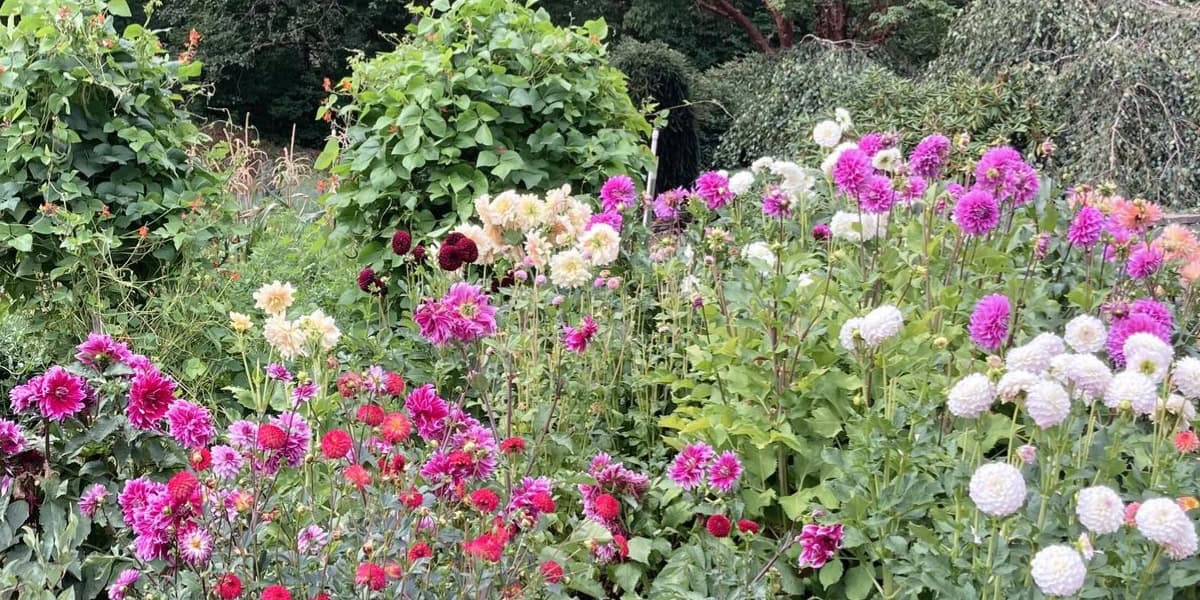
If you’ve ever filled a vase with grocery store blooms and wished you could walk out your back door and snip your own instead, a cut flower garden is exactly what you need. A well-planned cut flower garden layout gives you armloads of homegrown blooms all season long, whether you’re working with a few raised beds or a full backyard border. As a small farm owner and gardener who has been growing a cutting garden for years, I offer simple tips for gardeners with all levels of experience, including beginners. Below you’ll find why a cutting garden is worth the space, the most popular flowers to plant, layout ideas for small and backyard gardens, tips for tucking blooms in among your vegetables, a simple year-round task plan for beginners, and a few favorite books to guide your design with notes for USDA Hardiness Zones 5, 6, 7, and 8.
Why Grow a Cut Flower Garden
A dedicated cutting garden solves a problem every flower lover knows: the guilt of “ruining” a pretty landscape bed by cutting stems out of it. When flowers are grown specifically for cutting, you can harvest generously without worrying about how the display border looks the next morning. Cut flower gardens also tend to be more productive per square foot than ornamental beds, since they’re often planted in tight rows or blocks rather than spaced for a finished “designed” look.
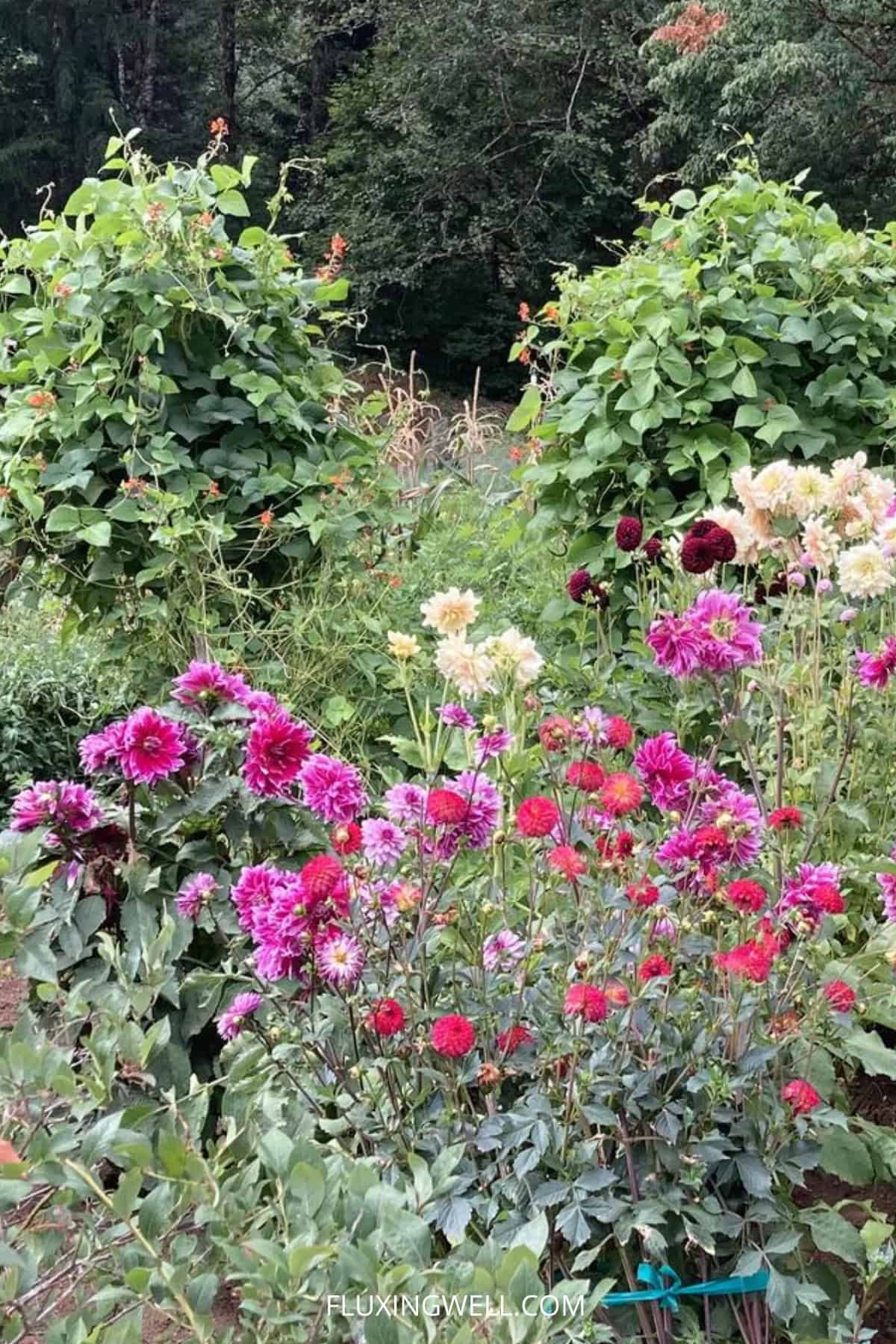
For me, I found I needed less space for a vegetable garden once my husband and I became empty-nesters and were eating less garden produce. I wanted to fill the garden space with something I would enjoy looking at whether I harvested it or not. Goodbye garden harvesting guilt and hello colorful blooms (see photo above)! Just because it’s a cut flower garden doesn’t mean I have to actually cut them all. I can enjoy the blooms outdoors or bring some inside. There are other advantages to growing a cut flower garden as well.
Beyond the practical harvest, a cut flower garden gives you a steady supply of homegrown bouquets for your kitchen table, gifts for neighbors, flowers for a DIY cut flower bouquet party activity, or centerpieces for a garden gathering. It’s also a wonderful way to attract pollinators, extend color in the landscape from spring through frost, and give beginning gardeners an easy, forgiving space to experiment. Many of the best cutting flowers like zinnias, cosmos, and sunflowers, are famously easy-care and low-maintenance, which makes a cutting garden a confidence-building project for anyone new to growing.
Popular Flowers to Grow in a Cut Flower Garden
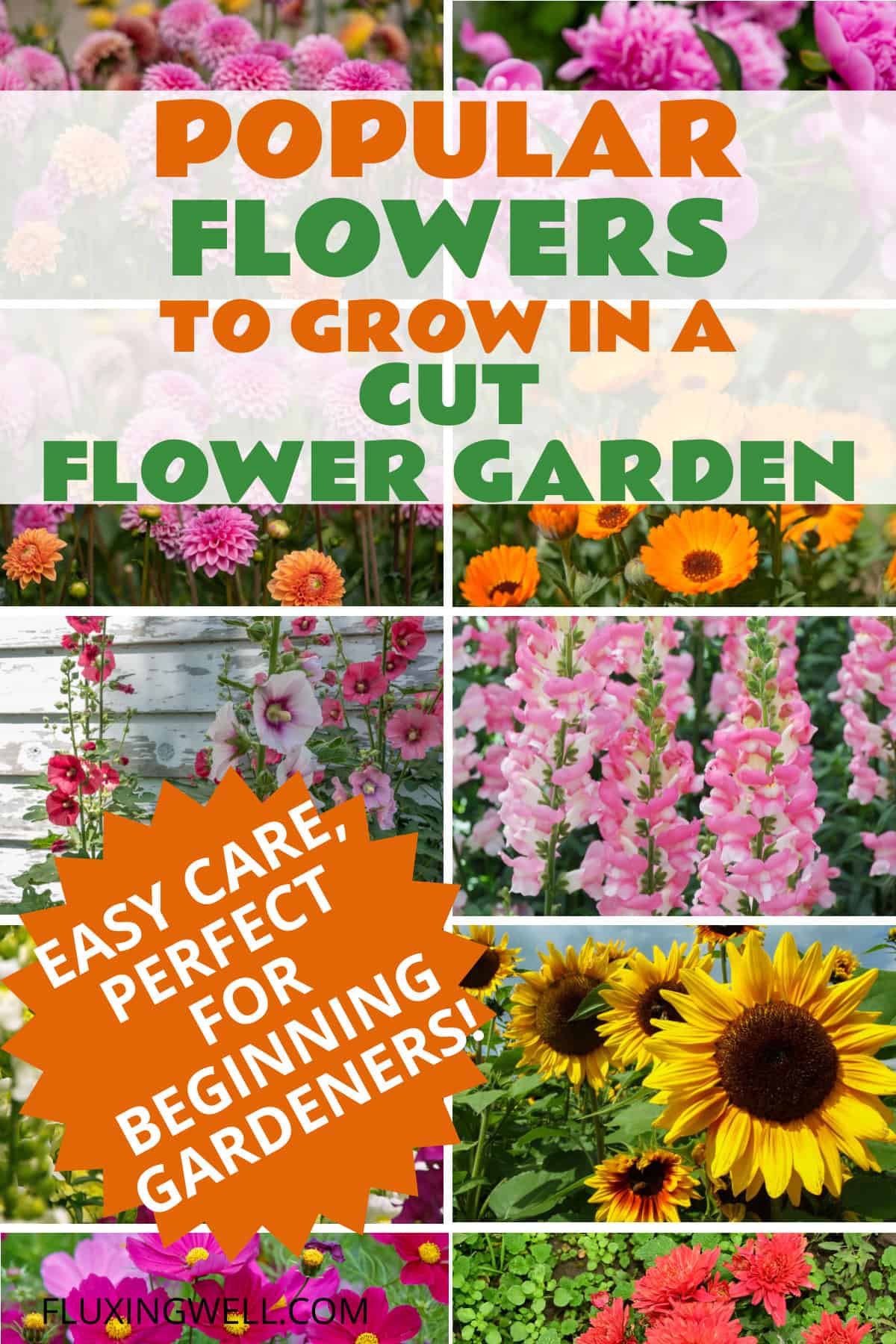
The best cut flower gardens mix long-stemmed annuals for quick color with sturdy perennials that return year after year. Some tried-and-true favorites include:
Zinnias – fast, prolific, and available in nearly every color
Cosmos – airy, drought-tolerant, and a magnet for pollinators (see my cosmos companion planting guide for pairing ideas)
Dahlias – dramatic, long-blooming, and a cutting garden classic (learn how to plant dahlias and best dahlia companion plants)
Sunflowers – bold focal blooms, plus you can try saving sunflower seeds for next year
Peonies – a fragrant, long-lived perennial investment (see how to grow peonies and peony companion plants)
Snapdragons – cool-season color with lovely vertical structure
Calendula – cheerful and edible, plus deer resistant (check out calendula companion plants)
Hollyhocks – cottage-garden height and drama (hollyhock companion plants)
Daylilies – reliable perennial color for warmer months (daylily companion plants)
Sweet peas, larkspur, and yarrow round out a well-balanced palette of fillers, focals, and airy “thrillers.”
Choosing a mix of these gives you flowers to harvest from late spring through the first frost, plus foliage and filler for arranging (my flower arrangement filler guide has more ideas).
Cut Flower Garden Layout Ideas for Small Gardens
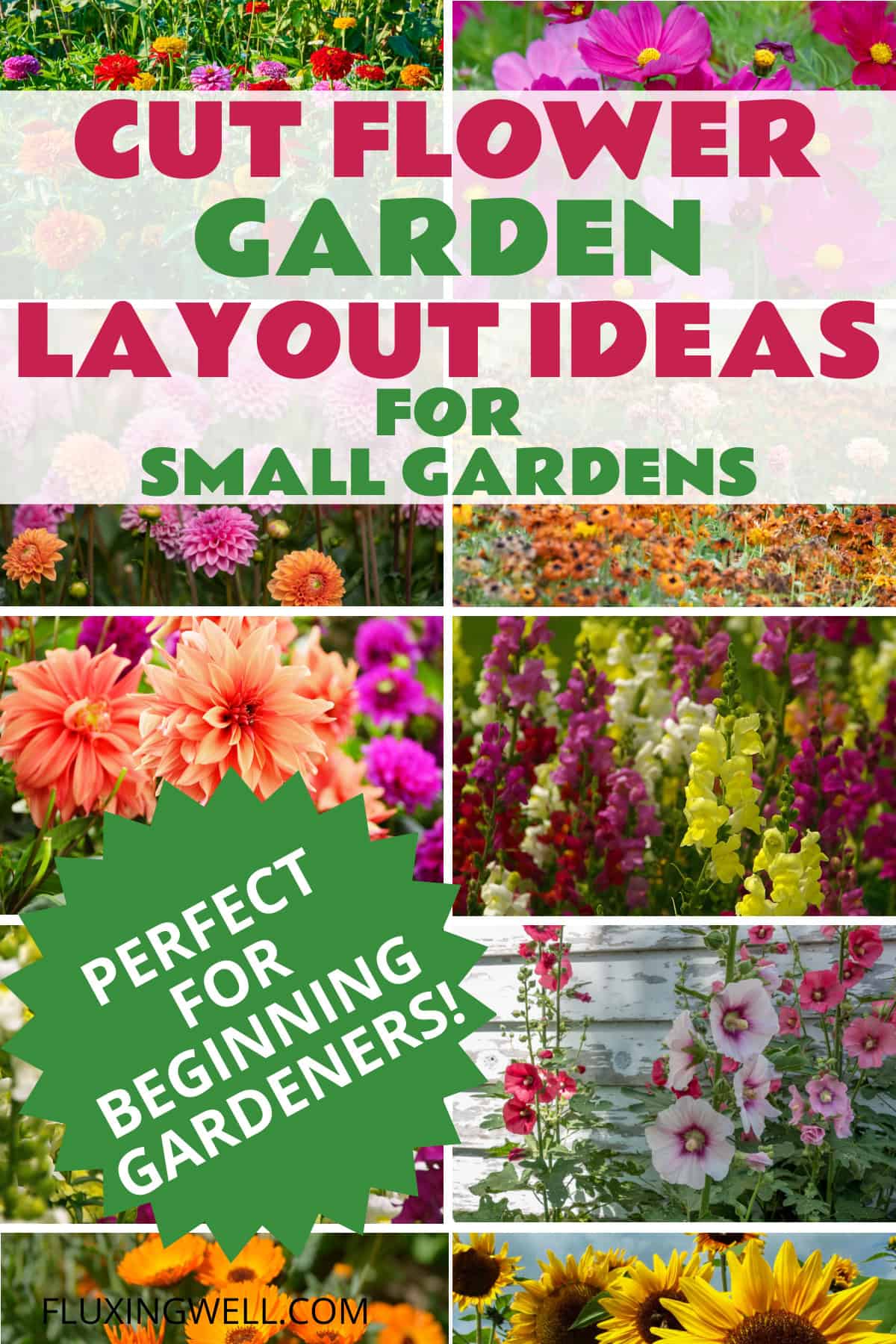
You don’t need acreage to grow a productive cutting garden. A small cut flower garden layout works beautifully in a single 4-by-8-foot raised bed or even a few large containers.
Row-by-variety beds: Plant one flower type per row so you can succession-sow and harvest without disturbing neighboring plants. This is what I usually do.
Grid or block planting: Divide a raised bed into a simple grid, giving each block one variety — an easy, beginner-friendly cut flower garden layout that keeps maintenance predictable.
Vertical add-ons: Add a trellis at the back of the bed for sweet peas or climbing nasturtiums to maximize a tiny footprint.
Container cutting gardens: Zinnias, dwarf snapdragons, and calendula all do well in large pots on a patio if in-ground space isn’t an option.
Keep pathways narrow but walkable (about 18 inches) so you can reach every plant to harvest without stepping on the soil.
Backyard Cut Flower Garden Layout Ideas
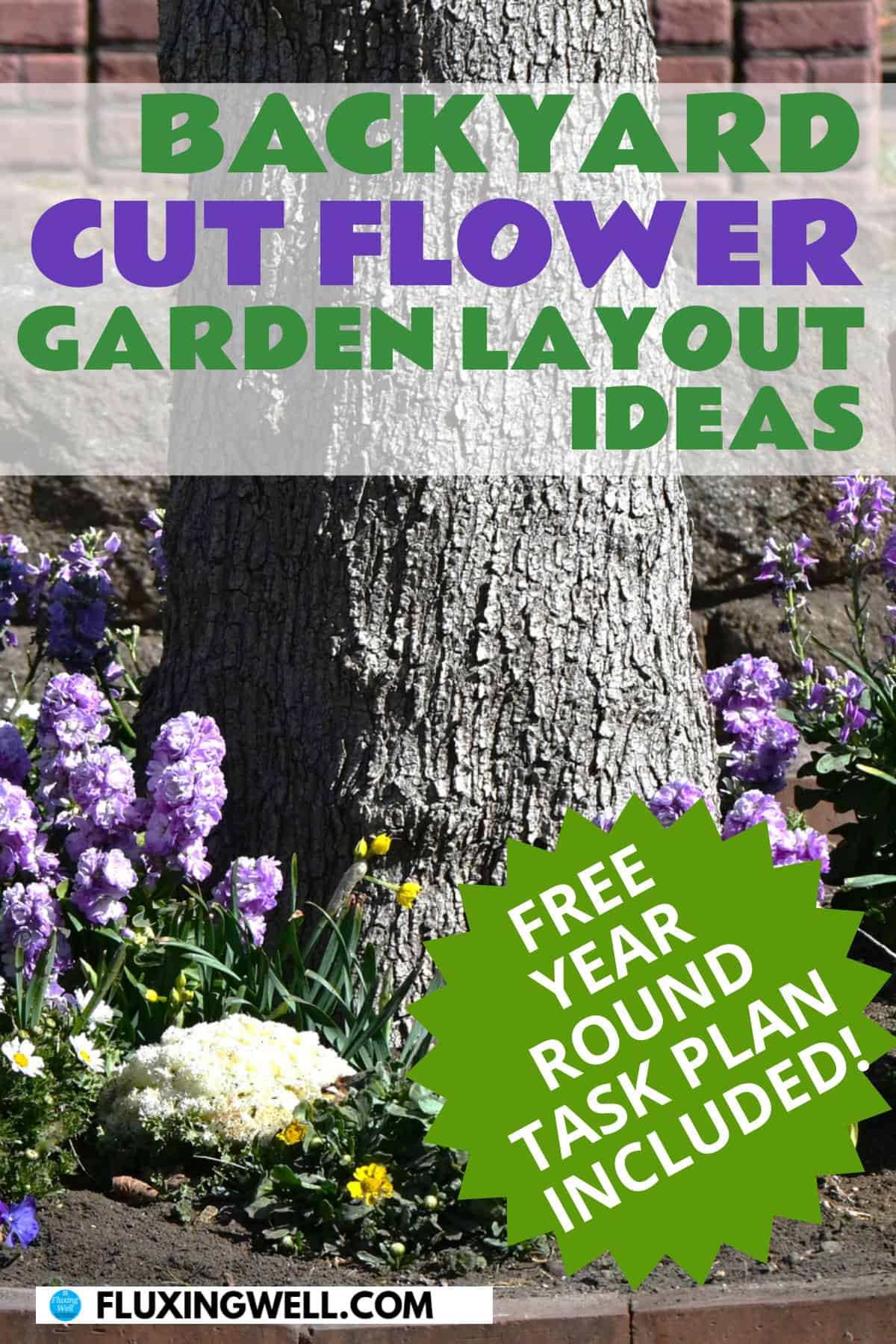
For a larger backyard cut flower garden layout, think in terms of long, sun-drenched rows similar to a small farm field, or a series of raised beds arranged along a fence line. A few backyard-friendly approaches:
The farmer-style row garden: Straight rows spaced for a garden cart or wheelbarrow, ideal if you want an abundant, market-style harvest.
The fence-line border: Plant tall varieties like sunflowers, cosmos, and hollyhocks along a back fence, tapering to shorter zinnias and calendula in front.
Raised bed clusters: A cut flower garden layout with raised beds gives you defined, weed-easy sections — perfect for separating perennials (peonies, daylilies) from fast-growing annuals that get replanted each year.
A cutting garden “island”: Place a freeform bed in the middle of the lawn so you can access flowers from every side.
Whatever shape you choose, group perennials together so you’re not disturbing their roots each spring, and leave annual sections open for yearly redesign.
Combining a Cut Flower Garden with a Vegetable Garden
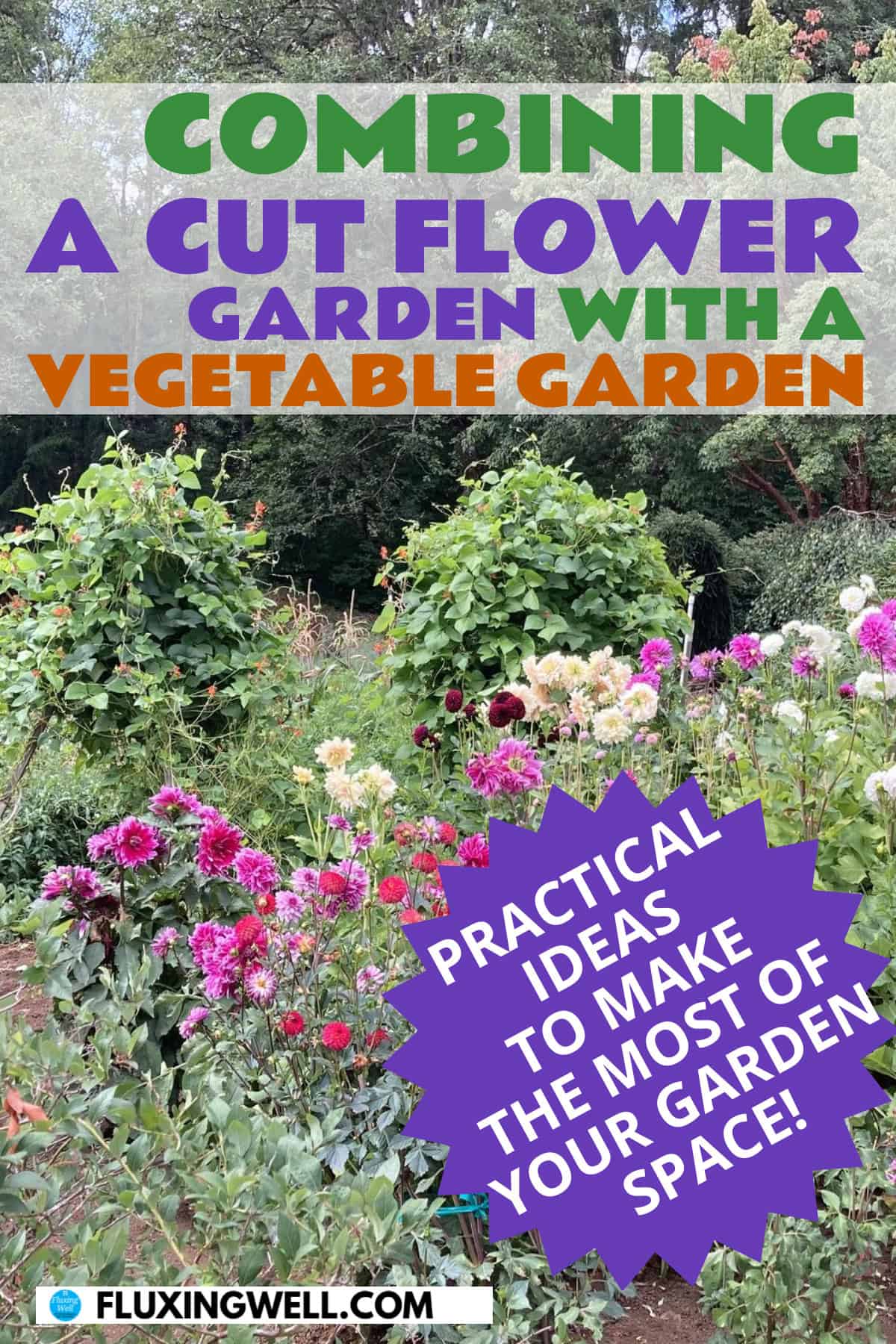
Flowers and vegetables are natural companions, and mixing the two saves space while boosting pollination and pest resistance. Try tucking zinnias, cosmos, and calendula at the ends of vegetable rows, or dedicate one raised bed entirely to cutting flowers within your larger vegetable garden footprint. Sunflowers make excellent natural trellises for pole beans, while low-growing calendula and nasturtiums work as living mulch between squash or cucumber hills. If you already grow vegetables, browse companion planting ideas for crops like asparagus, garlic, or pumpkins and simply add a flower row wherever there’s a sunny gap. Since my cutting garden is combined with my vegetable garden, I’m always on the lookout for ways to grow the flowers amongst the veggies.
A Year-Round Cut Flower Garden Task Plan for Beginners
This simple, beginner-friendly plan adjusts slightly by USDA zone, since planting dates shift with your last and first frost:
| Season | Zone 5 | Zone 6 | Zone 7 | Zone 8 |
| Late Winter | Start seeds indoors (snapdragons, larkspur) | Start seeds indoors | Direct-sow hardy annuals outdoors | Direct-sow hardy annuals; plant sweet peas |
| Spring | Harden off seedlings; plant after last frost (~late May) | Transplant after mid-May frost date | Transplant by early-to-mid April | Transplant by mid-March |
| Early Summer | Succession-sow zinnias & cosmos; stake dahlias | Same, plus start deadheading | Begin regular harvesting and deadheading | Harvest peaks early; watch for heat stress |
| Late Summer | Continue harvesting; sow fall annuals | Continue harvesting weekly | Sow a fall flush of quick annuals | Provide afternoon shade for cool-season flowers |
| Fall | Dig and store dahlia tubers before hard frost | Cut back perennials; mulch beds | Divide overcrowded perennials | Plant hardy annuals for winter/early spring color |
| Winter | Plan next year’s layout; order seed | Amend soil; review garden journal | Light cleanup; direct-sow hardy annuals | Minimal dormancy; tidy and refresh mulch |
A garden journal or the free online garden layout planner makes it easy to track bloom times and adjust your cut flower garden layout year to year, and dahlia growers will especially want to bookmark guides on dividing dahlia tubers and dahlia tuber storage for fall cleanup.

Get my free online garden layout planner template!
Popular Books About Designing Cut Flower Gardens
If you want to go deeper into cut flower garden design, these widely recommended titles are a great place to start:
“Cut Flower Garden” by Erin Benzakein (Floret Farm): a gorgeous, comprehensive guide to growing and arranging seasonal flowers.

“Floret Farm’s A Year in Flowers” by Erin Benzakein: season-by-season inspiration organized by bloom time.
“The Flower Farmer” by Lynn Byczynski: a practical guide for anyone scaling up toward market growing.

“Cutting Garden” by Sarah Raven: a classic British take on designing a productive, beautiful cutting bed.

“The Flower Gardener’s Bible” by Lewis and Nancy Hill: a broader reference that includes cutting garden design principles.
Pairing a book like one of these with your own garden journal notes is a simple way to refine your cut flower garden layout each season, no matter which USDA zone you’re gardening in.
I hope this article has given you some practical cut flower garden layout ideas you can use. May all of your cutting garden endeavors meet with success!

Lisa Mitchell is a wife, mom, and school librarian who likes to grow fruit, herbs, vegetables, and flowers on her family’s small Pacific Northwest farm. To learn more about what this website has to offer gardeners, click on over to the Garden page.
Want more great garden, food, or travel ideas? Follow FluxingWell on Pinterest, Facebook, Instagram, and X for the latest posts, tips, and inspiration.
This is a beautiful post! I absolutely love flowers! I’m single, but I would like to get married one day. I often find myself thinking about wedding designs, one of them being flower bouquet setups. I love the idea of a winter wonderland wedding. I think the colors would be blue and purple, including the flowers. The flowers would probably be mostly or fully purple though, since I hear natural blue flowers are rare. My bouquet wouldn’t be the only set of flowers. I think I would like flowers all over the reception hall maybe. Thankyou for sharing this cute post!
I love the purple and pink color palette as well. There are blue flowers, too, like delphinium and hydrangea, that you could incorporate into a cut flower garden.
Love the ideas for cut flowers. I need to see about planting more. Other than plants I use I don’t have many other plants. I need to get more info on what works together.
If you don’t mind digging and storing tubers, dahlias are my top recommendation for gorgeous cut flower bouquets.
Thank you for this helpful list of popular flowers to grow in a cut flower garden. So many great ideas as well as tips like keeping garden pathways narrow but walkable to harvest flowers without stepping on the soil.
I appreciate your positive feedback. It’s always a joy to come home and see the cut flower garden in bloom.
I love the idea of a cut flower garden, and I appreciate all of your great layout suggestions. Thanks so much for sharing this thoughtful guide.
You are most welcome! It’s fun to be able to give fresh flower bouquets away.
Thank you for these cut flower garden layout ideas. The year round cut flower garden task plan is especially helpful as I expand part of my vegetable garden to include cut flowers. Excellent suggestions!
I’m so glad you liked the ideas for a cut flower garden. Having fresh cut flowers in the house or giving as a gift is a wonderful way to spread joy.