
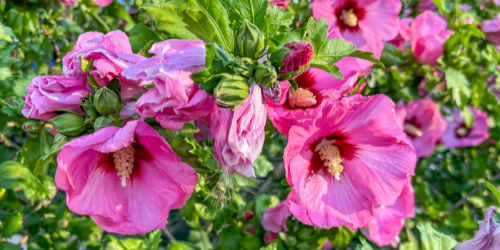
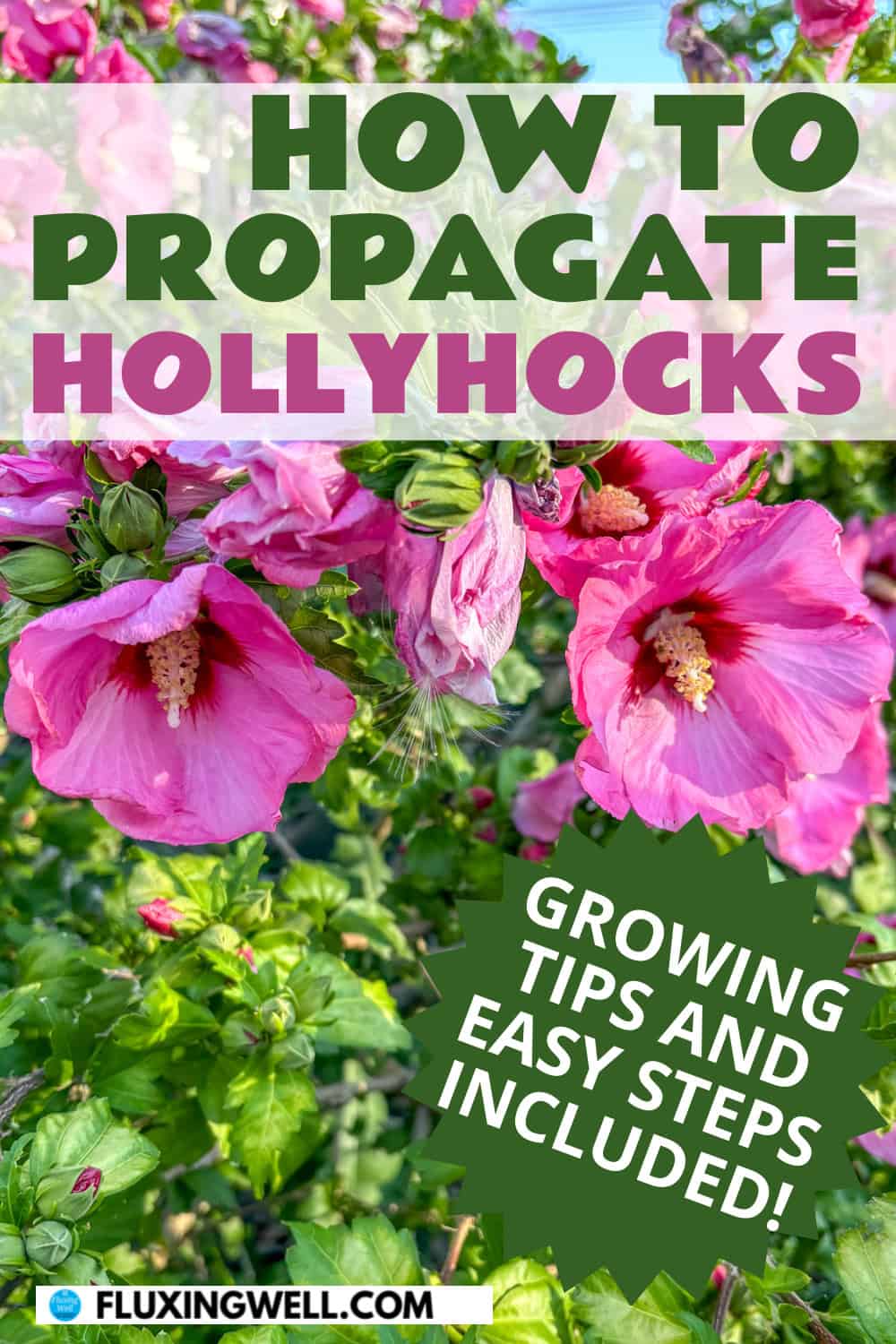
Looking to enhance the beauty of your garden with tall, striking blooms? The hollyhock plant is a classic favorite for cottage gardens, known for its towering spikes and old-fashioned charm. If you’re planting hollyhocks or wondering what to plant with hollyhocks, choosing the right companion plants can make all the difference. In this post, we’ll explore the best cottage garden plants to grow alongside colorful hollyhocks in garden beds, share tips on how to grow hollyhocks, and help you create a dreamy landscape filled with hollyhock flowers and their perfect plant partners.
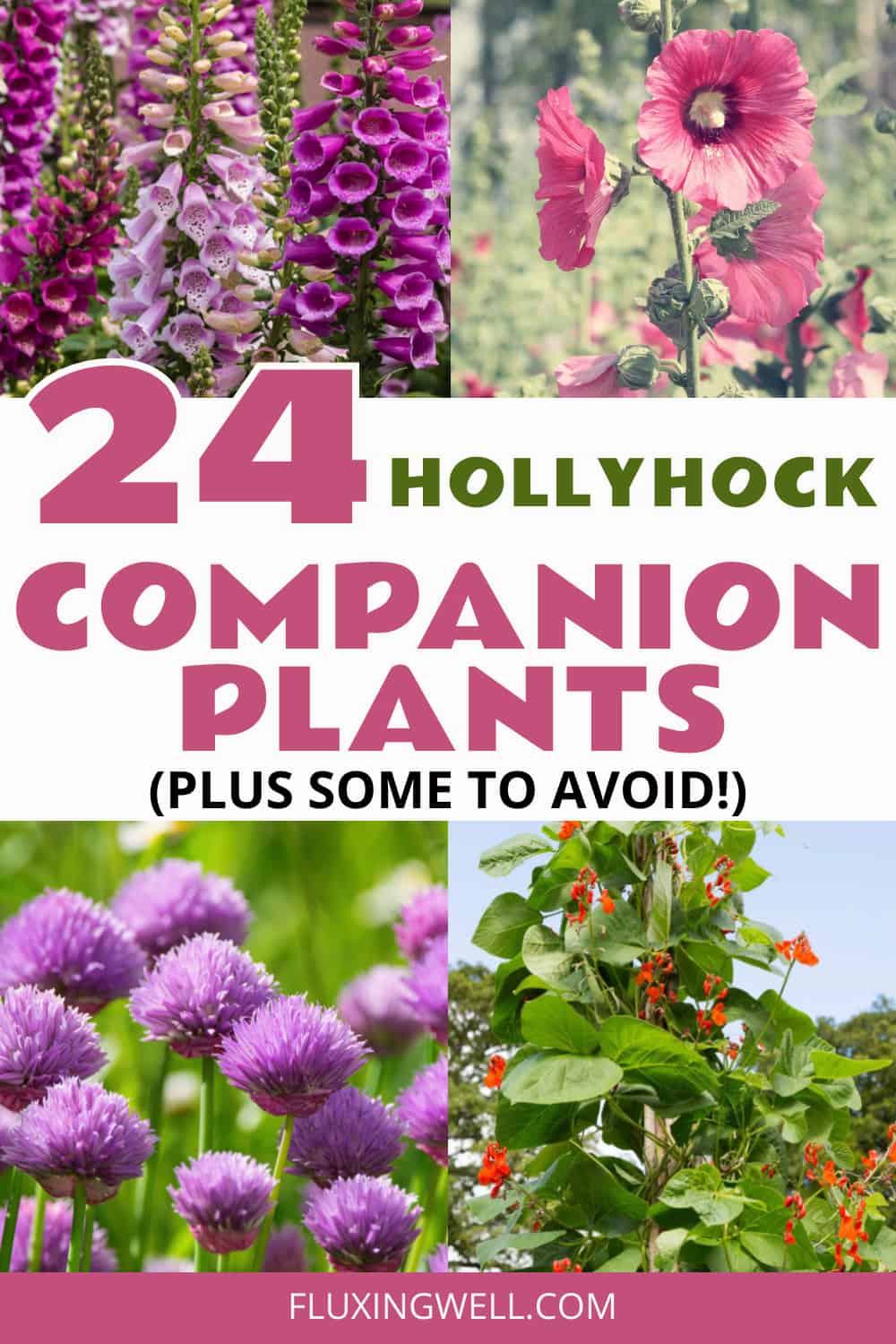
A quick reference plant guide chart is included so you can keep track of what grows well with hollyhocks and which plants to keep hollyhocks away from. Whether you’re new to growing hollyhocks or a seasoned gardener, you’ll find everything you need to know about hollyhocks: how to grow, care, and combine for stunning results.
Why I Love Hollyhocks
I love hollyhocks for their tall, dramatic blooms that add vintage charm and vibrant color to my perennial garden and my vegetable/cutting garden. They attract pollinators like bees and butterflies, thrive in rows or informal cottage garden settings, and provide vertical interest that complements other plants. They are easy to grow from seed (I save some every year, so the seeds cost me nothing) and bring a nostalgic, timeless beauty that brightens my outdoor spaces year after year. I have discovered the joy of growing this easy-care plant, and now I’m sharing that joy with you. Read on for the companion plants and growing tips so that you can grow thriving hollyhocks as well.
Hollyhock Companion Flowers
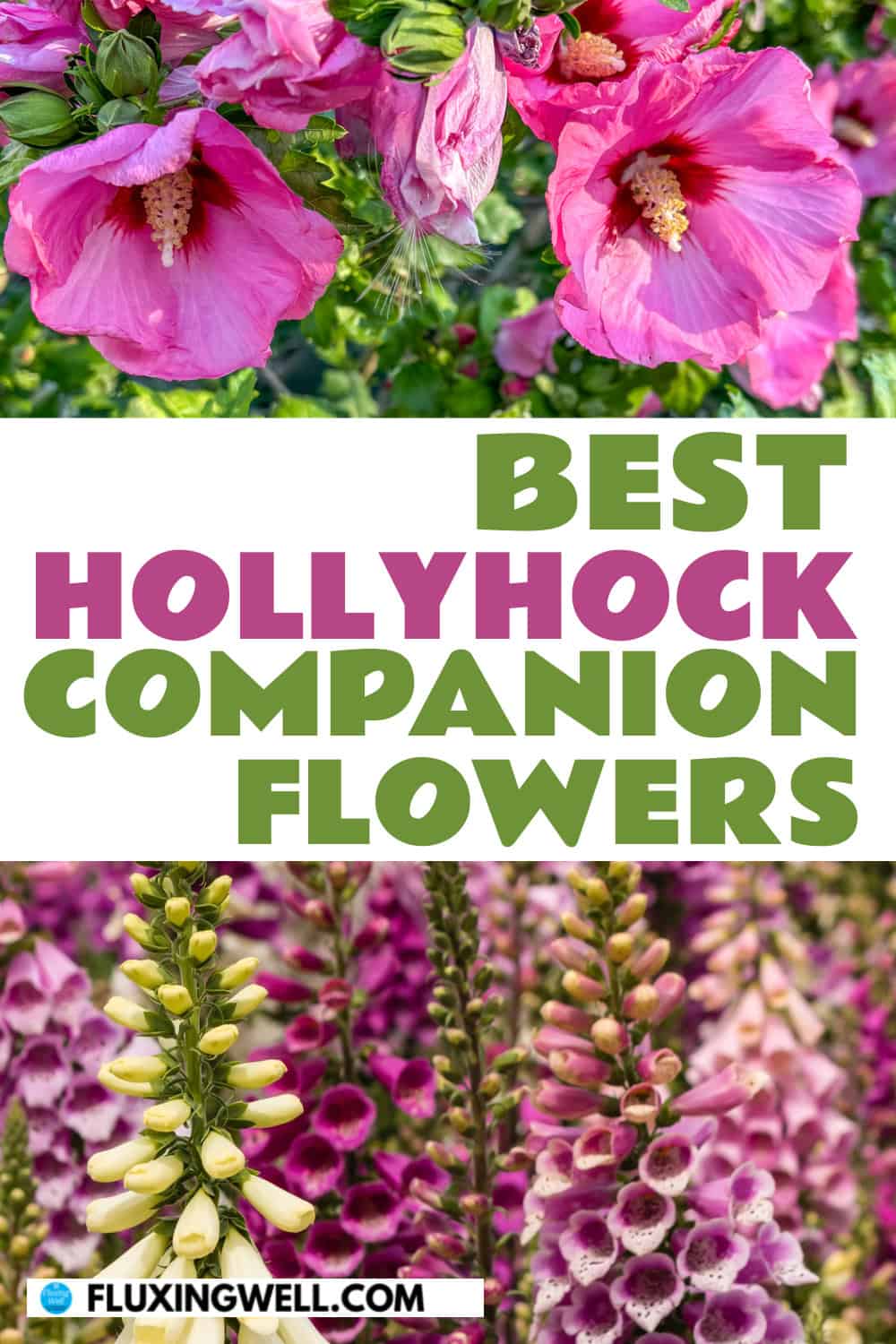
Here are some popular flowers that complement hollyhocks and add to the cottage garden look.
Delphinium: adds vertical interest and blooms at the same time as hollyhocks, creating a layered cottage garden look
Foxglove: thrives in similar conditions and offers tall spires that complement hollyhock height and texture
Shasta Daisy: provides a contrasting shape and a cheerful white bloom that enhances the rich colors of hollyhock flowers
Larkspur: echoes the upright form of hollyhocks and blooms in cool shades that balance bold hollyhock tones
Lavender: repels pests that can bother hollyhocks and offers a soft, fragrant border beneath their towering stalks
Catmint: fills space at the base of hollyhocks, controls weeds, and adds a hazy blue accent
Coreopsis: offers bright, daisy-like flowers that bloom profusely and attract pollinators alongside hollyhocks
Echinacea (Coneflower): pairs well with hollyhocks in both form and bloom time while bringing in beneficial insects
Yarrow: drought-tolerant and feathery, yarrow softens hollyhock’s upright growth and supports pollinator activity
Hollyhock Companion Herbs

For fragrant herbal companions to hollyhocks, here are some ideas to get you thinking.
Basil: repels common hollyhock pests like aphids and enhances pollinator activity in the garden
Thyme: serves as a low-growing ground cover that helps suppress weeds and improves air circulation at the base of hollyhocks
Chives: deters harmful insects and adds a soft purple bloom that complements colorful hollyhock flowers
Oregano: attracts beneficial insects while also acting as a natural pest deterrent
Parsley: improves garden biodiversity and thrives in similar growing conditions as hollyhocks
Sage: repels beetles and other pests while adding fragrance and texture to the garden bed
Mint: helps deter deer and rabbits, though it should be contained due to its aggressive spreading habits (I only grow mint in containers.)
Hollyhock Companion Vegetables
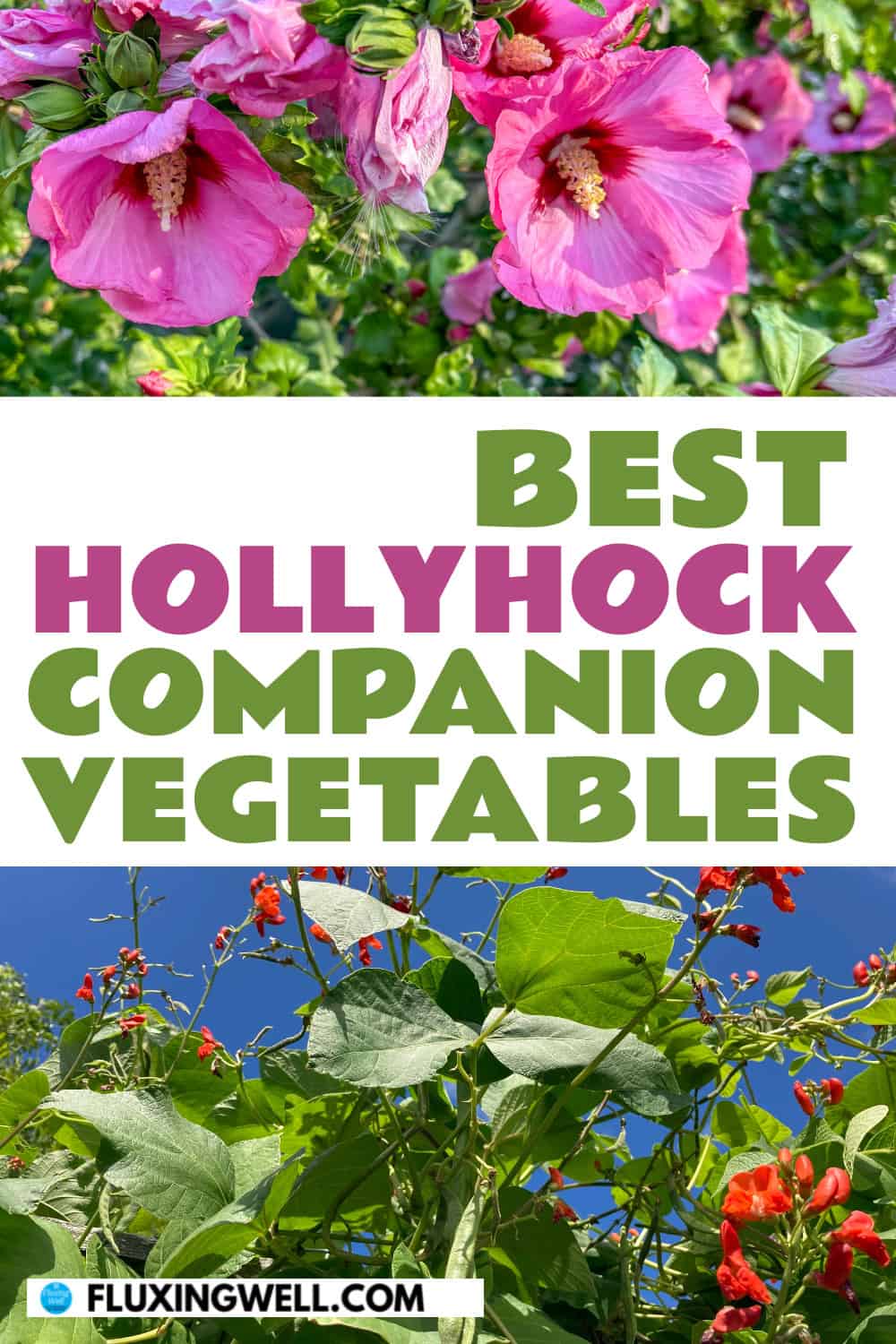
Planting hollyhocks in your vegetable garden? I plant hollyhocks in my vegetable/cutting garden because I find they get more regular watering that way. Here are some good vegetable companion choices.
Tomatoes: benefit from hollyhocks attracting pollinators and act as a living mulch to shade hollyhock roots
Peppers: thrive in similar sunny conditions and enjoy the pollinator boost from nearby hollyhock flowers
Corn: offers complementary height and structure, creating a layered vertical garden alongside hollyhocks
Beans: fix nitrogen in the soil, enriching the growing environment for hollyhocks (I love to grow scarlet runner beans alongside the hollyhock row in my vegetable/cutting garden.)
Lettuce: grows well in the partial shade cast by hollyhocks and helps suppress weeds
Cucumbers: enjoy the shared support and pollinator activity, and benefit from hollyhocks drawing aphids away
Carrots: thrive in the looser soil around hollyhocks and don’t compete heavily for nutrients
Radishes: grow quickly in hollyhock beds, helping break up soil and deter pests naturally
Zucchini: shares similar growing needs and thrives with the increased pollinator presence hollyhocks attract
What Not to Plant with Hollyhocks
Although hollyhocks grow well with many plants, here are a few that do not make great hollyhock companions.
Potatoes: increase the risk of fungal diseases that can easily spread to hollyhocks
Brussels sprouts: attract many of the same pests as hollyhocks, including aphids and flea beetles
Cabbage: competes heavily for nutrients and draws in pests that may also target hollyhocks
Cauliflower: prefers different soil conditions and can suffer when crowded near tall plants like hollyhocks
Broccoli: requires more space and consistent moisture, which can conflict with hollyhock growing needs
Pumpkins: have sprawling vines that can crowd out hollyhocks and reduce airflow around their stems
Fennel: releases compounds that inhibit the growth of nearby plants, including hollyhocks
Onions: may stunt hollyhock growth due to allelopathic effects and differing water needs
Garlic: competes for similar nutrients and may limit hollyhock development when planted too close
Quick Reference Chart for Hollyhock Companion Plants
| Hollyhock Companion Plants | |
| Hollyhock Companion Plants: Flowers | Hollyhock Companion Plants: Herbs |
| Catmint | Basil |
| Coreopsis | Chives |
| Delphnium | Mint (in a container) |
| Echinacea | Oregano |
| Foxglove | Parsley |
| Larkspur | Sage |
| Lavender | Thyme |
| Shasta Daisy | |
| Yarrow | Worst Hollyhock Companion Plants |
| Broccoli | |
| Hollyhock Companion Plants: Vegetables | Brussels Sprouts |
| Beans | Cabbage |
| Carrots | Cauliflower |
| Corn | Fennel |
| Cucumbers | Garlic |
| Lettuce | Onions |
| Peppers | Potatoes |
| Radishes | Pumpkins |
| Tomatoes | |
Common Hollyhocks Questions
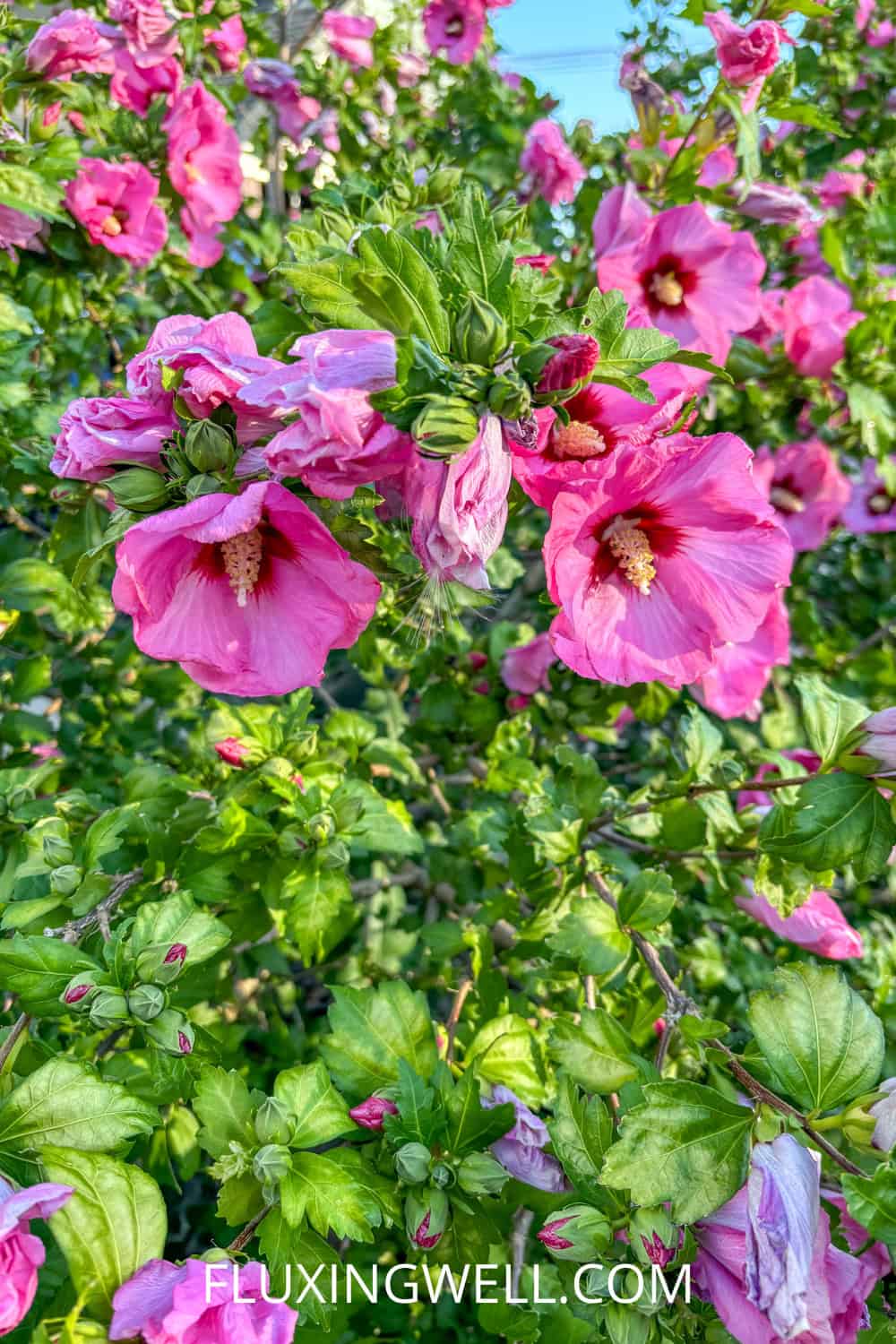
When is a good time to plant hollyhocks?
Plant hollyhocks in early spring after the last frost or in late summer to early fall so they can establish before winter. Fall planting often leads to earlier blooms the next year. Here are hollyhocks in early July, planted in the vegetable garden in a row next to the scarlet runner beans.
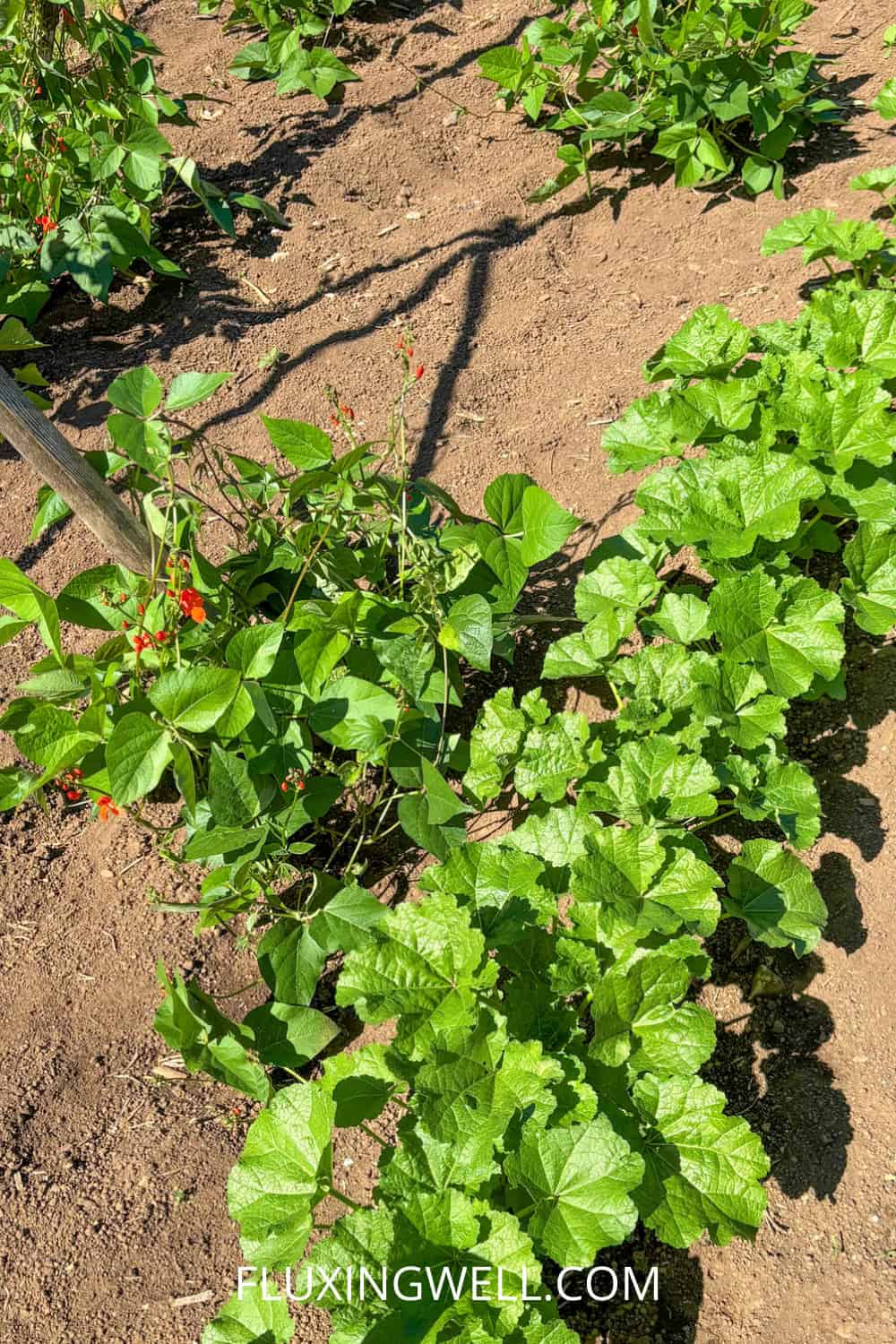
Where’s a good place to plant hollyhocks?
Plant hollyhocks in a sunny spot with well-draining soil, preferably against a fence or wall for support, and where they have plenty of space to grow tall without crowding. I like to water them with my garden hose extension wand to make sure they get off to a good start, and I find that the hollyhock rows I plant in my vegetable garden (pictured above) get more consistent watering.
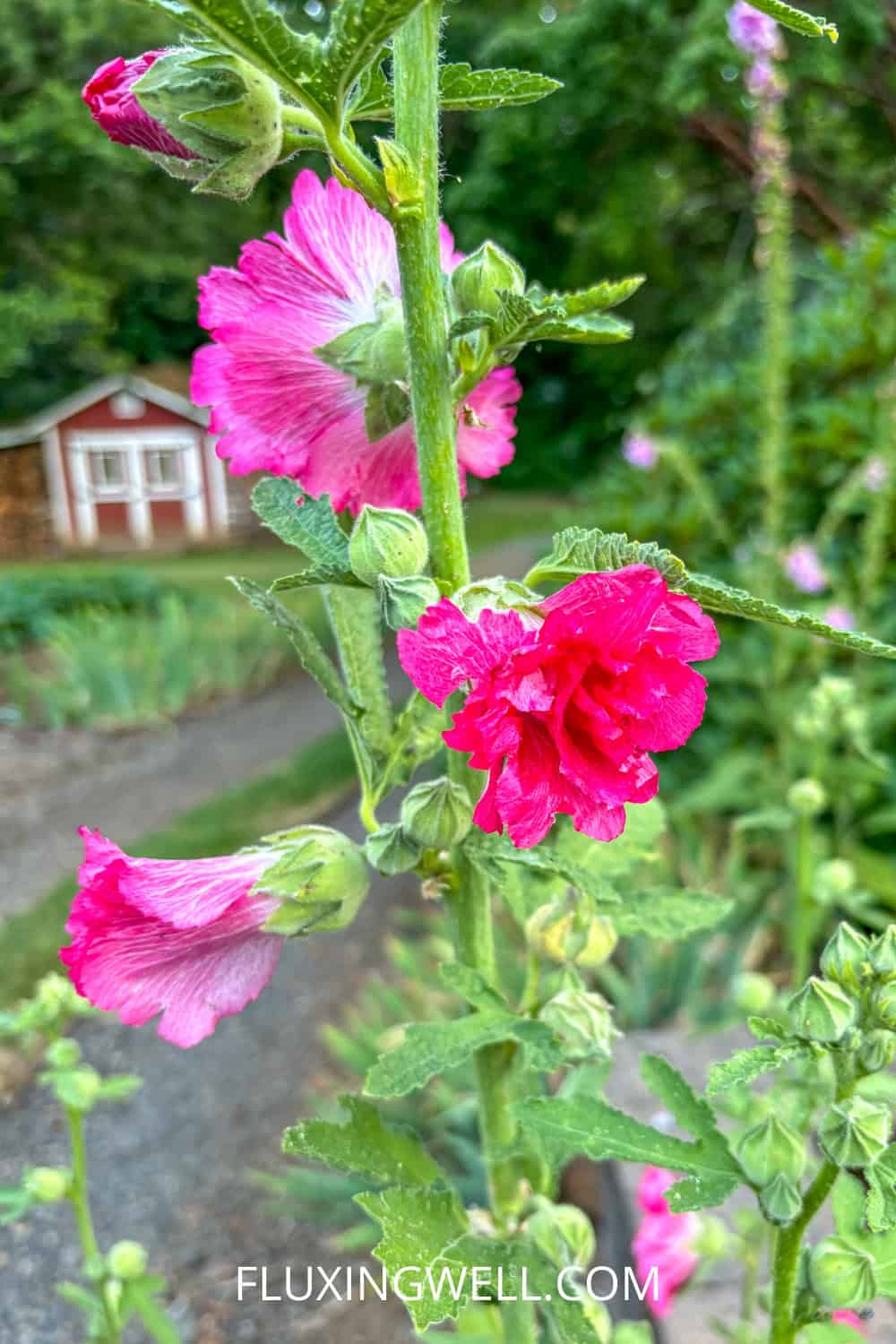
What is the easiest way to propagate hollyhocks?
Hollyhocks can be propagated by seeds, root cuttings, or division. The most common method is by seed (this is what I do): collect mature seeds from dried flower heads, then sow them directly in the garden in late summer or early fall. For root cuttings or division, dig up the plant in early spring or fall, then carefully separate sections of the root with growing points and replant.
Need More Planting Ideas?
Check out the tips for the best companion plants for eggplant to learn what to grow with those beauties. If you like the idea of companion planting, you might be interested in reading about the best companion plants for pumpkins, irises, spirea, Brussels sprouts, sunflowers, garlic, asparagus, rosemary, radishes, beetroot (beets), thyme, parsley, lupine, borage, stevia, kale, dahlias, arugula, or the best companion plants for lavender. Get tips for growing stunning dahlias or vintage roses. Are you a beginning gardener? Try planting some foolproof, easy-care perennials, or learning about the best companion plants for columbine. There are so many exciting plants to grow!
Keep Track of Your Garden with a Journal Logbook
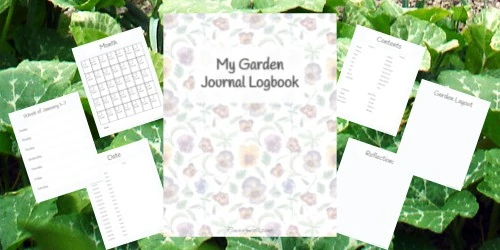
Now that you have learned about some compatible companion plants, keep track of your planting ideas, goals, and plans with a printable, editable free garden journal logbook. Choose the pages you want to use and customize them as you wish to record monthly, weekly, and daily garden tasks, lists, weather, and planting arrangements. There are also grid pages for easily designing the layout of your vegetable garden, flower garden, or landscape. Print it out and put it into a notebook you can take with you to the garden (that’s what I do). It’s nice to have all of your garden information in one place.
Free Online Garden Planner Layout Template
Now that you know which are the best companion plants for hollyhocks, you might need a way to plan your garden layout. Whether you are planting vegetables, flowers, or herbs near your lupine plants, this online garden planner can help you visualize your design and bring it to life. Arrange and rearrange the plants over and over, then print the layout when you are satisfied. With garden tasks that need your attention, this is one way to save time.

Get my free online garden layout planner template!
Have a wonderful day, and may all of your hollyhock endeavors meet with success!

Lisa Mitchell is a wife, mom, and school librarian who likes to grow fruit, herbs, vegetables, and flowers on her family’s small Pacific Northwest farm. To learn more about what this website has to offer gardeners, click on over to the Garden page.
These plants are gorgeous! I’m so excited to learn more about hollyhock companion plants. Great tips on the easiest ways to propagate them as well!
Thank you! Hollyhocks and their companions make up a large part of my cutting garden and perennial garden plants. I hope you get to plant some!
I find your gardening post so informative and helpful! I enjoyed reading about the hollyhock companion plants and which to avoid. Great source of information!
Thank you so much! I hope hollyhocks grow well where you live.
What a thorough and useful guide on hollyhock companion plants! You always provide exactly the information we need. 🙂
I appreciate your kind words. I’m so glad you found this guide to growing hollyhocks and good companion plants helpful.
I love hollyhocks and want to plant more of them. Thank you for writing about hollyhock companion plants so I know what to plant nearby. So many great ideas!
I’m so glad you found the companion plant ideas useful. Enjoy planting hollyhocks!